Parkwood sits in the Far Northeast, east of Roosevelt Boulevard, bounded roughly by the Byberry industrial area to the north, the Poquessing Creek to the east, Knights Road to the southeast, and Woodhaven Road to the southwest, in ZIP 19154. It’s one of the city’s newest and most suburban neighborhoods: developed by Hyman Korman’s Korman Corporation around 1960–1962 as the planned community of Parkwood Manor, it’s laid out along curving streets and cul-de-sacs with brick rowhomes, twins, and split-levels, many with integral ground-floor garages and driveways. The Philadelphia Mills (Franklin Mills) mall, the Byberry industrial park, and Poquessing Valley Park sit at its edges. Because most of Parkwood went up in a tight early-1960s window, the homes share a consistent style and a consistent age — now around 60 years old, generally well kept but reaching the point where original roofs, systems, and siding need attention. ValueGuard’s ASHI-certified home inspectors in Parkwood have been reading this neighborhood since 1997, and we’ve built our home inspections in Parkwood around exactly these planned-community, mid-century realities.
Inspections from $429 — condos and units from $329. Save with a package:
| Value Package · $829 · save $149 | Value + Sewer Scope · $1,108 · save $199 | Full Protection · $1,457 · save $249 |
See full pricing and packages →
i. Why this neighborhood is different
One of the city’s newest neighborhoods.
Parkwood is about as suburban as Philadelphia gets — a planned early-1960s community of brick rows, twins, and split-levels on curving Far Northeast streets, generally well kept and remarkably consistent. A thorough home inspection in Parkwood means knowing how these planned mid-century homes were built — integral garages, sided upper floors, low-slope roofs — and where six decades of use start to show. Here’s what we focus on:
Early-1960s Korman Brick Rows & Twins
Parkwood is a planned community Hyman Korman built around 1960–1962 — brick rowhomes, twins, and split-levels with vinyl or aluminum upper stories, on curving streets and cul-de-sacs. Party walls, framing, brick-and-sided facades, and bay windows all need careful evaluation. We know how these planned mid-century homes were built, and how they age.
Integral Ground-Floor Garages
A defining Parkwood feature is the integral garage built into the ground floor, beneath the living space, with a driveway out front. Convenient, but each adds things to inspect: slab and foundation cracks, water intrusion at the garage and driveway, fire separation between the garage and the rooms above, and the safety of any garage-to-living-space conversion.
Aging Flat, Low-Slope & Mansard Roofs
Parkwood’s roofs — flat or low-slope over the main house, with shingled mansard or hood sections out front — are now around 60 years old and often on their second or third covering. We evaluate every roof surface, the flashing and drainage, and the parts you can’t see from the street.
Vinyl & Aluminum Siding
Most Parkwood homes pair a brick first floor with vinyl or aluminum siding on the upper story and bays. Siding hides as much as it shows, so we look closely at what’s underneath — sheathing, moisture, and flashing — along with the condition of the siding itself.
1960s Panels & Original Systems
At about 60 years old, many Parkwood homes still carry original systems: aging electrical panels (we watch for outdated or recalled types such as Federal Pacific Stab-Lok), 100-amp service, original plumbing and drains, and first- or second-generation heating and central air. We trace what’s original, what’s been updated, and what a lender or insurer is likely to flag.
Poquessing Creek & Far-NE Grading
Parkwood wraps around the Poquessing Creek and its valley park, and the curving, graded streets mean water management matters. We look at grading and drainage, sump pumps, and water intrusion at the integral garages and lower levels — especially on homes that sit lower or closer to the creek.
← Swipe to see all six →
A note on Parkwood’s garages & roofs
Two things define a Parkwood home: an integral garage tucked under the living space, and a low-slope or mansard roof that’s now around 60 years old. Both are exactly where a careful inspection earns its keep. We check the garage slab, foundation, and fire separation, whether any garage conversion was done safely, and how much life is left in the roof and its flashing — along with the panel, plumbing, and HVAC. If it was all maintained and updated, you’ll have peace of mind. If corners were cut, you’ll know before you close — not after.
From our recent caseload
Recently inspected in 19154.
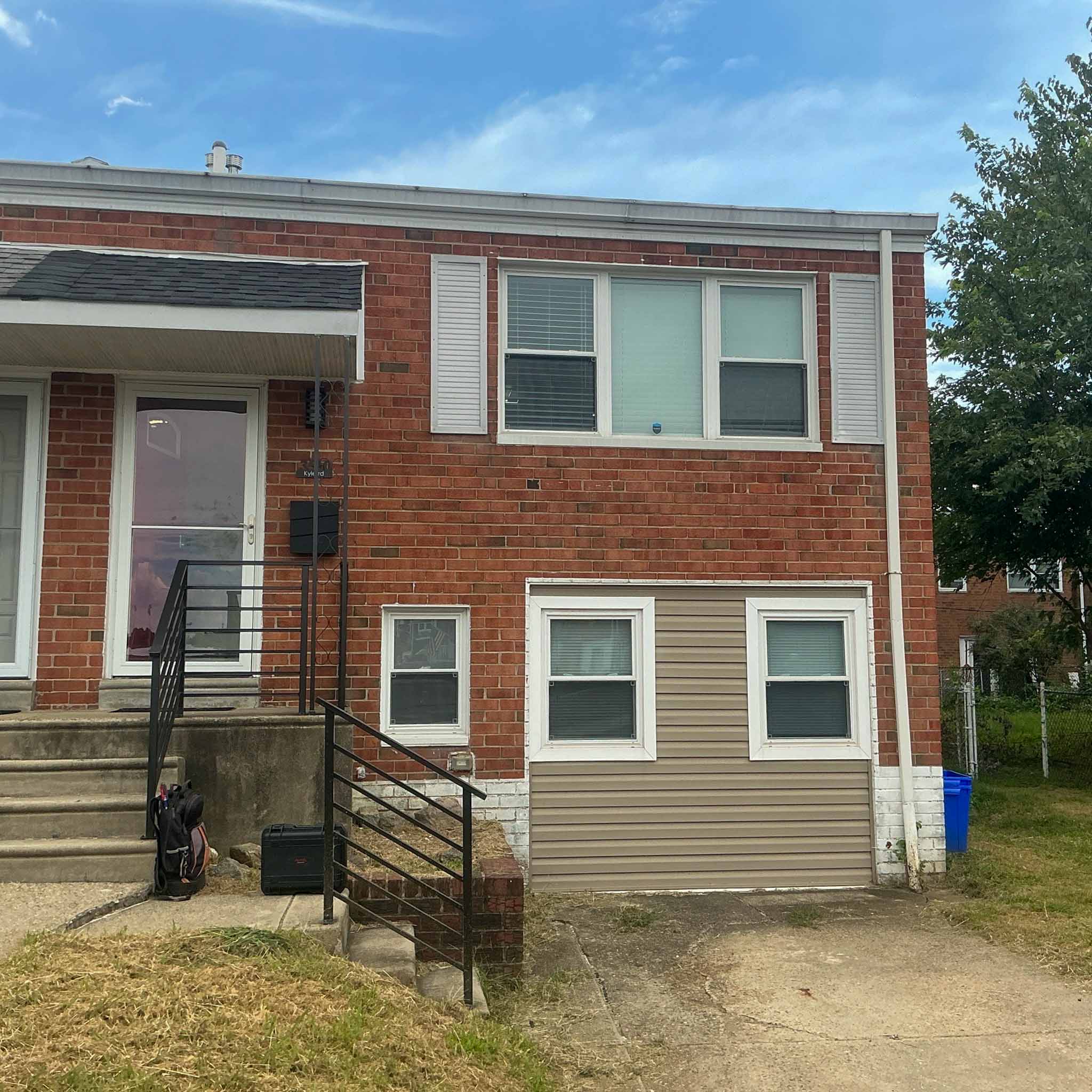
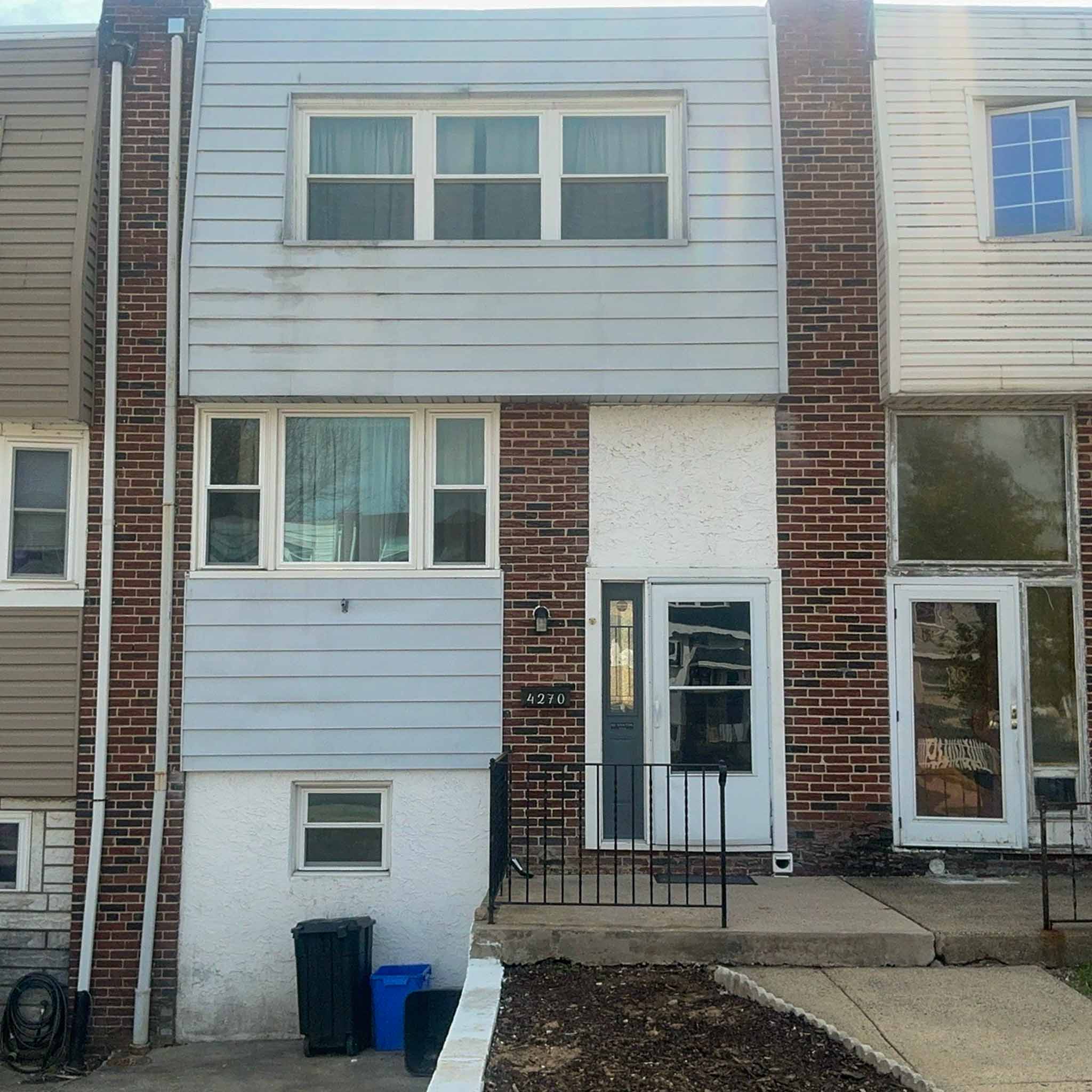
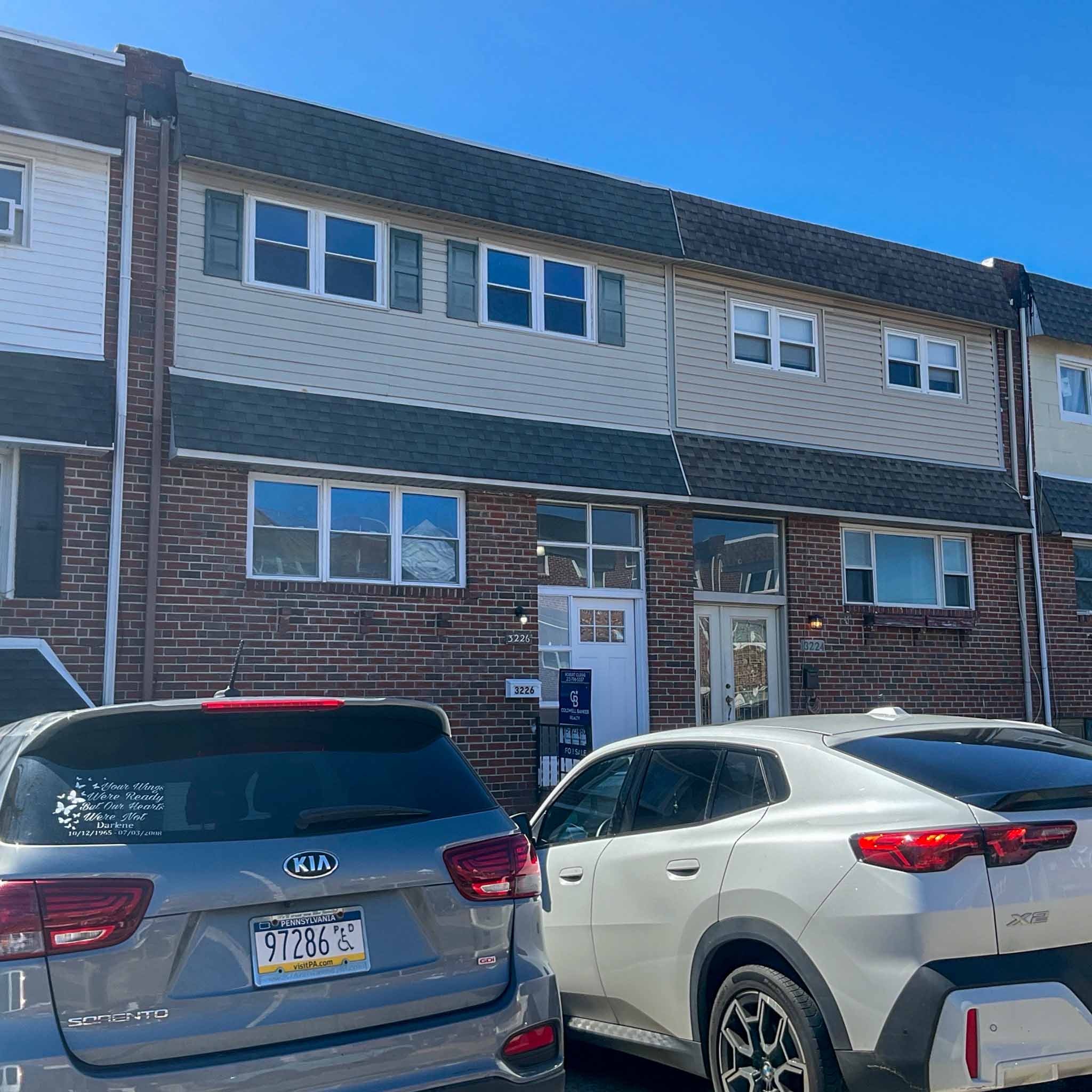
Three homes from recent ValueGuard inspections in Parkwood — a brick split-level twin with a lower-level garage, a brick-and-vinyl rowhome mid-refresh, and a brick-and-vinyl row on the market. Same planned 1960s neighborhood, three different inspections. Swipe or use the arrows to see all three.
No. 01
Brick Split-Level Twin
A classic Parkwood split-level twin — red brick with a tan-sided lower level, a raised entry up metal-railed steps, and shutters on the windows. The kind of multi-level, integral-garage home where the lower level, the framing between half-floors, and the grading all reward a careful inspection.
No. 02
Brick-and-Vinyl Rowhome
A typical Parkwood row — a brick first floor with a vinyl-sided bay and a full vinyl-sided upper story, brick party-wall pilasters between units, and a fresh front walk. We look closely at what’s behind the siding, the bay window, the roof, and the original systems on a home of this era.
No. 03
Brick-and-Vinyl Row, For Sale
A Parkwood row on the market — brick first floor, vinyl-sided upper story, and a shingled mansard roof, with driveway parking out front. A pre-purchase inspection here maps the roof life, what’s behind the siding, the integral garage, and the 60-year-old systems, so buyers know exactly what they’re taking on.
Photos from recent ValueGuard inspections in Parkwood.
ii. The four services that matter most
What to inspect in 19154.
Home Inspection
A complete evaluation of structure, roof, electrical, plumbing, HVAC, and major systems — delivered as a photo-rich report the next business day. Tuned to the realities of Parkwood’s planned early-1960s brick rows, twins, and split-levels with integral garages.
Sewer Scope Inspection
Especially worthwhile in Parkwood, where the original cast-iron and clay drain and sewer lines are now around 60 years old — prone to corrosion, root intrusion, offsets, and partial collapse. Our camera travels the lateral from cleanout to main, documenting root intrusion, offsets, bellies, and collapse. A few hundred dollars now can save tens of thousands later.
Radon Testing
Radon appears in Philadelphia homes — including Parkwood rows, twins, and split-levels with integral garages and finished lower levels. Our PA DEP-certified technicians use tamper-resistant electronic monitors with 48-hour turnaround. Mitigation, if needed, typically runs $800 to $2,500.
Termite / WDI Inspection
Parkwood’s homes — with wood framing, decks, porches, and integral garages at grade — are exactly where wood-destroying insects turn up. A licensed termite/WDI inspection is required by most lenders and protects you from costly hidden damage. Easy to bundle with your home inspection.
← Swipe to see all four →
Ready to book your inspection?
iii. Your local inspection team
Meet your inspectors.
When you book ValueGuard in Parkwood, you get inspectors who have walked thousands of Philadelphia rows, twins, and split-levels — and know exactly what to look for in each. Swipe or use the arrows to meet all 9 inspectors serving Philadelphia.
Schedule now
Meet our full team →
iv. Services & pricing
Parkwood inspection pricing.
Starting prices shown. Final price confirmed at booking. See full pricing →
| Value Package · $829 · save $149 | Value + Sewer Scope · $1,108 · save $199 | Full Protection · $1,457 · save $249 |
See full pricing and packages →
v. What buyers say
From recent buyers.
★★★★★
James was incredibly knowledgeable and patient. He has a great attention to detail and excellent communication skills. Would highly recommend.
Lindsey Kuhl
Google · Inspector: James Royer
★★★★★
Buying our first home was a milestone for us, and having ValueGuard there made it that much easier. We’ll definitely recommend them.
Michael & Marissa R.
Google · Philadelphia, PA
★★★★★
Incredible experience working with Nick! He was so thorough and patient with all my questions. Would definitely recommend ValueGuard.
Anne Tran
Google · Inspector: Nick Ostrowski
← Swipe to see all three →
Read all 1,300+ Google reviews →·See our reviews page →
vi. Common questions
Frequently asked.
How much does a home inspection cost in Parkwood?
+
Do I need a home inspector in Parkwood who knows the neighborhood?
+
What’s different about Parkwood homes?
+
Should I get a sewer scope on a Parkwood property?
+
Do I really need an inspection on a well-kept Parkwood home?
+
What are the biggest issues in Parkwood homes?
+
Can I be present during the inspection?
+
How quickly can I schedule in Parkwood?
+
vii. Serving all of Philadelphia
Also inspecting nearby neighborhoods.
Wherever you’re buying in Philadelphia, ValueGuard is your local inspector.
| Morrell ParkAcademy GardensMillbrookNormandy VillageCrestmont FarmsByberrySomertonBustletonTorresdaleModena ParkFox ChaseHolmesburgAll Philadelphia Neighborhoods → |
Ready when you are
Let’s take a closer look at your Parkwood home.
Book online in under 3 minutes — or call (215) 860-3150. Seven days a week. Report in your inbox tomorrow. 100% Satisfaction Guarantee.
| Schedule my inspection | Get instant quote |
100 E Penn Square, Suite 400, Philadelphia, PA 19107 · (215) 860-3150
Inspections 7 days a week · Office hours Mon–Fri 8:30am–5pm, Sat 9am–4pm · ASHI-certified home inspectors in Parkwood · Serving Parkwood (19154) and every Philadelphia neighborhood