A brand-new home feels like the one purchase that shouldn’t need an inspection. It’s new — what could be wrong? The data says: plenty, and most of it gets covered by drywall before you ever move in.
Across Greater Philadelphia’s new townhome communities, suburban developments and city infill builds, homes go up fast — framed, wired, plumbed and sealed by rotating crews working under deadline pressure. Municipal code inspections check the minimum. Nobody on that job site is paid to advocate for you.
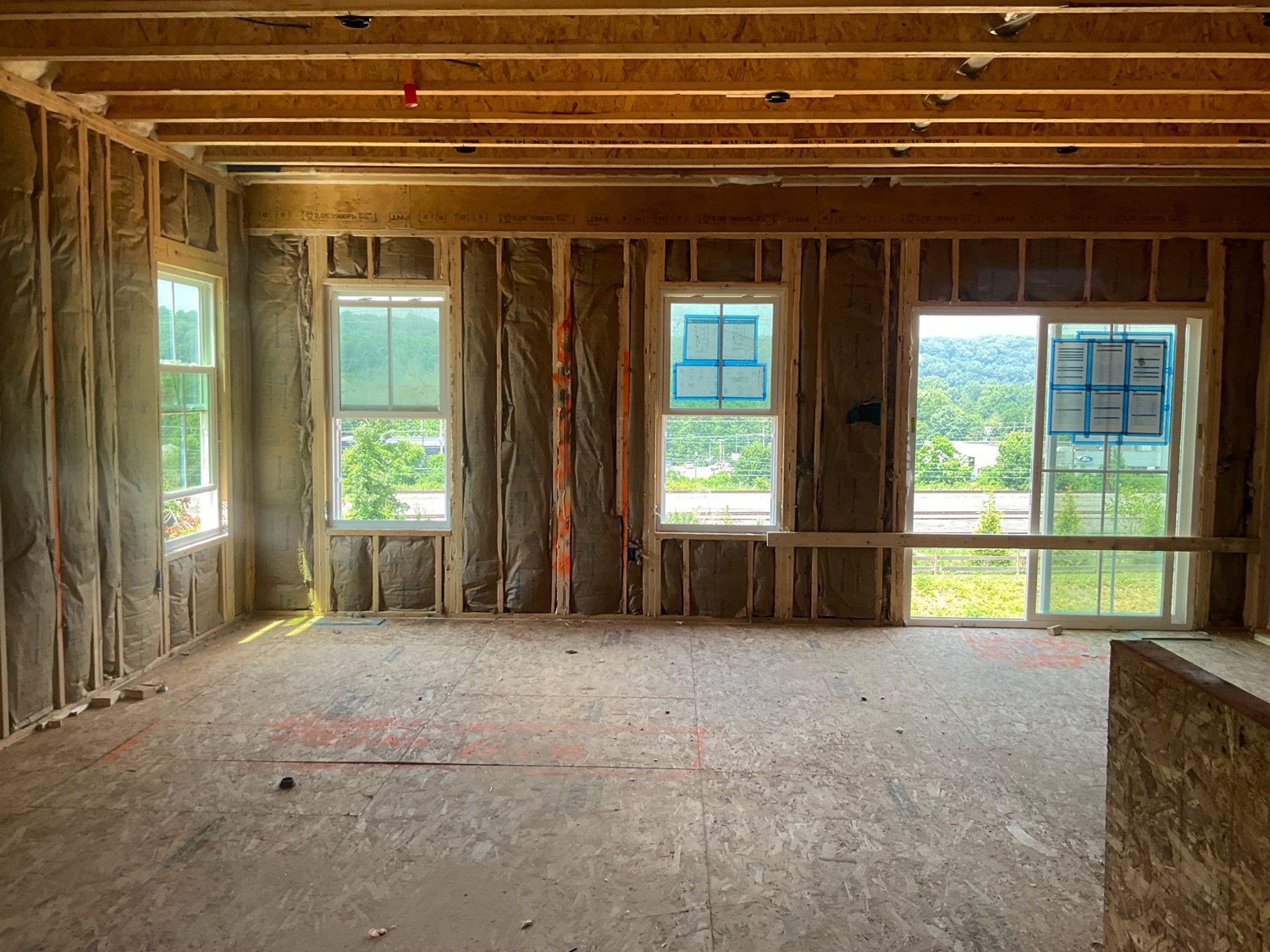
A ValueGuard pre-drywall inspection — which you’ll see titled a Phase Property Inspection on your report — puts an independent, ASHI®-certified inspector inside your home at the moment of maximum visibility: after framing, electrical, plumbing and HVAC rough-ins are complete, but before insulation and drywall conceal them. We document what’s inside your walls while it can still be seen — and fixed with a hammer instead of a lawsuit.
i. New doesn’t mean flawless
The numbers behind “brand new”
The largest construction-quality study of its kind — 42,000 inspections across more than 2,000 U.S. projects — found that the most common new-home deficiencies sit exactly where drywall is about to hide them: weather barriers, framing, mechanical, electrical, plumbing and window installations.
deficiencies documented across 1.1 million new-construction assemblies in a landmark multi-year U.S. study.
of home inspections find at least one issue requiring attention — brand-new homes included.
of new-build owners discover defects only after they’ve moved in — when fixes mean drywall demolition and builder disputes.
is how many chances you get to see your home’s framing and rough-ins. After drywall, they’re sealed for the life of the house.
ii. What we inspect before the walls close
Everything drywall is about to hide
The pre-drywall stage is the only moment in your home’s life when its skeleton and circulatory systems are fully exposed. Here’s where we focus — the same categories the national data identifies as the most common new-construction deficiencies.
Framing & structure
Studs, joists, headers, beams and trusses — checking for over-notched or over-bored members, missing hangers, cracked lumber, improper bearing and modified trusses. Wood framing is a top-five national deficiency category.
Roof structure & sheathing
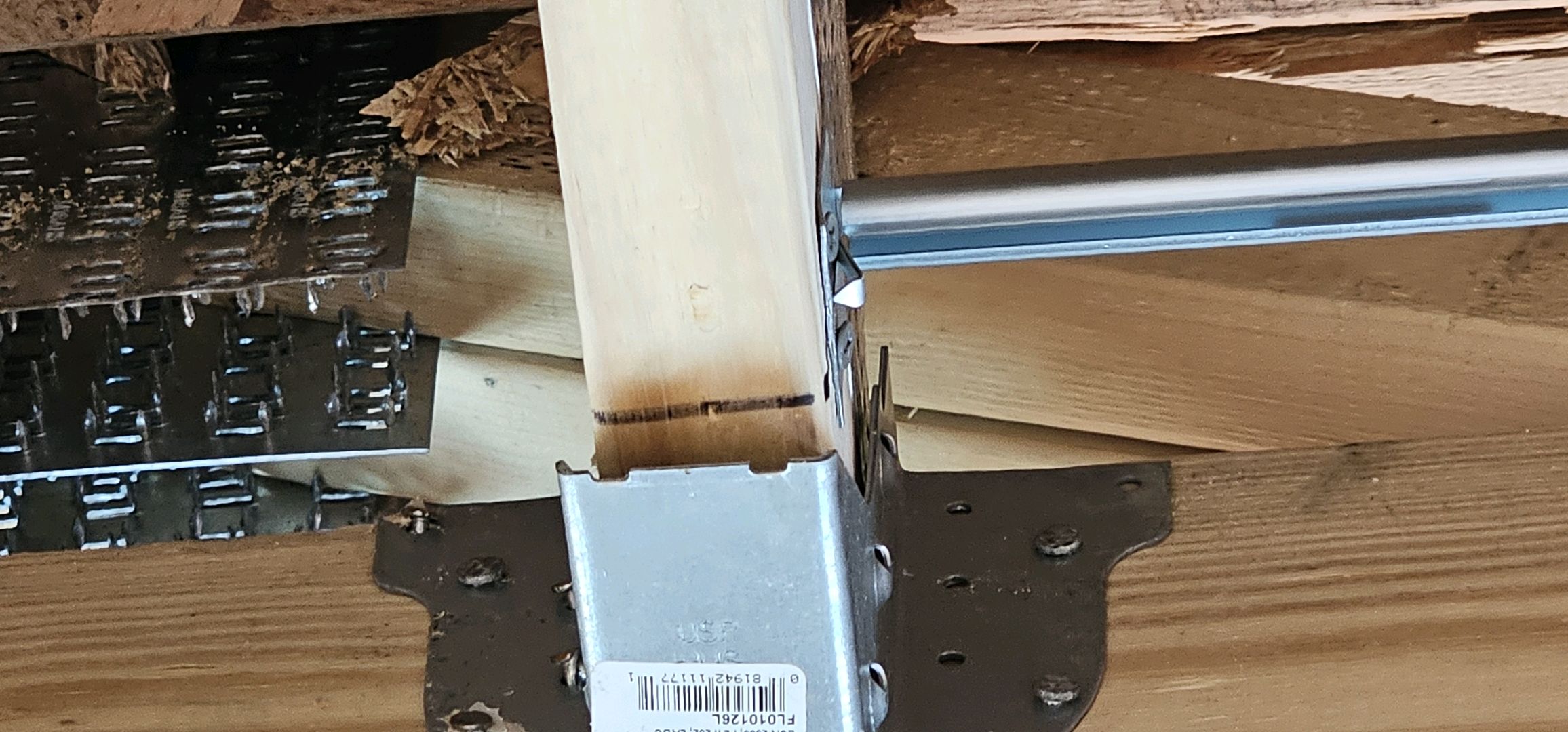
Truss seating in hangers, hanger-nail completeness, header gaps and sheathing attachment — the exact truss-hanger defects that draw our most serious “Immediate Action” flags, plus daylight visible through the roof and flashing at penetrations.
HVAC rough-in
Duct routing, connections and support through attic, basement and joist bays, plus refrigerant and condensate lines and equipment placement — crushed or disconnected runs are a classic defect that vanishes the day insulation goes in.
Electrical rough-in
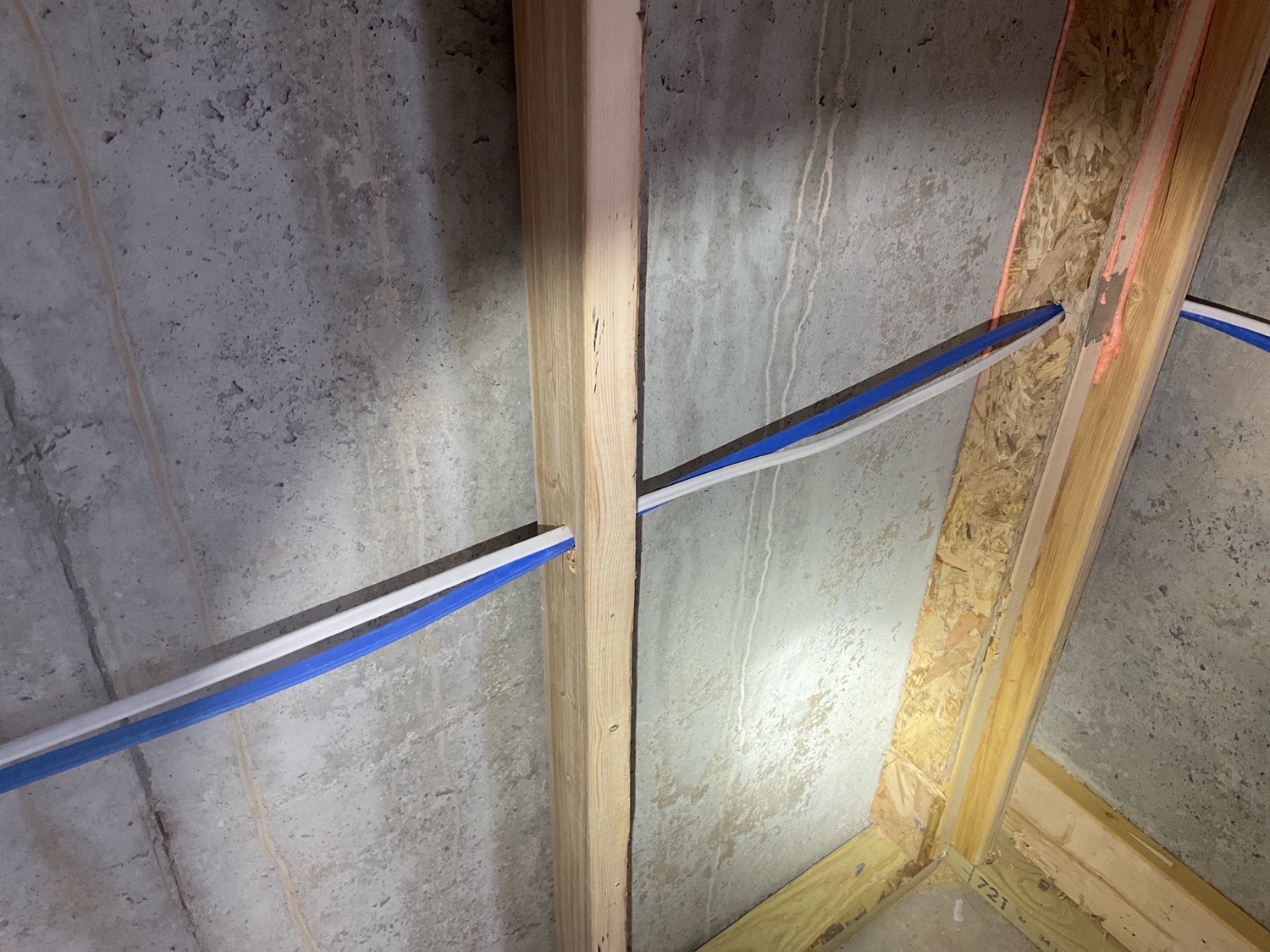
Wire routing, protection plates, box placement and securement, panel rough-in and grounding provisions — catching pinched or unprotected cables before they’re buried behind insulation.
Plumbing rough-in
Supply and drain-waste-vent runs, pipe support and protection, penetration sealing and visible test conditions — a pinhole or missing nail plate here becomes a wall-demolition leak later.
Windows, doors & weather barrier
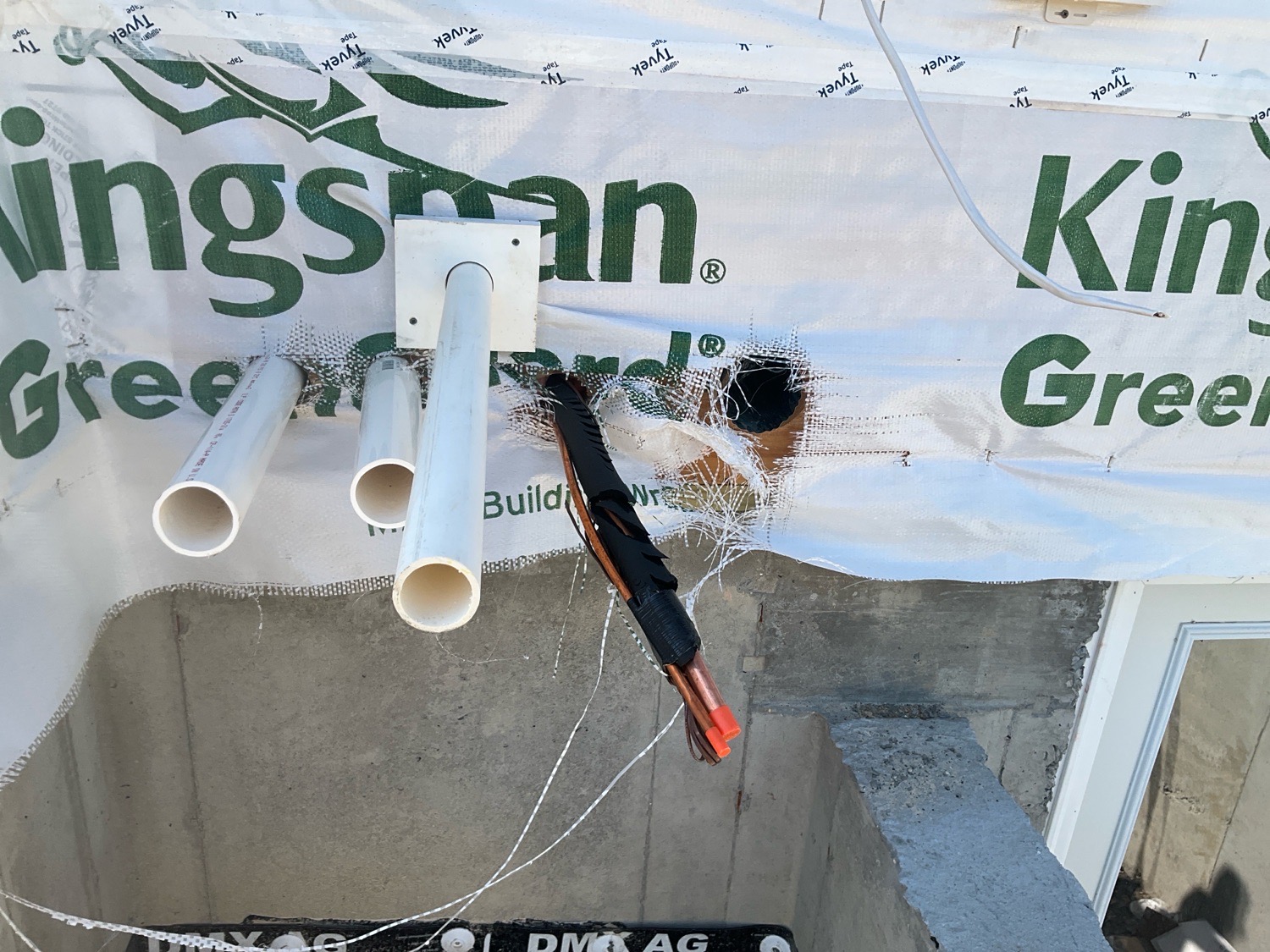
House wrap integration, window and door flashing, and exterior penetration sealing — exterior weather barriers are the #1 single-family deficiency category in the national data.
From a recent report
What we caught on one Huntingdon Valley build
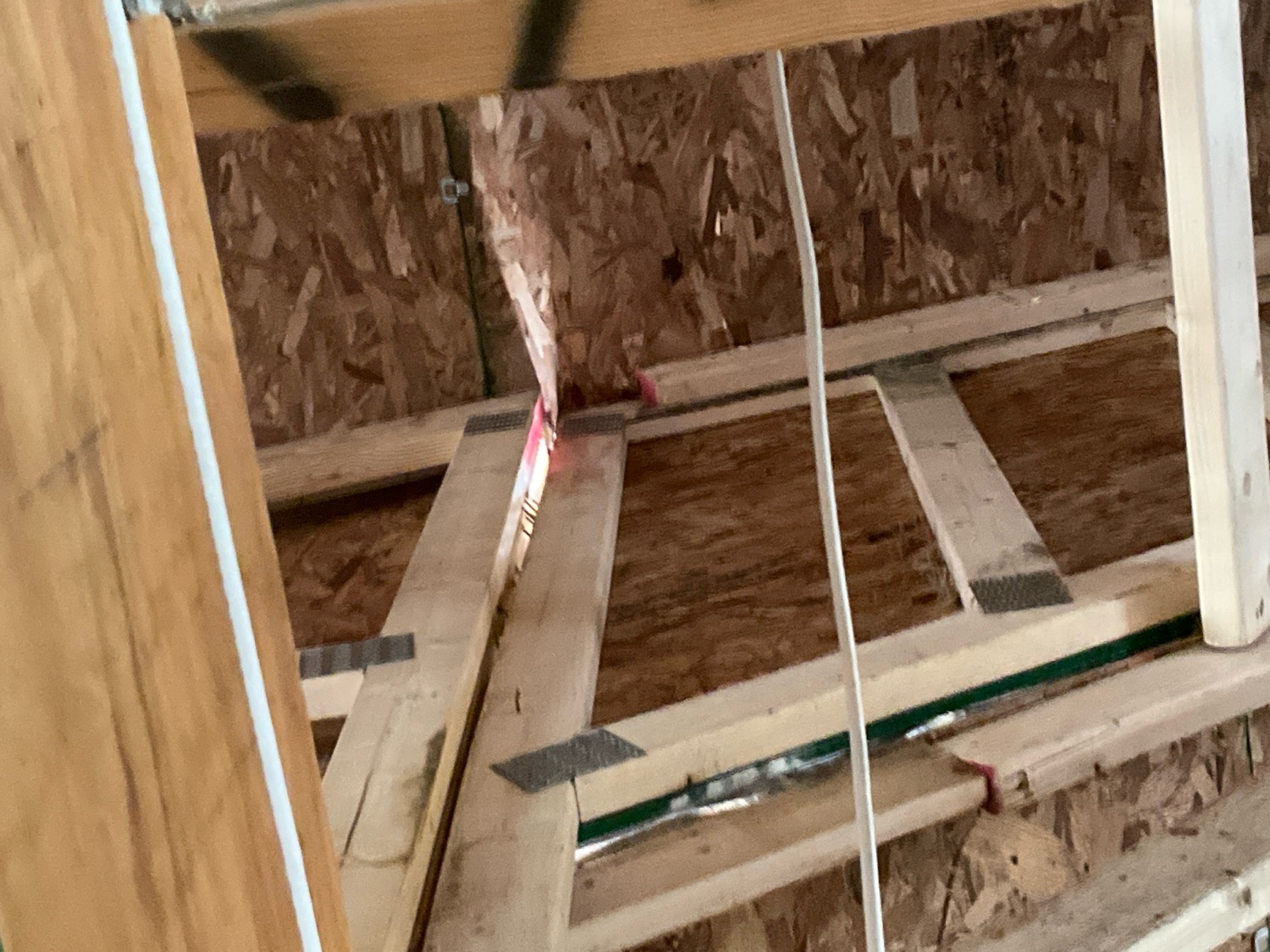
These are real photos from a single pre-drywall phase inspection on a brand-new townhome — every item below flagged for the builder to fix before the drywall crew arrived. A representative report, not a worst case.
The moment of maximum visibility
Where your inspector looks at the pre-drywall stage
1Framing. Studs, joists, headers and bearing points — checked for notching, boring and modification defects.
2Roof structure. Trusses, bracing, sheathing and flashing details at every penetration.
3HVAC rough-in. Duct routing, connections, support and equipment placement between the studs and joists.
4Electrical rough-in. Wire runs, boxes, protection plates and panel provisions — before insulation buries them.
5Plumbing rough-in. Supply and drain-waste-vent runs, support, protection and penetration sealing.
+Windows & weather barrier. House wrap, flashing and sealing — the #1 deficiency category nationally.
iii. Why ValueGuard for your pre-drywall inspection
Independent eyes on a builder’s job site
Everyone else walking your unfinished home answers to a schedule or a code book. Your ValueGuard inspector answers to you — with the experience to know what good work looks like at the framing stage, and the documentation to prove what was there before the walls closed.
We don’t work for builders, and we don’t perform repairs — inspection is all we do. Our only incentive is telling you the truth about your home’s construction quality.
Since 1997 we’ve seen how Greater Philadelphia homes are built — and how they fail decades later. That hindsight is exactly what a pre-drywall inspection puts to work in your favor.
Every ValueGuard inspector is certified by the American Society of Home Inspectors and works to its Standards of Practice and Code of Ethics — the industry’s most rigorous benchmark.
Your written, photo-rich report documents your home’s framing and rough-ins forever — invaluable for future renovations, warranty claims and peace of mind. Backed by our 100% satisfaction guarantee.
An honest comparison
“Doesn’t the township already inspect it?”
Yes — and municipal inspections matter. But they answer a different question. A code inspection asks: does this meet the legal minimum? A ValueGuard pre-drywall inspection asks: is this built well, and would you accept it if you could see it?
| ValueGuard Pre-Drywall Inspection | Municipal Code Inspection | |
| Works for | You — the buyer, exclusively | The municipality — enforcing minimum code |
| Standard | Quality of workmanship, future performance & durability | Legal minimum code compliance |
| Pace | A dedicated, unhurried evaluation of your home alone | Brief visits across a full day of job sites |
| Deliverable | Photo-rich written report you keep for the life of the home | Pass/fail approval to proceed |
| You receive | Findings explained to you, documented for your builder to address | Typically nothing — results go to the builder |
iv. How it works
Three steps, timed to your builder’s schedule
Timing is everything with a pre-drywall inspection: the window opens when framing and rough-ins are complete, and closes the day insulation goes in. Inspections start at $329 — tell us your builder’s schedule and we’ll hit the mark.
Time it right
Ask your builder for the “pre-drywall walk” or insulation date, then call us. We coordinate site access with your builder directly.
We inspect & document
Your inspector methodically evaluates framing, rough-ins and weather barriers, photographing conditions throughout the home.
Report to your builder
You receive a photo-rich written report by the next business day — a clear punch list your builder can address before drywall goes up.
v. Areas served
Pre-drywall inspections across Greater Philadelphia
From new townhome communities to custom builds and city infill construction — wherever your home is going up, we’ll be there before the drywall is.
Infill rowhome construction, condo conversions and new developments across the city’s fastest-changing neighborhoods.
Active new-home communities from Warrington to Yardley — production builders working at production speed.
One of the region’s busiest new-construction markets — townhomes and single-family builds from West Chester to Exton.
New builds and teardown-rebuilds throughout the close-in suburbs, where lots are tight and schedules are tighter.
Custom builds and new communities alike — we know what quality framing looks like in this county’s housing stock.
Building just outside these counties? Call us — we can often accommodate nearby projects.
vi. What clients say
Trusted on the biggest purchase of their lives
“Excellent and thorough service! The inspectors were knowledgeable and patient answering all of my questions. Highly personable and professional! Thanks guys.”
Cindy H. · Google Review
“I am totally satisfied with ValueGuard home inspection’s clear and satisfactory inspection report. Special thanks to Mr. James.”
Abul Kalim · Google Review
vii. Frequently asked questions
Pre-drywall questions, answered straight
What is a pre-drywall inspection?
It’s an independent inspection of your new-construction home at the stage when framing, electrical, plumbing and HVAC rough-ins are complete but insulation and drywall have not yet been installed. Everything that will spend the next fifty years hidden inside your walls is visible for evaluation — for the first and last time. Your inspector documents the structure and rough-in systems with photographs and delivers a written report your builder can act on before the walls close.
When exactly should I schedule it?
The window opens when framing, roofing, windows and the mechanical rough-ins (electrical, plumbing, HVAC) are complete — and it closes the day insulation is installed. Most builders hold a “pre-drywall walk” with buyers at this stage; ask your construction manager for that date and schedule us for the same window. Call us as soon as you have the date, and we’ll coordinate access with your builder directly.
Doesn’t the township inspector already check all this?
Municipal inspections verify minimum code compliance — and they matter. But the code is a floor, not a standard of quality, and a municipal inspector visiting many job sites in a day is not evaluating workmanship, durability or the details that determine how your home performs in year fifteen. They also work for the township, not for you: you typically never see their findings. A ValueGuard pre-drywall inspection is the only evaluation at this stage performed exclusively on your behalf.
What kinds of problems do you actually find?
Real examples from our recent Philadelphia-area phase inspections: roof trusses not seated correctly in their hangers, gaps at truss-to-header hangers beyond the 1/8-inch allowance, joist-hanger holes missing their required nails, daylight visible through the roof at the attic, damaged house wrap, I-joist damage in the basement, absent nail protection plates, and loose electrical boxes. Each finding in your report is graded — Immediate Action, Safety Concern or Repair Item — so you and your builder know exactly what’s urgent. Individually most are quick fixes at this stage; concealed behind drywall, the same items become leaks, cold rooms, tripped breakers and structural repairs.
How much does a pre-drywall inspection cost?
Pre-drywall inspections start at $299, with final pricing based on the size and complexity of the home — call (215) 860-3150 or see our pricing page to confirm your rate. Set against the cost of opening finished walls to fix a concealed defect — or living with one — it’s one of the highest-leverage inspections in the building process.
Will my builder allow an independent inspection?
In most cases, yes. Reputable builders in the Philadelphia region routinely accommodate independent pre-drywall inspections — many schedule them alongside their own buyer walkthrough. Check your agreement of sale for inspection provisions, notify your construction manager in advance, and we’ll handle the coordination. A builder’s reaction to an independent inspection request is itself useful information.
Do I get a written report?
Yes. You receive a comprehensive, photo-rich written report by the next business day, with every finding graded — Immediate Action, Safety Concern or Repair Item — so your builder’s punch list is prioritized, not just a pile of photos. It’s a clear action list for your builder now, and a permanent record of what’s inside your walls for as long as you own the home. Owners tell us that record pays for itself again at renovation time, when contractors can see exactly where framing, wiring and plumbing run.
Should I also inspect before settlement?
Yes — the pre-drywall inspection and a full home inspection of the finished home work as a pair. The first catches what will be concealed; the second evaluates everything installed and finished afterward — fixtures, appliances, grading, roofing and final systems operation — before you close and your leverage with the builder drops. Ask us about scheduling both when you call.
Schedule Now →
Have your builder’s insulation date? Book your pre-drywall window today.
See Pricing →
Pre-drywall inspections start at $299 — plus pre-settlement and add-on services for new construction.
All Inspection Services →
Pair your pre-drywall inspection with a full pre-settlement inspection.
The drywall crew is scheduled. Are you?
Once the walls close, this inspection can never be performed again. Call us the moment your builder gives you an insulation date.
100 E Penn Square, Suite 400, Philadelphia, PA 19107 · (215) 860-3150
Mon–Fri 8:30am–5:00pm · Sat 9:00am–4:00pm · Serving Philadelphia, Bucks, Chester, Delaware, Montgomery, Berks & Lancaster Counties, PA and New Castle County, DE