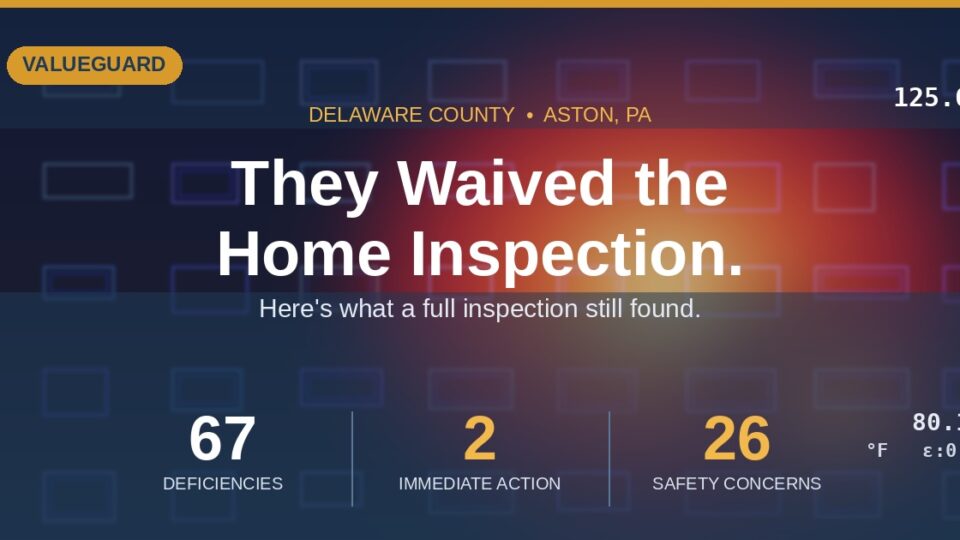
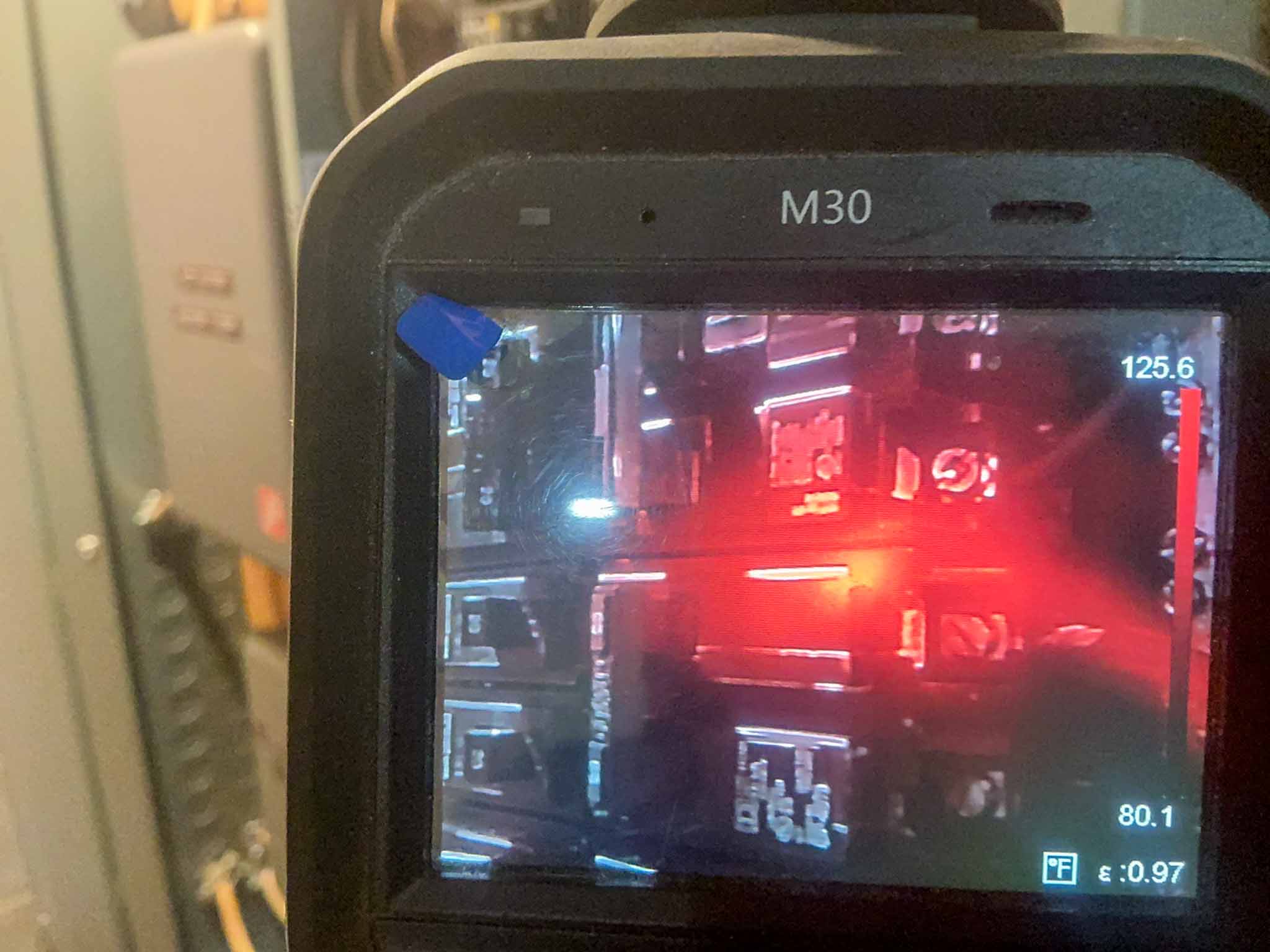
A buyer waived the home inspection to win a 1968 house in Aston, Delaware County, then hired ValueGuard to inspect it after closing. The inspection documented 67 deficiencies—2 needing immediate action (an overheating breaker measured at 125.6°F and evidence of wood-destroying insects) and 26 safety concerns. None were visible on a walkthrough, and every one could have been used to negotiate before closing.
- Waiving a home inspection doesn’t remove risk—it delays discovery until after you own the home, when every repair is yours to pay for.
- This post-closing inspection found 67 issues, led by an overheating electrical breaker (125.6°F on thermal imaging) and wood-destroying insect activity.
- Other findings included suspected attic mold, basement moisture, presumed asbestos floor tiles, insufficient garage fire separation, and a cracked roof rafter.
- Even after closing, a home inspection gives you a prioritized roadmap of what to fix for safety and what to budget for.
- ValueGuard inspects homes before or after closing across Delaware, Montgomery, Bucks, Chester and Philadelphia counties and the Main Line.
In a hot market, waiving the home inspection can feel like the move that wins the house. No contingencies, no delays, a cleaner offer. Buyers do it every week across the Philadelphia suburbs. But “waiving the inspection” doesn’t make the problems disappear—it just means you don’t find out about them until the keys are already in your hand.
We were recently hired to inspect a 1968 single-family home in Aston, Delaware County after the sale had already closed. The buyers had waived their inspection to win the deal, moved forward, and then—wisely—asked ValueGuard to tell them exactly what they’d bought. Our inspector, ASHI Certified inspector Todd Denney, documented 67 deficiencies across the property, including two items flagged for immediate action and 26 safety concerns.
None of it was visible on a walkthrough. All of it would have surfaced in a standard inspection before closing—when the buyers still had leverage to negotiate repairs, a credit, or a lower price. Here’s a look at what a waived inspection can hide.
|
67
total deficiencies
|
2
immediate action
|
26
safety concerns
|
1An electrical system full of fire hazards
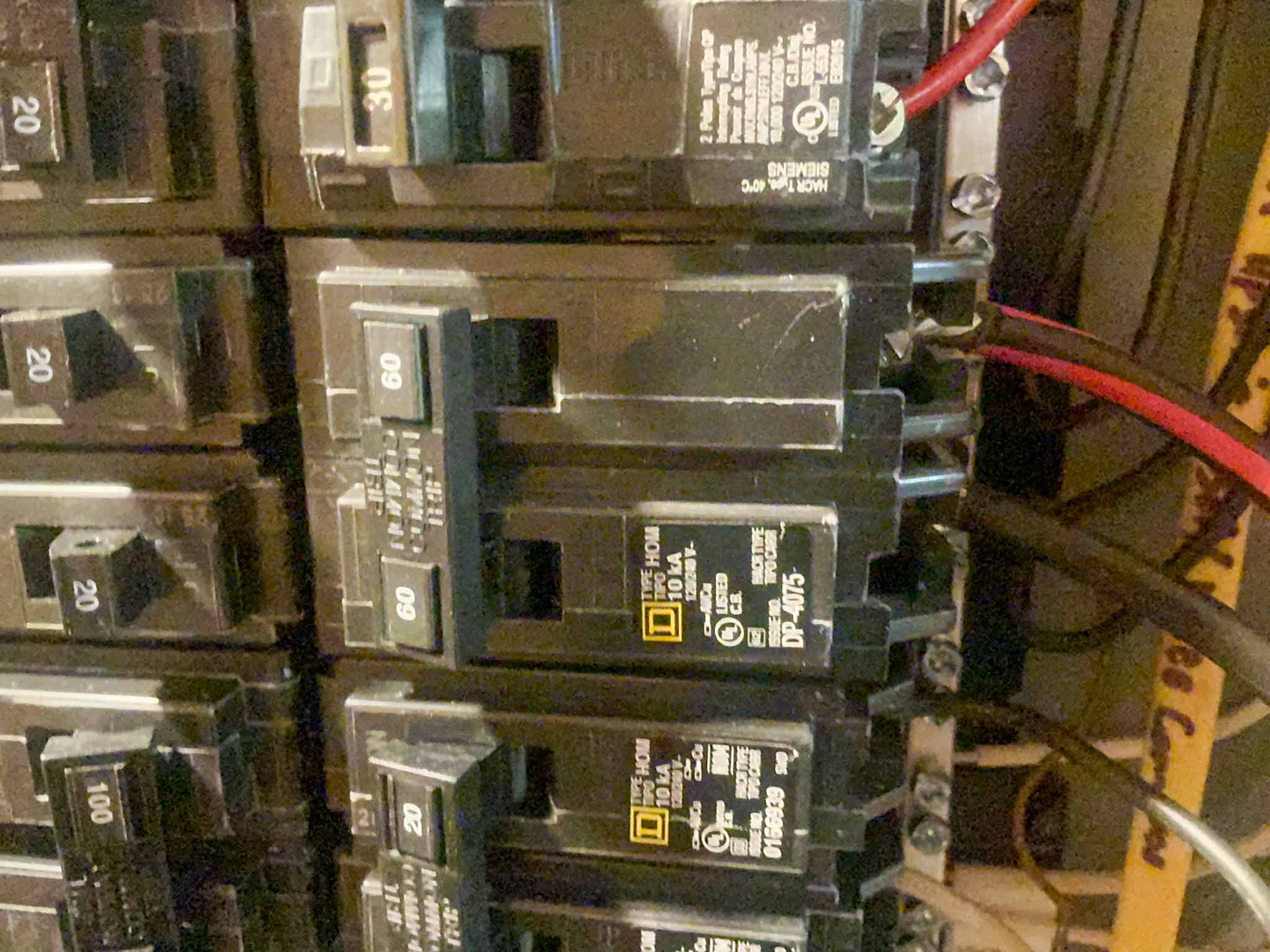
The single biggest concern in this house was the electrical system. Todd documented problems at the main service panel and at three separate sub-panels—so many that the report advised having a licensed electrician evaluate the entire system. Among the findings:
Individually, some of these are inexpensive fixes. Together, they describe a system that has been modified over decades without proper permits or oversight—the kind of pattern that only a hands-on inspection at the panel can reveal. A buyer walking through the home would never see the inside of a breaker box.
2Evidence of wood-destroying insects
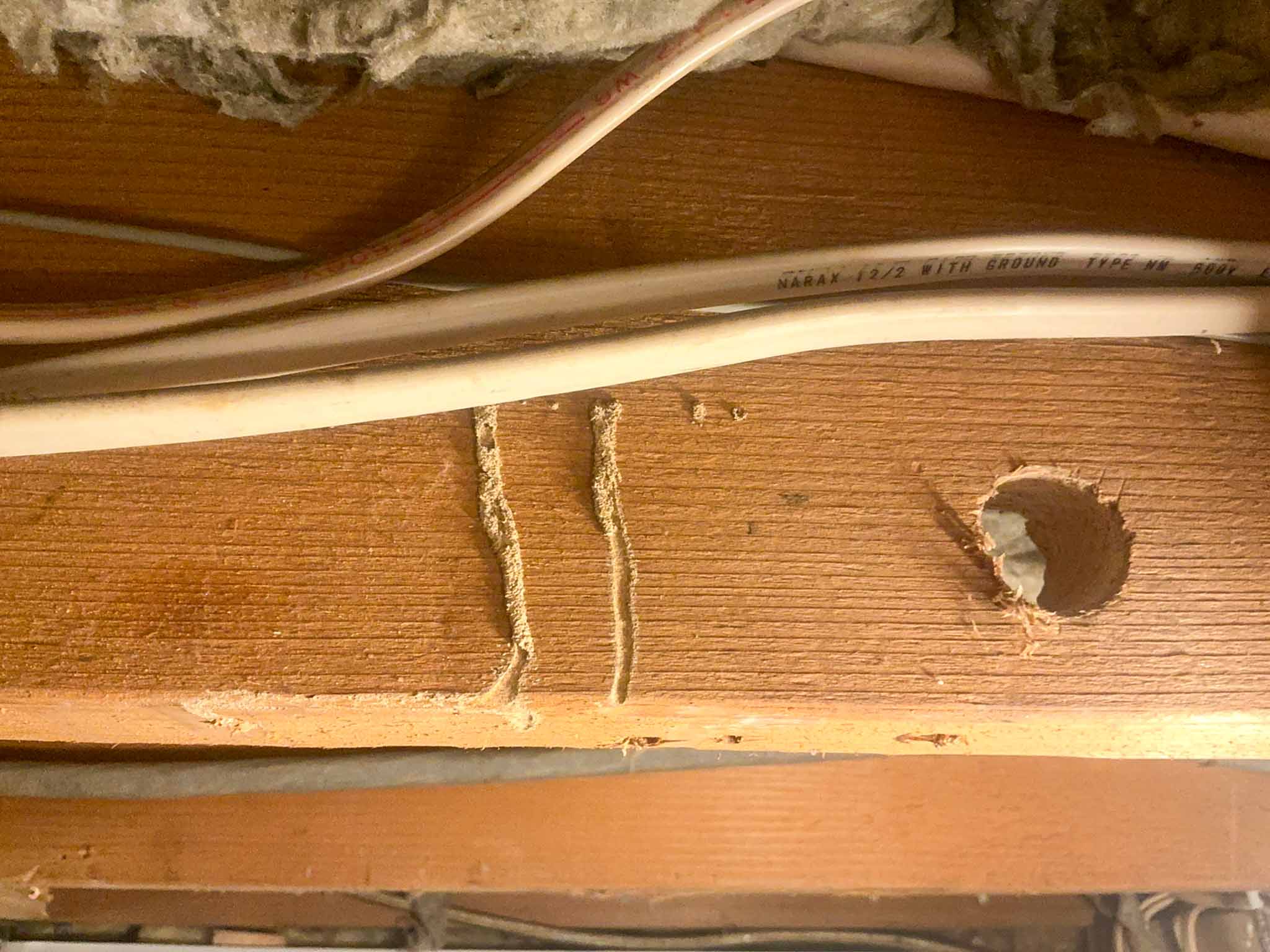
In the basement, the inspection noted evidence of suspected activity and/or damage from wood-destroying insects—the second item flagged for immediate action. Termite and pest damage is one of the most expensive problems a home can hide, and it is almost never obvious to an untrained eye. A dedicated wood-destroying insect inspection was recommended to determine the extent.
3Moisture, suspected mold, and presumed asbestos
The report documented a suspected mold / fungal growth in the attic, visible moisture staining in the basement, and an undersized sump pit that limits how well the home can manage water. It also noted a sulfur / rotten-egg odor in the basement water supply that warranted further evaluation.
Downstairs, the vinyl floor tiles were identified as Presumed Asbestos-Containing Material—a routine finding in homes of this era, but one that changes how any future renovation has to be handled. For a buyer planning to finish a basement, that’s the difference between a weekend project and a licensed abatement job.
4Fire-safety gaps between the garage and living space
Two related findings stood out here. The fire separation between the garage and the living space appeared insufficient, and the garage-to-house passage door was not a proper fire-rated door. These barriers exist to slow a garage fire from reaching the bedrooms. On top of that, the inspection found carbon-monoxide detectors missing near several bedrooms and at least one smoke detector past its service life. None of these are visible as “problems” during a showing—they simply look like a normal door and a normal wall.
5Structural and fall-hazard items
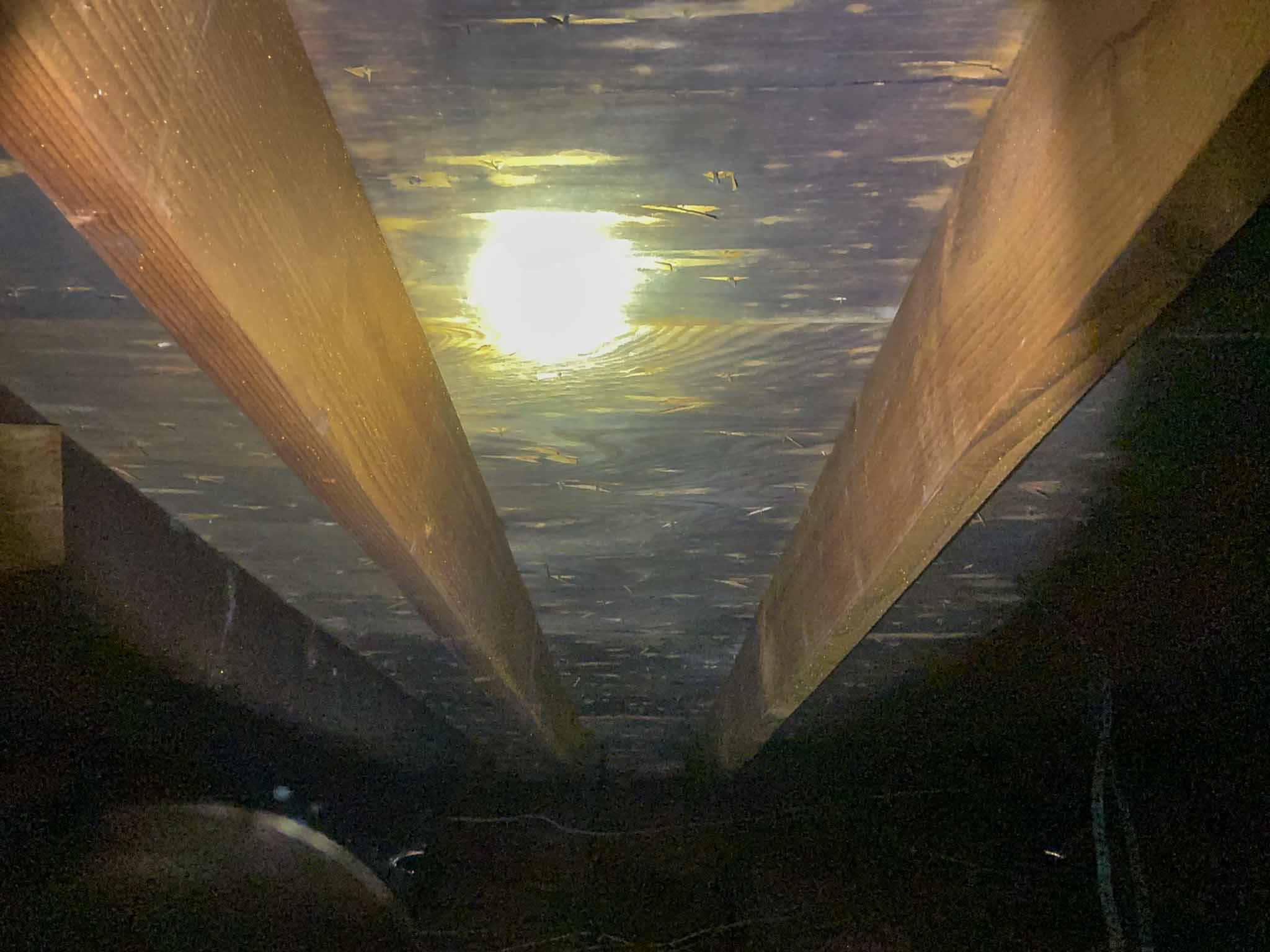
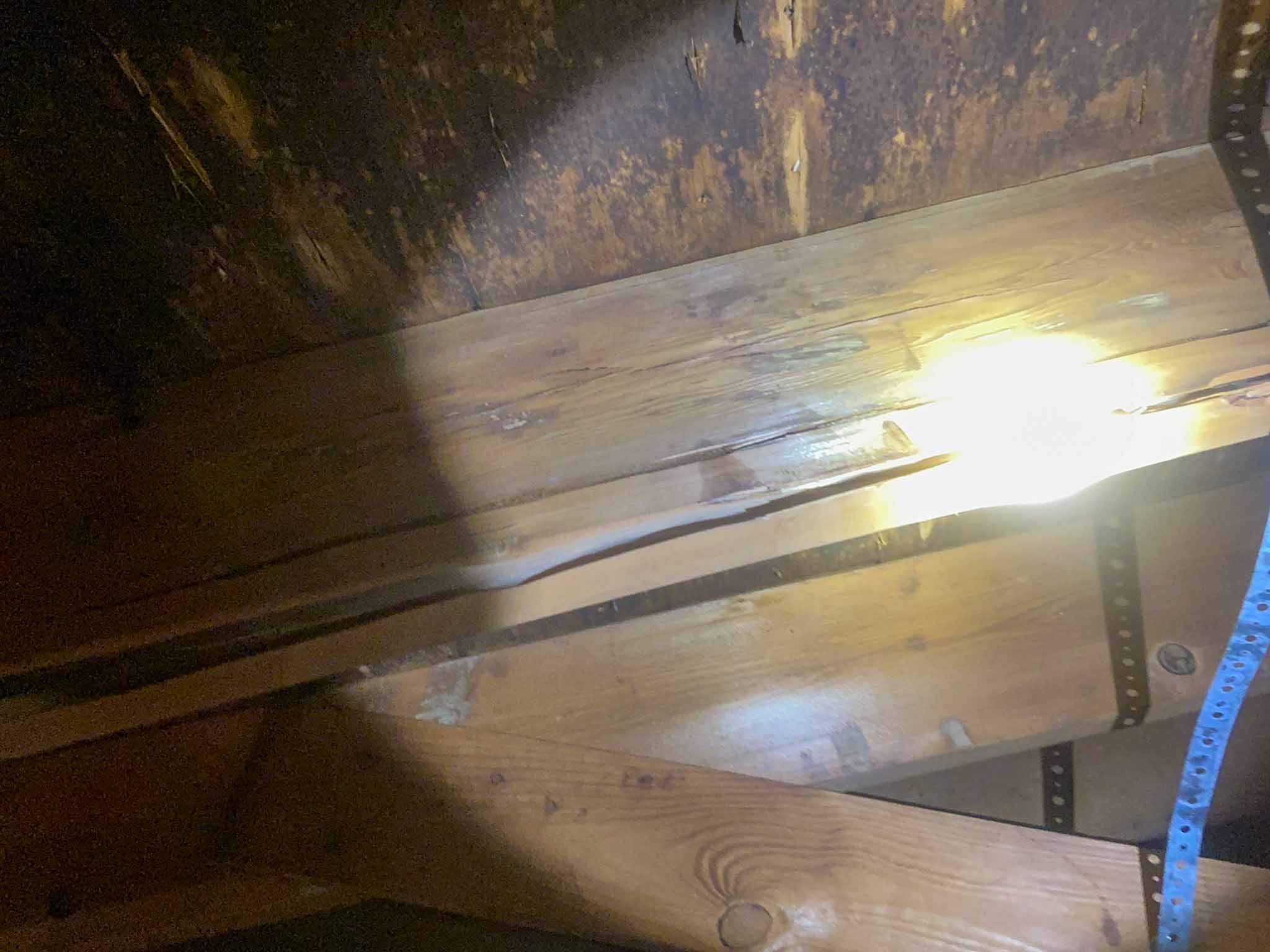
The structural and exterior findings rounded out the picture: a cracked roof rafter in the attic, a leaning retaining wall at the front, movement in a masonry wall at the rear, a rear deck guardrail installed too low to be safe, and a missing exterior handrail at a set of stairs. Inside, the kitchen range was missing its anti-tip bracket—a genuine tip-over hazard that costs very little to fix but is easy to overlook.
What a waived inspection really costs
Waiving the inspection doesn’t remove the risk from a purchase—it just moves the discovery date to after you own the home, when every repair is yours to pay for and every problem is yours to solve. In this Aston home, an inspection before closing would have handed the buyers a documented list of 67 items, two of them urgent, to bring to the negotiating table. Instead, they learned about them as new owners.
The good news: they still made the right second call. Even after closing, a full inspection gives you a clear, prioritized roadmap—what to fix now for safety, what to budget for, and what can wait. If you’ve bought a home without an inspection, or you’re about to, it’s never too late to understand exactly what you own.
Frequently asked questions
Can I still get a home inspection after I’ve already closed?
Why do buyers waive home inspections?
What kinds of problems does a home inspection catch that a walkthrough won’t?
What does “immediate action” mean on an inspection report?
Which areas does ValueGuard serve?

ValueGuard Inspections is a Greater Philadelphia home inspection firm serving Delaware, Montgomery, Bucks, Chester and Philadelphia counties and the Main Line. Our ASHI Certified inspectors deliver thorough, plain-English reports that help buyers and homeowners understand exactly what they own. Call (215) 860-3150 or visit valueguardinspections.com.