The Short Version
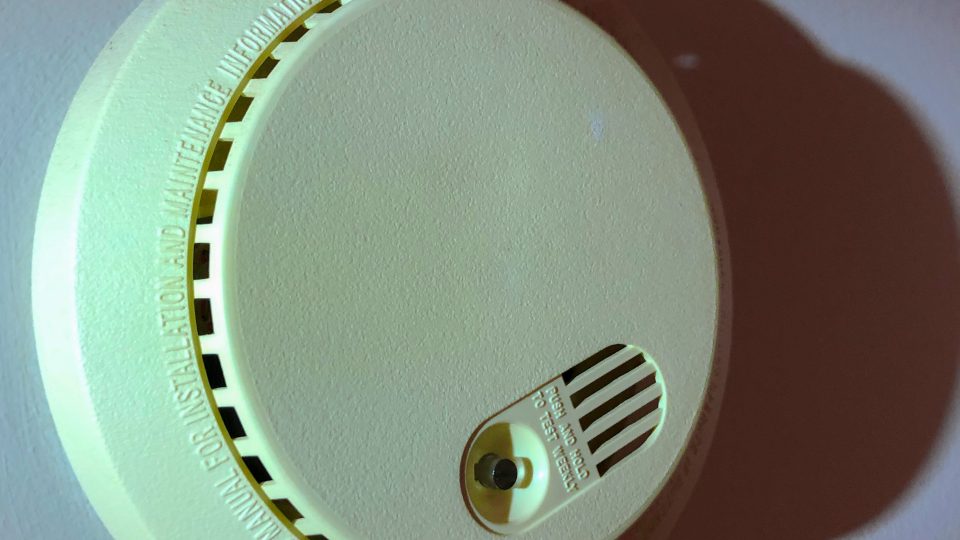
A yellow smoke detector is not dirty. The plastic housing contains brominated flame retardants, and years of exposure to air, heat and light oxidize them, turning white plastic cream and then amber. The yellowing itself is harmless. What it tells you matters: this alarm has been on the ceiling a long time. Check the manufacture date printed on the back. Any alarm more than ten years old should be replaced, yellow or not.
You are tidying up, you glance at the ceiling, and there it is. A smoke detector that used to be white and is now a distinct shade of yellow.
Most people assume it is dust or cooking grease and reach for a cloth. Scrubbing will not help. The colour is coming from inside the plastic, not sitting on top of it.
We find these in homes across the region constantly. It is one of the most common safety items we flag, and one of the easiest to fix. Here is what the colour actually means and what to do about it.

1What the Yellow Actually Is
Smoke alarm housings are molded from ABS plastic that contains brominated flame retardants. That is sensible engineering. A device whose entire job is fire safety should not readily burn.
Over years of exposure to air, warmth and ambient light, those additives and the plastic around them oxidize. White drifts to cream, then to amber. It is the same chemistry that turns old game consoles and phone chargers yellow, and it plays out over years rather than weeks.
One correction worth making, because it circulates widely online: manufacturers do not add bromine as a deliberate expiration indicator. The flame retardant is there for fire resistance. The colour change is a side effect nobody designed.
That distinction matters more than it sounds. Because the yellowing is incidental rather than engineered, it is a rough signal of age, not a calibrated one. Useful, but not authoritative.
2Why the Date on the Back Beats the Colour
Yellow is a good prompt. It is a poor measurement, and here is why.
Where the alarm lives changes how fast it discolours. An alarm near a kitchen collects a thin film of cooking oils that bakes into a yellow-brown stain. Indoor tobacco smoke does the same thing faster. Direct sunlight from a skylight or a west-facing window accelerates the oxidation considerably.
So two alarms installed the same day can look years apart. A pristine white alarm in a dark hallway may still be twelve years old and well past replacement.
Take it down and look at the back. Every alarm carries a manufacture date, either written out or as a code such as 15-123, where the first digits are the year. That date is the authority. If it is missing or unreadable, replace the unit.
The Test Button Does Not Test What You Think
Pressing the button confirms the horn works and the unit has power. It does not test whether the sensor can still detect smoke. An old alarm can chirp confidently and still be far less sensitive than it was on day one. Sounding is not the same as working.
3The Ten-Year Rule, and the Science Behind It
Smoke alarms are not built to last forever. The sensing element degrades whether or not the electronics still power up.
Photoelectric sensors work by shining a light beam into a chamber and watching for smoke particles to scatter it. Dust accumulation and component drift gradually change what that chamber reports.
Ionization sensors use a tiny radioactive source to maintain a current that smoke particles interrupt. Contamination and decay both shift the baseline over time.
Neither failure announces itself. The unit keeps beeping when tested. It simply becomes less likely to catch a fire early, which is the only thing it exists to do.
The NFPA guidance is unambiguous: replace every smoke alarm ten years from its manufacture date. Not from installation. From manufacture.
4What the Numbers Say
These figures come from NFPA research covering home fires from 2018 through 2022. They are worth sitting with.
NFPA Home Fire Research
60 percent. When working smoke alarms are present, the risk of dying in a home fire is cut by about sixty percent.
Three out of five. Roughly three of every five home fire deaths happen in homes with no smoke alarms, or with alarms that did not operate.
94 percent versus 85 percent. In fires large enough to trigger them, hardwired alarms operated 94 percent of the time. Battery-powered alarms operated 85 percent of the time.
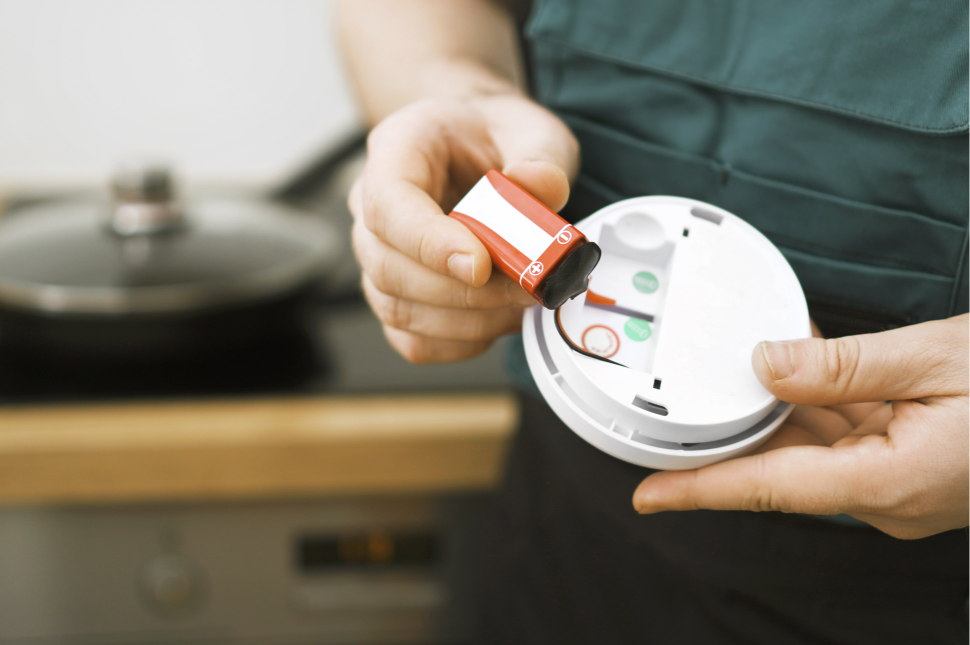
Batteries are the weak link. Among alarms present but not operating, battery problems are the most common cause — dead, missing or disconnected.
That last figure is the argument for sealed ten-year units. A battery nobody can remove is a battery nobody removes to silence a 2 a.m. chirp and then forgets to replace.
5Where Alarms Belong
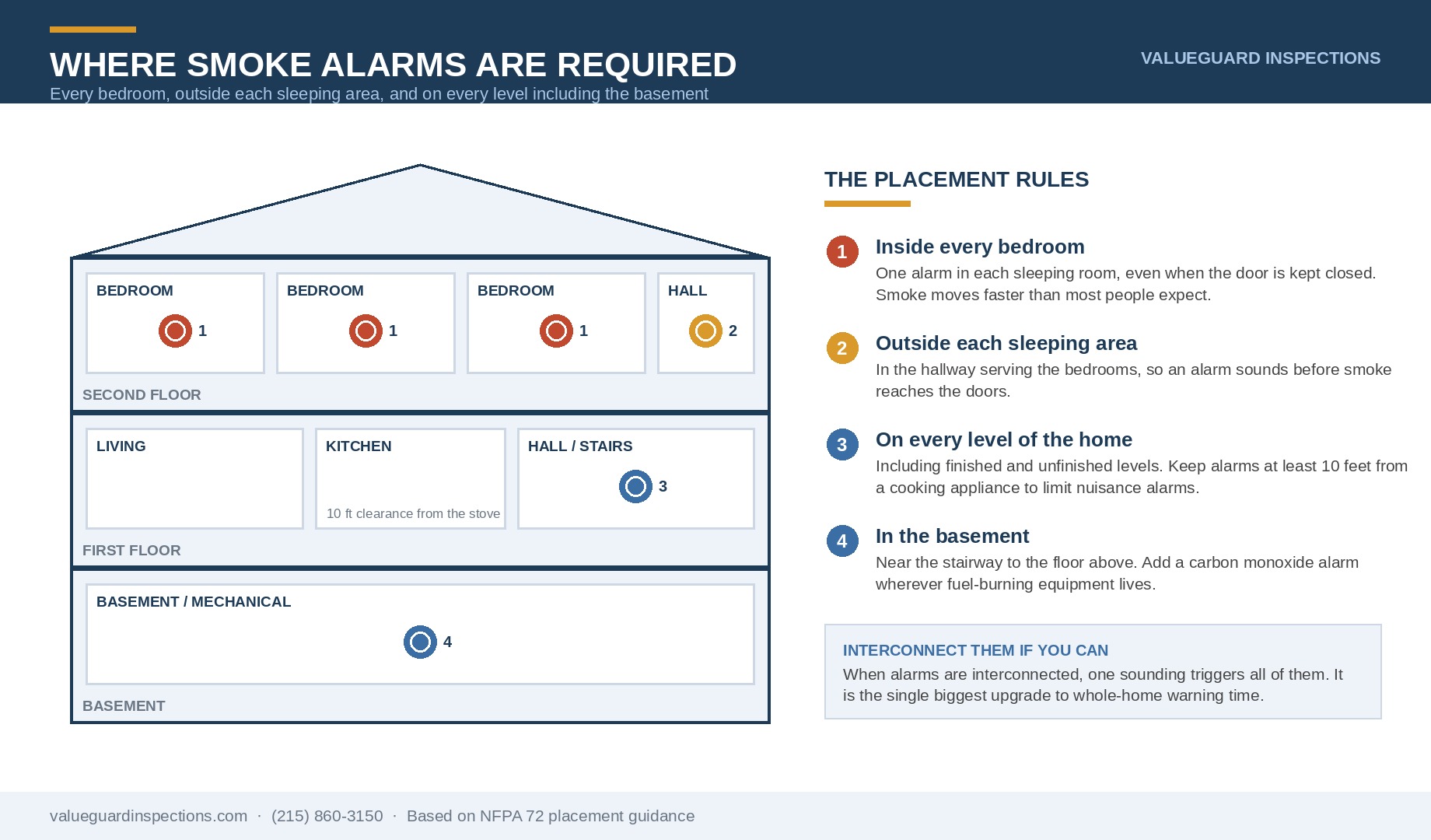
Two placement details are worth calling out because they are the ones people get wrong.
Keep alarms clear of the stove. Roughly ten feet of separation prevents most nuisance alarms. Where space makes that impossible, NFPA suggests a photoelectric unit or one with a hush feature that silences temporarily without disabling the alarm.
Never disable an alarm to stop nuisance alarms. This is how homes end up unprotected. A silenced alarm becomes a forgotten alarm, and a forgotten alarm is how the NFPA figures above happen.
6Philadelphia Has Its Own Rules
This is the part most articles about yellow detectors leave out entirely, and in this city it changes what you are allowed to install.
Philadelphia treats homes differently based on when they were built, using January 1988 as the dividing line.
Philadelphia One- and Two-Family Homes
Built before January 1988. An alarm on every level, including the basement and a finished attic. Battery-powered alarms must use sealed, non-removable ten-year lithium batteries. Removable 9-volt units are not permitted, under a city ordinance that took effect in 2013.
Built after January 1988. Alarms on every level, in each bedroom and near all sleeping areas. They must be hardwired to the home’s power, interconnected, and backed up by battery.
Two things follow from this. If you own an older Philadelphia rowhome and you are replacing a yellowed alarm, buying a 9-volt unit at the hardware store is the wrong purchase. Buy sealed ten-year.
And the Philadelphia Fire Department distributes free smoke alarms to residents who request them through 311. If cost is the obstacle, it does not have to be.
Outside the city, Montgomery, Delaware, Chester and Bucks counties follow the Pennsylvania Uniform Construction Code, and individual municipalities can add requirements. Codes change, so confirm current requirements with your township or with Philadelphia L&I before a sale or a rental listing.
7Choosing the Replacement
We do not sell alarms and we do not recommend brands. What we can tell you is how the types differ, because that is the choice that actually matters.
Photoelectric
Responds faster to smoldering fires, which is the fire that starts in upholstery or bedding and fills a house with smoke before it ever shows flame. Also less prone to nuisance alarms near cooking.
Ionization
Responds faster to fast-flaming fires such as paper or grease. More likely to sound when you sear a steak.
Dual-sensor, or both types installed
Covers both fire behaviours. NFPA’s position is that both technologies should be present in the home, whether through dual-sensor units or a mix.
Combination smoke and carbon monoxide
Worth strong consideration in any home with fuel-burning equipment, a fireplace or an attached garage. Carbon monoxide is odorless and invisible, and a smoke alarm will not detect it.
Whatever you buy, confirm it is listed by a recognized testing laboratory. Current UL standards include improved resistance to nuisance alarms from cooking, which is a meaningful upgrade over a unit purchased a decade ago.

Thirty Minutes, This Weekend
1. Take down every alarm and read the manufacture date on the back. Write the dates somewhere you will find them again.
2. Replace anything ten years old or older, anything yellowed, and anything with no readable date.
3. Count your coverage against the placement diagram. Every bedroom, outside each sleeping area, every level.
4. Add carbon monoxide protection if you have fuel-burning equipment, a fireplace or an attached garage.
5. Test everything, then set a monthly reminder on your phone. Monthly testing is the habit that matters most.
6. Walk your escape plan with everyone in the house, including a meeting point outside.
If you are buying a home, alarms are part of every ValueGuard inspection, and missing or expired units are among the findings we flag most often. If you already own the place and simply want a second set of eyes, we are happy to talk it through.
Frequently Asked Questions
Why do smoke detectors turn yellow?
The plastic housing contains brominated flame retardants. Over years of exposure to air, heat and light, those additives and the ABS plastic around them oxidize, shifting the colour from white to cream to amber. It is the same chemistry that yellows old game consoles. The flame retardant is there for fire resistance, not as an intentional expiration indicator.
Does a yellow smoke detector still work?
It may still sound when tested, but that is not the same as working reliably. The yellowing itself is harmless. What it indicates is age, and older units have less reliable sensors. Check the manufacture date on the back and replace any alarm that is ten years old or more.
Can I clean a yellowed smoke detector?
No. The discolouration comes from within the plastic rather than sitting on the surface, so it is permanent. Scrubbing will not restore the colour and risks damaging the unit. Vacuuming the exterior to clear dust is still worth doing annually on newer alarms.
How often should smoke detectors be replaced?
Every ten years, measured from the manufacture date printed on the back rather than from the day it was installed. This applies to hardwired and battery units alike. Replace conventional batteries annually, or move to sealed ten-year units that remove the annual task entirely.
Where do I find the date on a smoke detector?
Twist the unit off its mounting bracket, usually counterclockwise, and look at the back label. The date may be written out or appear as a code such as 15-123, where the leading digits are the year. If there is no readable date, treat the alarm as expired and replace it.
Where are smoke alarms required in a home?
Inside every bedroom, outside each separate sleeping area, and on every level of the home including the basement. Keep alarms roughly ten feet from cooking appliances to limit nuisance alarms. Interconnecting them, so one sounding triggers all, is the single biggest improvement to whole-home warning time.
What are Philadelphia’s smoke alarm requirements?
Philadelphia divides one- and two-family homes at January 1988. Homes built before then need an alarm on every level, including basement and finished attic, and battery-powered units must have sealed, non-removable ten-year lithium batteries — removable 9-volt units are not permitted. Homes built after January 1988 require hardwired, interconnected alarms with battery backup on every level, in each bedroom and near sleeping areas. Confirm current requirements with Philadelphia L&I, since codes change.
Photoelectric or ionization — which should I buy?
Both, ideally. Photoelectric alarms respond faster to smoldering fires and are less prone to cooking nuisance alarms. Ionization alarms respond faster to fast-flaming fires. NFPA’s position is that both technologies should be present in a home, either through dual-sensor units or a mix of the two.
Does a home inspection check smoke detectors?
Yes. ValueGuard inspectors document smoke and carbon monoxide alarm presence and location in every inspection, and missing or absent alarms are among the findings we flag most frequently. Note that testing the sensor’s sensitivity is outside the scope of a general home inspection — we report presence, placement and, where visible, age.

About ValueGuard Inspections
ValueGuard Inspections has inspected homes across Greater Philadelphia since 1997, serving Philadelphia, Montgomery, Bucks, Chester and Delaware counties. Our ASHI-certified inspectors specialize in the region’s older housing stock, and every inspection produces a photo-rich, plain-English report you can act on.
Call (215) 860-3150, email Team@valueguardinspections.com, or find us on Google.
Enjoying our home inspection guides? Get ValueGuard articles in your Google results: