The Short Version
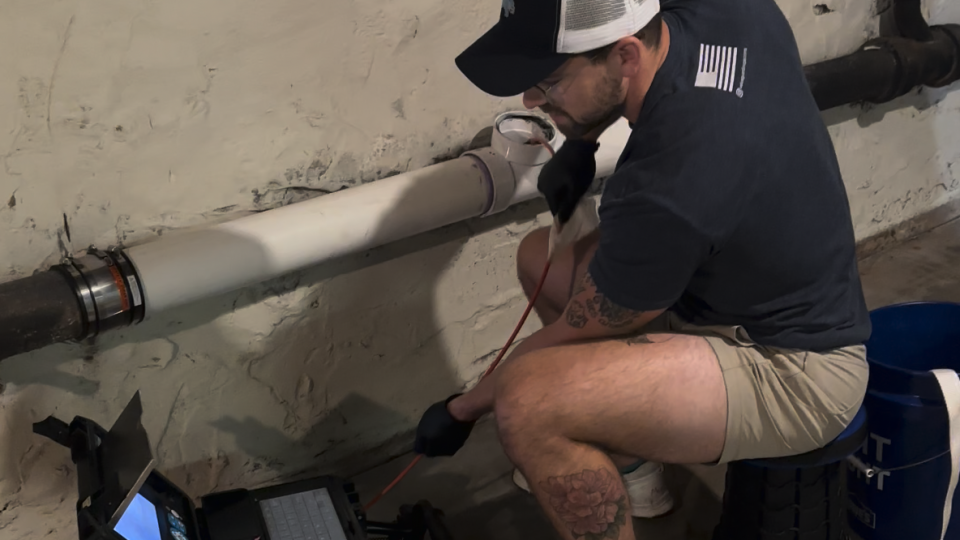
In Philadelphia, the homeowner is responsible for the sewer lateral running from the house all the way to the city main, which usually sits under the street. A sewer scope is a camera inspection of that pipe. It typically runs $300 to $800. Replacing a failed lateral commonly runs $3,000 to $12,000 or more once permits and street restoration are added. A sewer scope is not part of a general home inspection and must be ordered separately.
You found it. A brick rowhome in Manayunk with original hardwood and an updated kitchen. The home inspection went smoothly. You signed, and you moved in.
Three days later you run your first load of laundry, and dark water starts coming up through the basement floor drain. Within the hour the basement is a swamp.
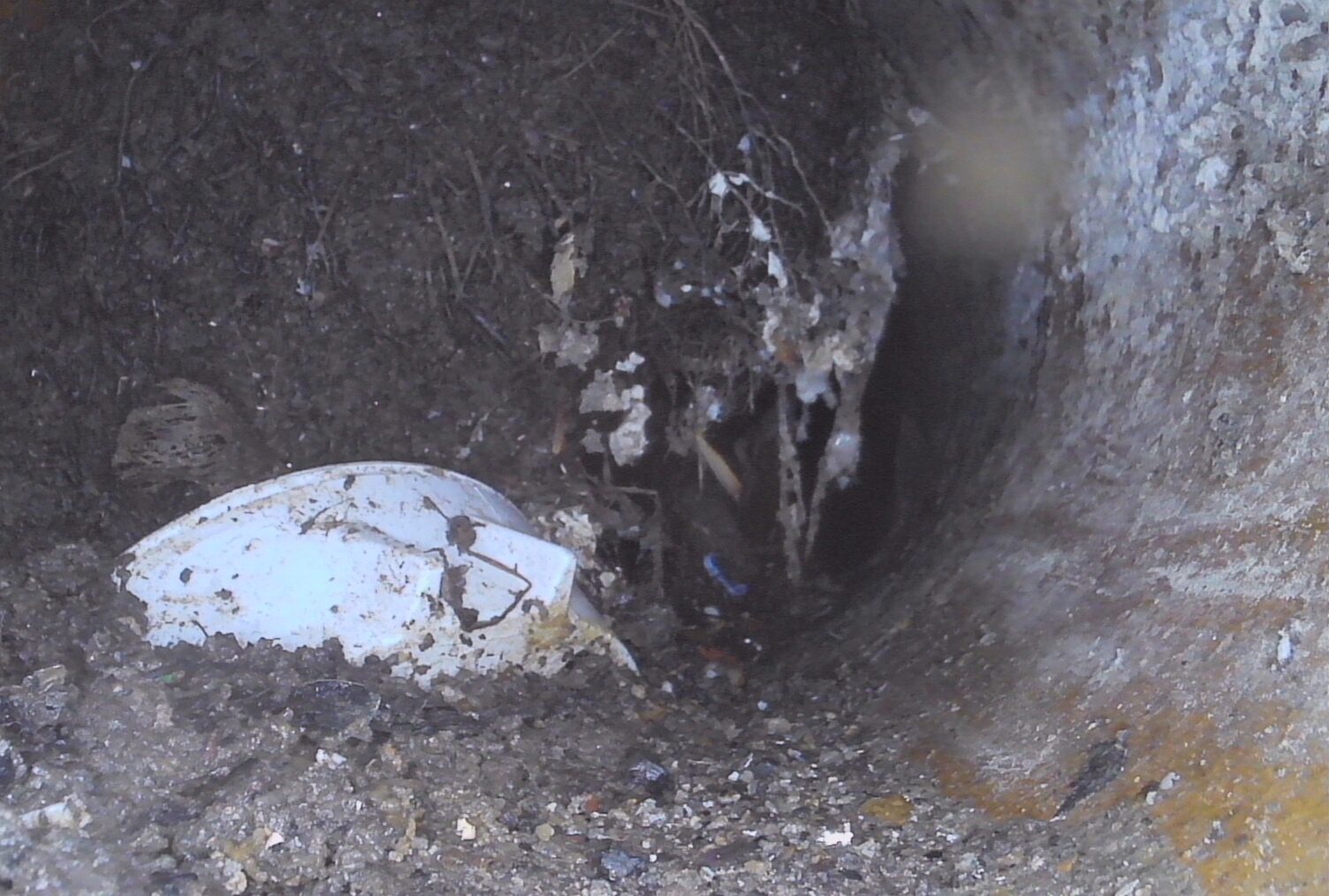
You call a plumber expecting a clog. He drops a camera down the line and shows you a screen full of collapsed orange clay. Your main sewer lateral is crushed under the sidewalk.
Because you already closed, that bill is entirely yours.
1Your Responsibility Does Not End at the Front Door
Most buyers assume that a pipe under the sidewalk or the street belongs to the city. In Philadelphia, that assumption is a five-figure mistake.
The Philadelphia Water Department publishes this plainly. Customers are responsible for maintaining and repairing the sanitary and storm sewer lateral lines connecting the house to the sewer main. PWD’s own customer responsibility materials list the house main drain, the curb trap, the lateral, the slant, and the vent as the homeowner’s to maintain.
The city owns the main. You own everything between your basement and that main. If the pipe fails anywhere along that run, you are paying for the permits, the excavation, the pipe, and the street restoration.
There is a second piece buyers rarely hear about. If PWD identifies a defective lateral, the property owner can be served a Notice of Defect requiring repair within a stated period. That is not a suggestion you can defer. PWD does offer a five-year, zero-interest loan to help cover repair costs, which is worth knowing about, but the obligation is still yours.
After nearly sixteen years inspecting homes across this region, I have watched this play out more times than I would like. It is why we tell buyers that in Greater Philadelphia, a sewer scope is not optional diligence.
2What Actually Fails in Philadelphia Sewer Laterals
Philadelphia is a city of history, and some of that history is buried in the front yard. Across South Philly, Germantown, Manayunk and out into Doylestown and the older suburbs, the same handful of failures come up again and again.
Vitrified clay
Many older homes are served by vitrified clay pipe. Clay resists corrosion beautifully, which is why so much of it is still down there. It is also brittle.
Decades of ground movement crack it or push the joints out of alignment, which is called an offset. Once there is a gap, nature takes over.
Orangeburg
Orangeburg is a different animal, and worth naming separately. It is bituminized fiber pipe, essentially wood pulp bound with tar, installed widely from the mid-1940s into the early 1970s.
It does not crack so much as deform. Under soil pressure it goes oval, then flattens, then collapses. Where we find it on camera, replacement is usually the honest recommendation rather than a repair.
Tree root intrusion
Roots love sewer lines. They are warm, moist and full of nutrients. A hair-thin root finds a joint, and over a few seasons it becomes a root ball that dams the line and catches everything moving past it.
Cast iron corrosion
Homes built roughly between the 1940s and 1960s often have cast iron. It corrodes from the inside out, leaving a rough, scaled interior that snags waste and narrows the channel until it blocks entirely.
A belly in the line
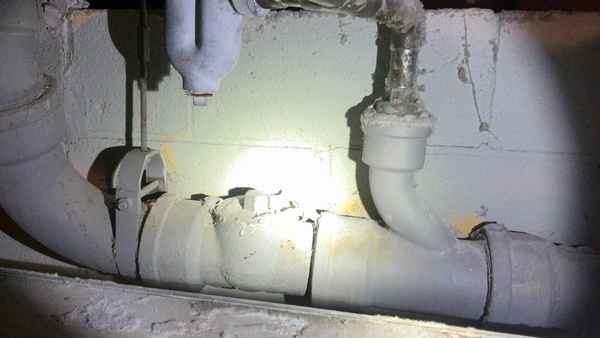
Sometimes the pipe is not broken at all. It has sagged. That low spot, called a belly, holds standing water and collects sediment. It is not an emergency on the day we find it, but it is where the next blockage will start.
3A Sewer Scope Is Not Part of Your Home Inspection
This trips up buyers every year, so we will be blunt about it. A general home inspection is a non-invasive, visual examination of accessible systems. The condition of a buried sewer lateral is explicitly outside that scope.
Your inspector can tell you the visible waste piping is cast iron. Your inspector can flag a cleanout in poor condition. What no general inspection can do is tell you what is happening forty feet out under the sidewalk.
That takes a camera, and it is a separate service. Radon, mold and wood-destroying insects sit outside the standard scope for the same reason, which is why we recommend bundling them at booking rather than scrambling during your contingency window.

4What We Are Actually Looking For
We do not just tell you the pipe is old. We tell you what is happening inside it, with footage and distances so a contractor can price the work without re-scoping the line.
The Sewer Scope Checklist
Is there a cleanout? This is the camera’s way in. If there is not one, access may require another route, and that is vital information for every future maintenance call.
What is the pipe material? PVC, cast iron, clay or Orangeburg. Material sets your long-term risk profile more than anything else.
Are the joints offset? Misaligned joints are the leading entry point for roots and the start of soil erosion around the pipe.
Is there standing water? A belly or a slope problem, and a reliable predictor of chronic clogs.
How far does the line run, and where does the trouble start? Distance matters enormously to cost. A defect at 8 feet and a defect at 46 feet are very different excavations.
5The Math: Inspection Versus Replacement
Let’s talk numbers, because this is where the case makes itself.
A professional sewer scope typically runs $300 to $800, depending on the length and accessibility of the line.
Replacing a lateral in the city commonly runs $3,000 to $12,000 or more. If the line runs deep under a paved street, add several thousand for permits and street restoration. These are ranges from experience, not quotes, and the only real number comes from a licensed plumber.
Worth Knowing
Timing is the whole point. Found during your contingency period, a failing lateral is negotiating leverage. You can ask the seller to repair it, ask for a credit, or walk. Found three days after settlement, the same pipe is simply a bill.
6Why an Inspector, Not a Contractor Selling Repairs
When you hire a plumbing company to check the line, you are hiring someone whose living comes from selling the repair.
That is not an accusation. Plenty of plumbers are honest. It is simply a structural conflict, and you should know it exists when you are deciding whose assessment to trust with a five-figure decision.
ValueGuard does not perform repairs. We have no financial interest in what the camera finds. Our inspectors are there to document the line and tell you what is in it, and that is the entire job.
You get a clear, photo-rich report, usually by the next business day, with footage and distances you can hand directly to whichever contractor you choose.
7What If You Already Closed?
Plenty of buyers waived contingencies to win a house in this market. If that was you, the scope is still worth running.
You cannot negotiate anymore, but you can plan. Knowing you have Orangeburg at 30 feet turns an unpredictable emergency into a budgeted project you schedule on your own terms, before the basement floods.
The same logic applies to the rest of the house, which is what a post-settlement inspection is for.
Whether you are buying a South Philly rowhouse, a colonial in Montgomery County, a twin in Delaware County, or a stone farmhouse in Chester County, your diligence is not finished until someone has looked underground.
Schedule your inspection and bundle the sewer scope with it, or call us and we will talk through whether your particular block warrants one.
Frequently Asked Questions
Who is responsible for the sewer lateral in Philadelphia?
The homeowner. The Philadelphia Water Department states that customers are responsible for maintaining and repairing the sanitary and storm sewer lateral lines connecting the house to the sewer main, along with the house main drain, curb trap, slant and vent. The city owns the main itself. Everything between your basement and that main is yours, including the portion under the sidewalk and street.
How much does a sewer scope inspection cost in Philadelphia?
A professional sewer scope typically runs $300 to $800, depending on the length of the line and how accessible it is. Bundling it with a home inspection is usually the most economical way to have it done, since the inspector is already on site.
How much does it cost to replace a sewer lateral?
Replacement commonly runs $3,000 to $12,000 or more in the city, with cost driven by depth, distance and what has to be dug through. A line running under a paved street adds permits and street restoration on top. These are experience-based ranges, not quotes, so get pricing from a licensed plumber before making decisions.
Is a sewer scope included in a home inspection?
No. A general home inspection is a non-invasive visual examination of accessible systems, and the condition of a buried sewer lateral falls outside that scope. A sewer scope is a separate camera inspection. ValueGuard can perform it during the same visit when you book them together.
What is Orangeburg pipe, and why does it matter?
Orangeburg is bituminized fiber pipe, essentially wood pulp bound with tar, installed widely from the mid-1940s into the early 1970s. Rather than cracking, it deforms under soil pressure until it flattens and collapses. Where a camera confirms Orangeburg, replacement is usually the honest recommendation rather than a spot repair.
What is a “belly” in a sewer line?
A belly is a sagging low spot where the pipe has settled out of its intended slope. Water and sediment collect there instead of draining through. It is rarely an emergency on the day it is found, but it is a reliable predictor of where the next chronic blockage will develop.
What if there is no sewer cleanout at the property?
A cleanout is the camera’s access point. Without one, reaching the line may require another route, and in some cases a scope cannot be completed at all. Either way it is worth knowing before you own the house, because every future maintenance call will face the same obstacle.
Should I get a sewer scope if I already closed on the house?
Yes, particularly on a pre-1970 home. You cannot negotiate anymore, but you can plan. Knowing the material, condition and problem locations turns an unpredictable emergency into a project you schedule and budget on your own terms. Many buyers pair it with a post-settlement inspection of the whole house.
Which areas does ValueGuard serve?
We inspect throughout Greater Philadelphia, including Philadelphia, Montgomery County, Delaware County, Chester County and Bucks County, plus the Main Line and New Castle County, Delaware.
About ValueGuard Inspections
ValueGuard Inspections has inspected homes across Greater Philadelphia since 1997, serving Philadelphia, Montgomery, Bucks, Chester and Delaware counties plus New Castle County, Delaware. Our ASHI-certified inspectors do not perform repairs, which means our reporting is unbiased by design.
Call (215) 860-3150, email Team@valueguardinspections.com, or find us on Google.
Enjoying our home inspection guides? Get ValueGuard articles in your Google results: