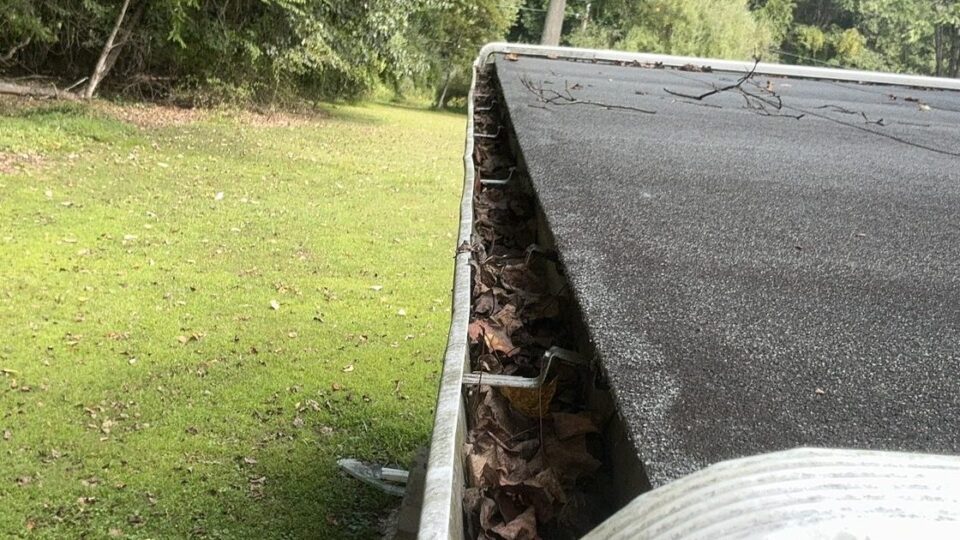
Buying a home in the fall comes with a built-in deadline. You close, you move in, and within a few weeks the heat is running, the fireplace looks tempting, the leaves are in the gutters and the cold rains have started. To show fall buyers what’s coming, we went back through every home inspection report ValueGuard published between September 1 and November 30, 2025. That’s 451 homes across Philadelphia and the surrounding counties. Here are the five fall-related findings that showed up most, and what to do about each one.
The short version
Across 451 fall 2025 inspections, the five most common fall-related findings were:
1Chimney and fireplace issues (61% of homes)
This was the single most common fall-related finding. It makes sense: many Greater Philadelphia homes have masonry chimneys that have gone decades without much attention. Here’s what we found most:
A cracked crown lets water into the chimney, and freeze-thaw cycles turn small cracks into big ones over the winter. A missing cap lets in rain, leaves and animals. Neither is visible from the living room.
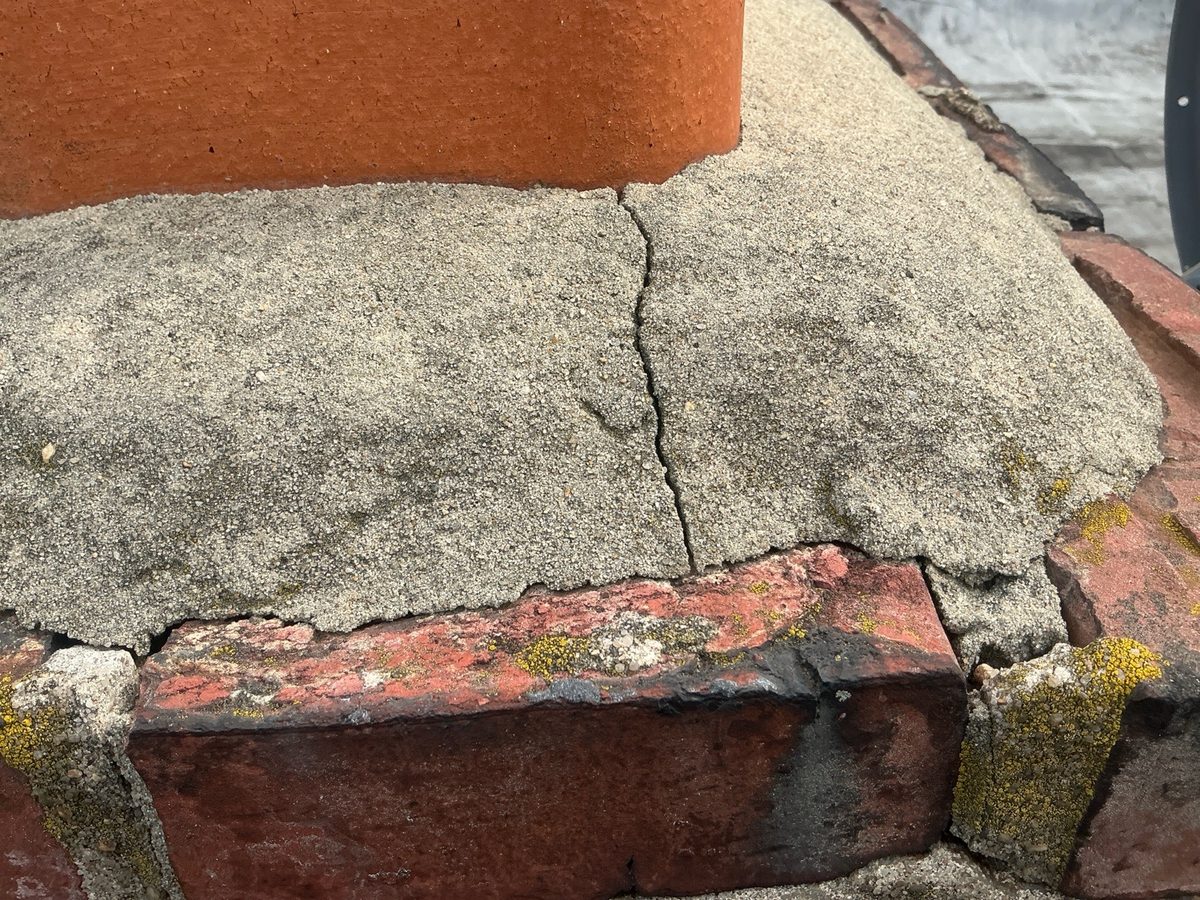
A cracked chimney crown. Water gets in, and freeze-thaw cycles widen the crack each winter. |
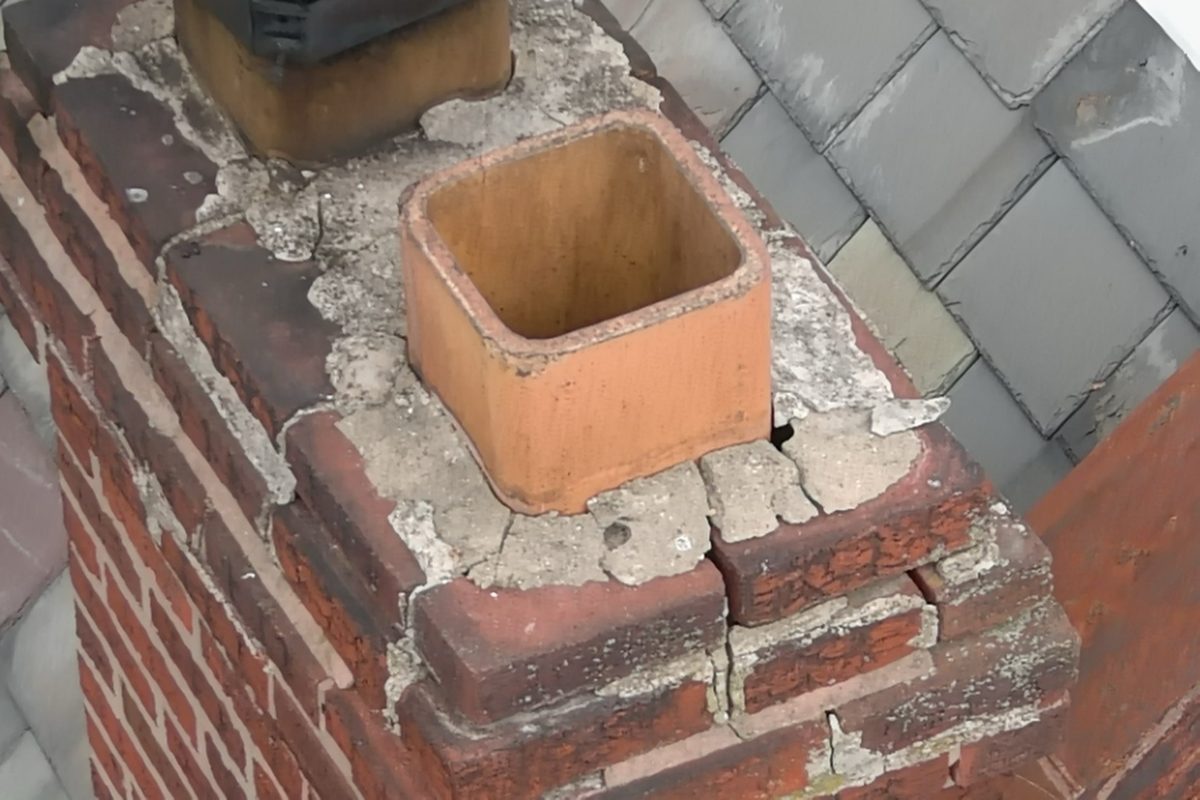
An open flue with no cap or spark arrestor, plus deteriorating crown mortar. |
A home inspection looks at the visible parts of the chimney and fireplace. It can’t see inside the full length of the flue. That’s what a Level 2 chimney inspection is for: a camera inspection of the flue, typically recommended when a home is sold or when the inspector sees signs of a problem.
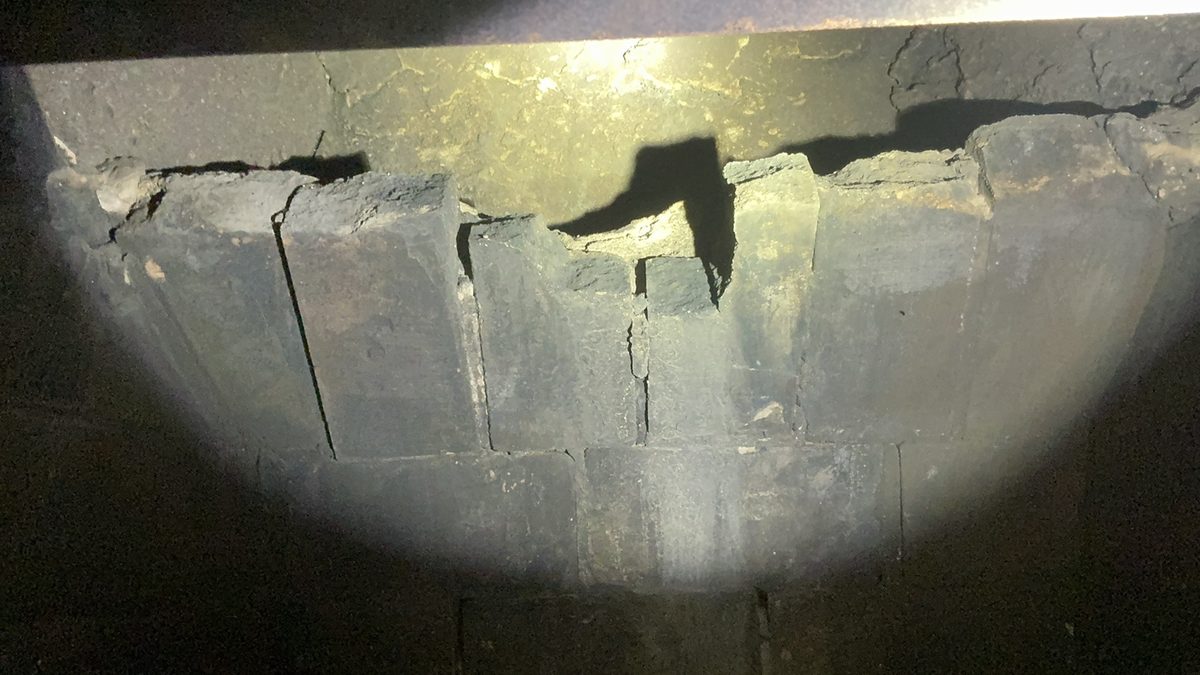
Before the first fire: If your report recommends cleaning or a Level 2 evaluation, schedule it before you light anything. It’s much easier to sort out before closing than after you’ve moved in.
2Missing smoke or carbon monoxide alarms (60%)
Six in ten homes were missing a smoke alarm or a carbon monoxide (CO) alarm somewhere it should have one. CO alarms were missing in 48% of homes, and smoke alarms were missing in 46%.
This matters most in the fall. It’s when gas furnaces, boilers, fireplaces and water heaters start running hard, and those are the appliances that can produce carbon monoxide if something goes wrong. CO has no color and no smell. An alarm is the only way you’ll know.
Easy win: Put working smoke and CO alarms on every level and near every sleeping area before your first night in the house. It’s one of the cheapest fixes on any inspection report. Wondering about an old, yellowed alarm? Read why that smoke detector turned yellow.
3Heating system findings (58%)
More than half of fall inspections turned up something with the furnace, boiler or heat distribution. The most common findings:
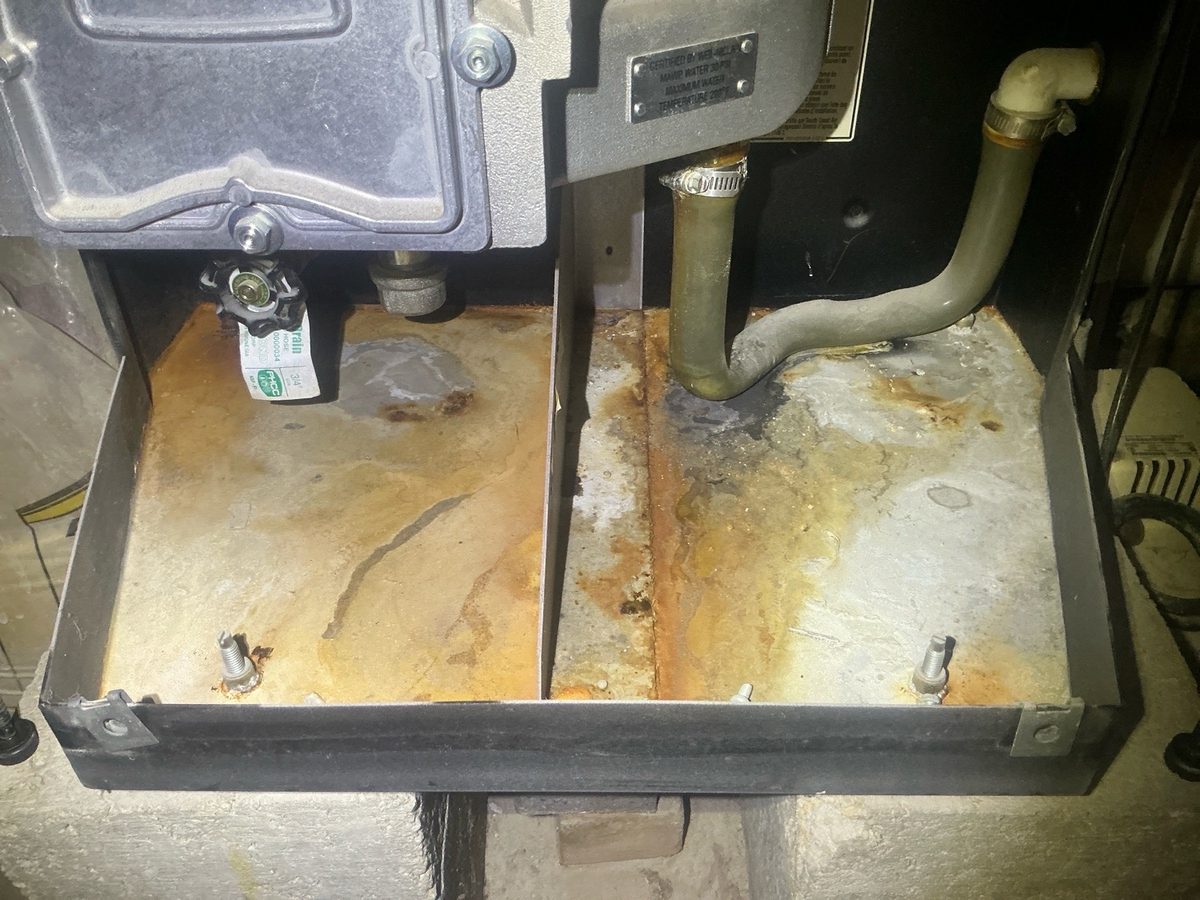
An older system isn’t automatically a problem. Plenty of well-maintained boilers outlive their expected lifespan. What matters is knowing where it stands, so a replacement doesn’t catch you by surprise in January.
Ask for the records: Ask the seller for service records. If the system is due for service, a clean-and-check by a licensed HVAC contractor is a common, reasonable request during the inspection period.
4Gutters, downspouts and drainage (51%)
Half of all homes had at least one problem moving rainwater away from the house:
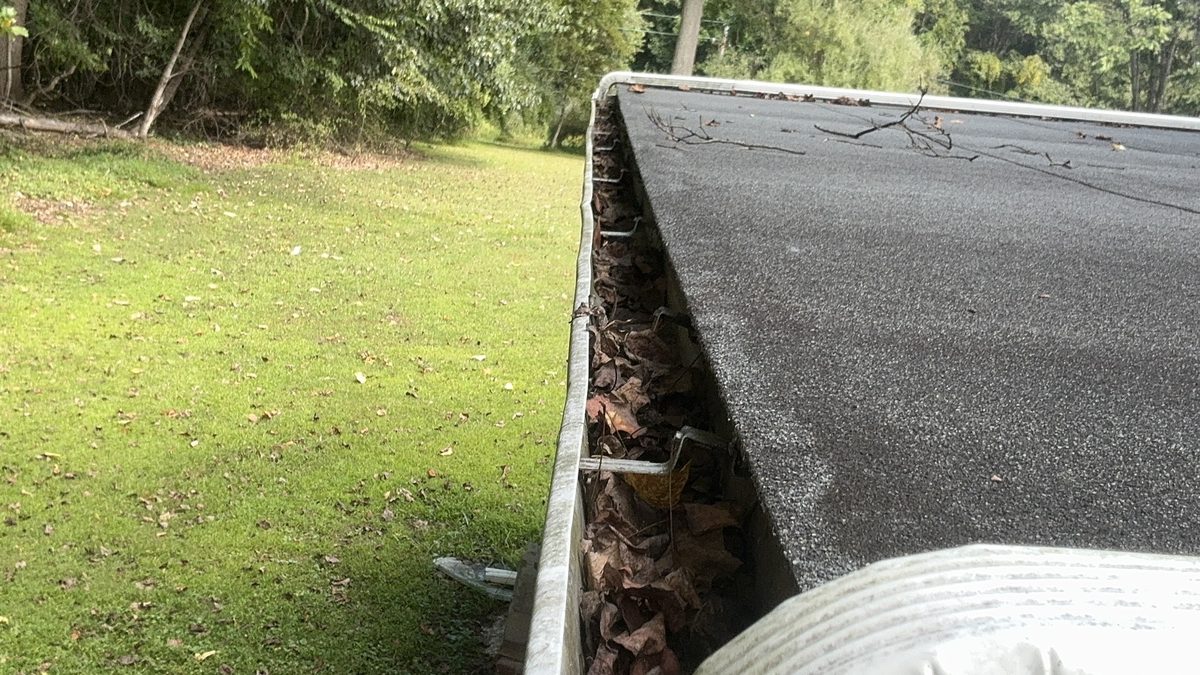
These are usually the easiest, least expensive items on a report. They’re also one of the most common reasons a basement gets wet, which brings us to number five.
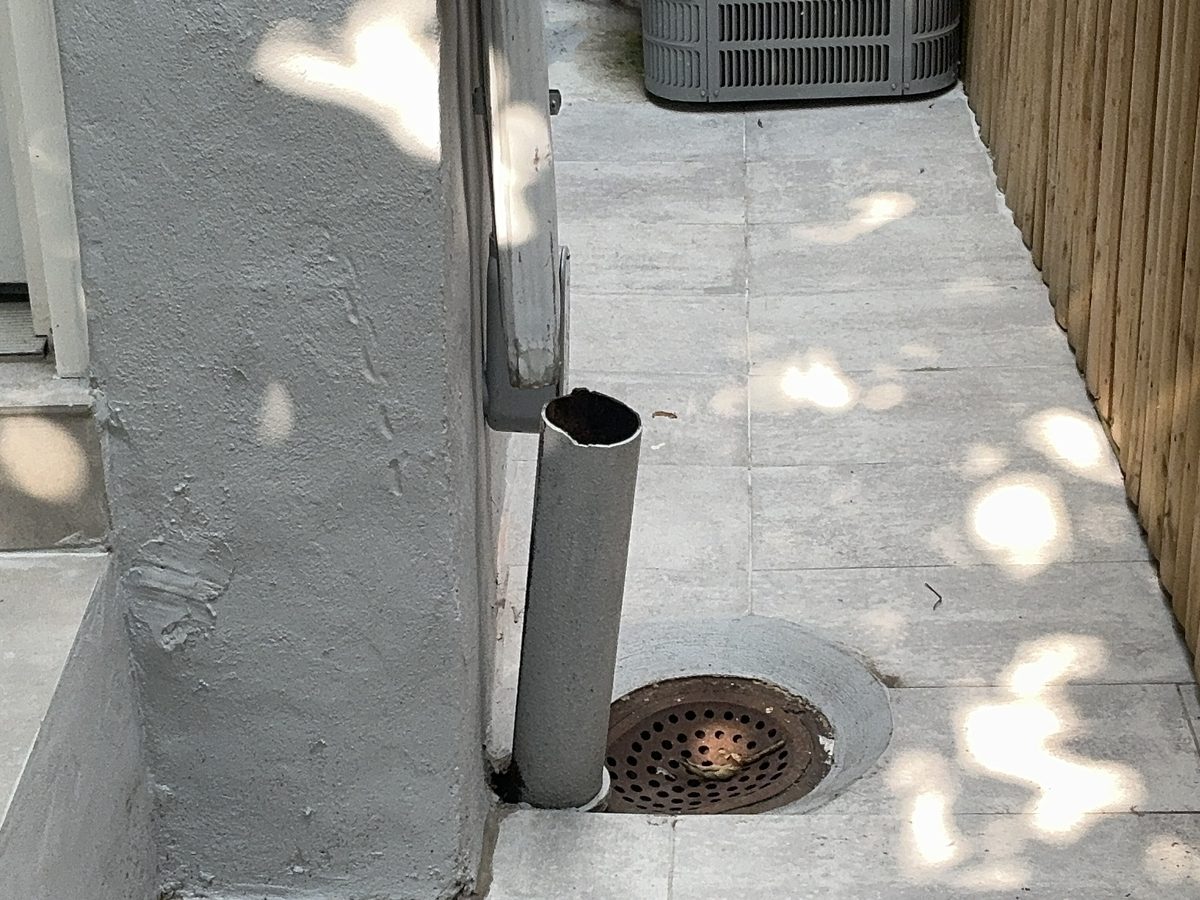
A downspout that stops short of its drain, so roof water soaks the ground next to the house. |
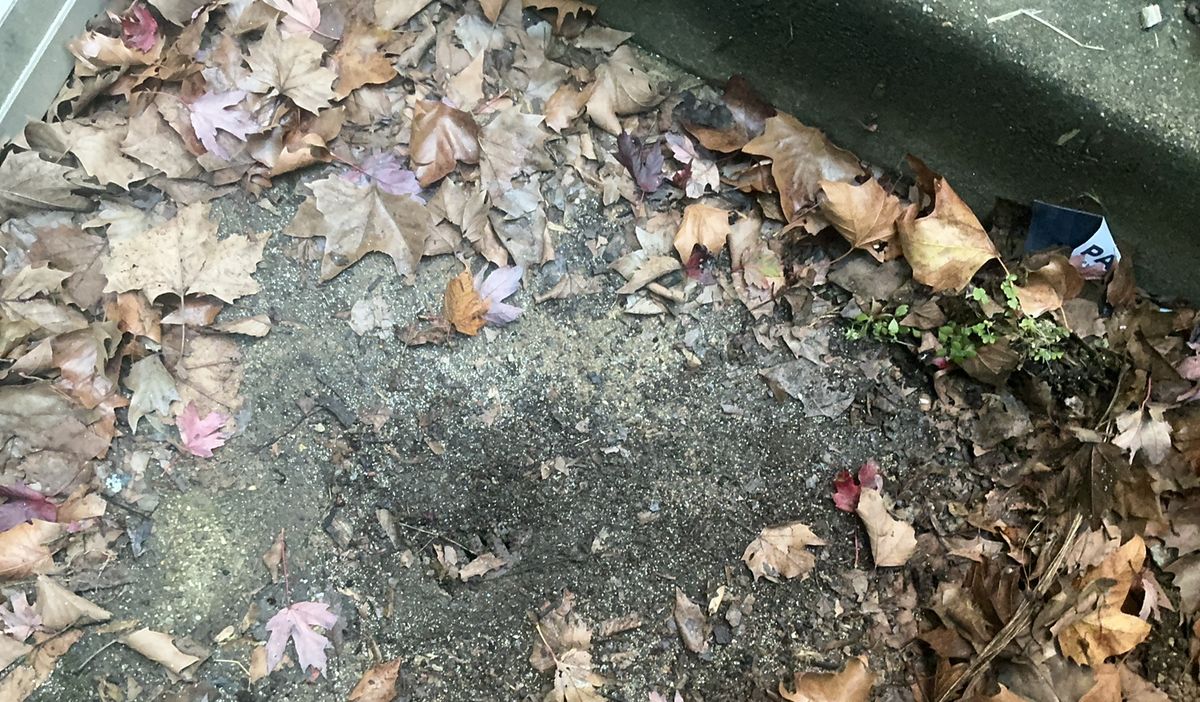
An exterior drain buried under fall leaves. Clear these before the heavy rains start. |
First-month to-do: Clean the gutters after the leaves drop, and make sure every downspout sends water well away from the foundation.
5Signs of basement moisture (49%)
Nearly half of homes showed signs of past or present basement moisture. Most of it was staining and efflorescence, the white, chalky mineral deposits water leaves behind on masonry (35% of homes). Active moisture showed up in about 1 in 10 homes.
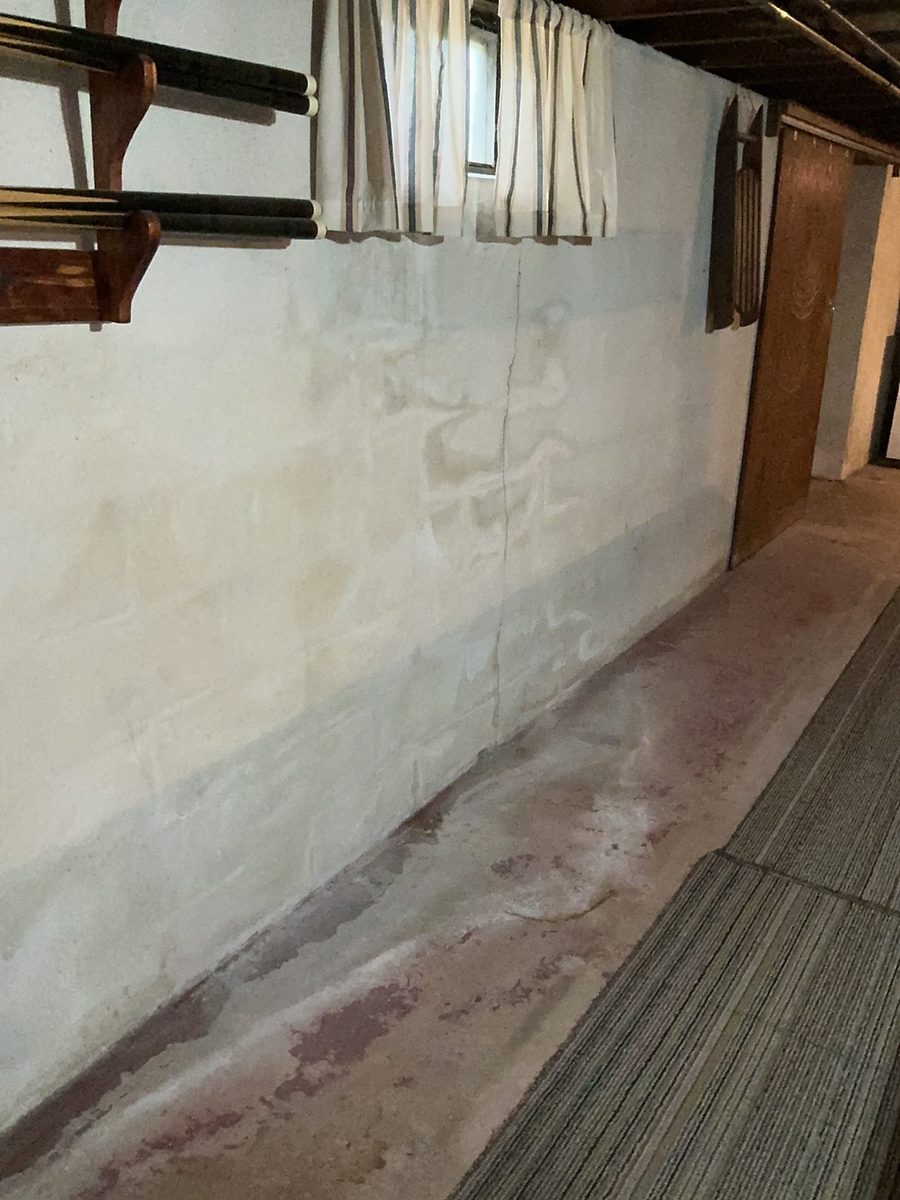
That difference matters. Old staining in a 100-year-old stone basement is common, and it doesn’t always mean there’s a current problem. Active moisture, especially paired with the drainage problems above, deserves a closer look before you close.
Ask your inspector: “Is this old or current?” A good inspector will explain what they’re seeing and whether it’s worth further evaluation.
Your fall buyer checklist
Buying in Philadelphia, the Main Line or the suburbs? Our inspectors know local housing stock, from century-old rowhomes to new construction. See our Philadelphia, Montgomery County, Delaware County, Chester County and Bucks County pages, or schedule your inspection.
Frequently asked questions
+ Is fall a good time to get a home inspection?
+ Does a home inspection include the inside of the chimney?
+ What’s the most common fall issue home inspectors find?
+ Is basement staining a deal-breaker?

About ValueGuard Home Inspections
Family-owned and serving Greater Philadelphia since 1997, ValueGuard has completed more than 94,000 inspections and earned 1,600+ five-star reviews across Google, Yelp and Angi. We offer home, radon, termite, sewer, mold and lead inspections, all in one visit.
Enjoying our home inspection guides? Get ValueGuard articles in your Google results:

About the data: Figures come from 451 residential home inspection reports ValueGuard published for inspections performed September 1 – November 30, 2025. Percentages reflect the share of inspected homes with at least one finding in each category. Some homes had findings in several categories.