The Short Version
Read a home inspection report in this order: the severity badges first, the Limitations sections second, and the full narrative last. Sort every finding by badge rather than by page. Treat cost ranges as budgeting figures, not quotes. And ignore the total number of findings entirely. A recent 102-page Bryn Mawr report contained 107 findings, and only 10 of them drove the negotiation. What matters is which handful affect safety or money.
The report lands in your inbox the evening after the inspection. It is 102 pages. There are 107 findings. Somewhere in there is a red triangle, and your stomach drops before you have read a single word of what it says.
That reaction is completely normal, and it is almost always out of proportion. We have written thousands of these reports. The length of a report is not a measure of a house. It is a measure of how carefully someone looked at it.
The trouble is that nobody teaches buyers how to read one. So people open to page one, scroll until the fear peaks, and then call their agent.
This guide walks through a real ValueGuard report on a 1955 single-family home in Bryn Mawr, inspected in July 2026. We have removed the address and the buyers’ names. Everything else — the findings, the photographs, the cost ranges, the exact wording — comes straight from the document. By the end you will be able to open your own report and know, in about twenty minutes, exactly what to ask for.
1Start With What the Report Is — and Isn’t
Before the findings make sense, the frame has to. A home inspection is a non-invasive, visual examination of the accessible parts of a house on one particular day.
The scope is set by the American Society of Home Inspectors Standards of Practice, Pennsylvania’s home inspection law, and your pre-inspection agreement. Under Act 114 of 2000, the Commonwealth does not license inspectors individually. It requires instead that anyone inspecting for compensation hold full membership in a qualifying national association — one demanding an accredited exam, more than 100 completed inspections, a code of ethics and continuing education — and that the inspection follow that association’s standards. Ask your inspector for the membership number. It is the professional standard the whole document is measured against.
Four things a report is specifically not:
It is not a code compliance inspection. A 1955 house was built to 1955 rules. Comparing it to today’s code would flag most of the housing stock in Bryn Mawr and Haverford.
It is not a warranty. A working furnace on Tuesday can fail on Friday. The report describes what was observed, not what will happen.
It is not an appraisal. Cost ranges are for planning. They say nothing about value.
It is not transferable. The report was written for the named client. Nobody else may rely on it.
Holding that frame keeps you from reading a maintenance note as a catastrophe.
2Learn the Three Severity Badges First
This is the single highest-value thing you can learn about your report. Every finding carries a badge, and the badge tells you what the item asks of you.
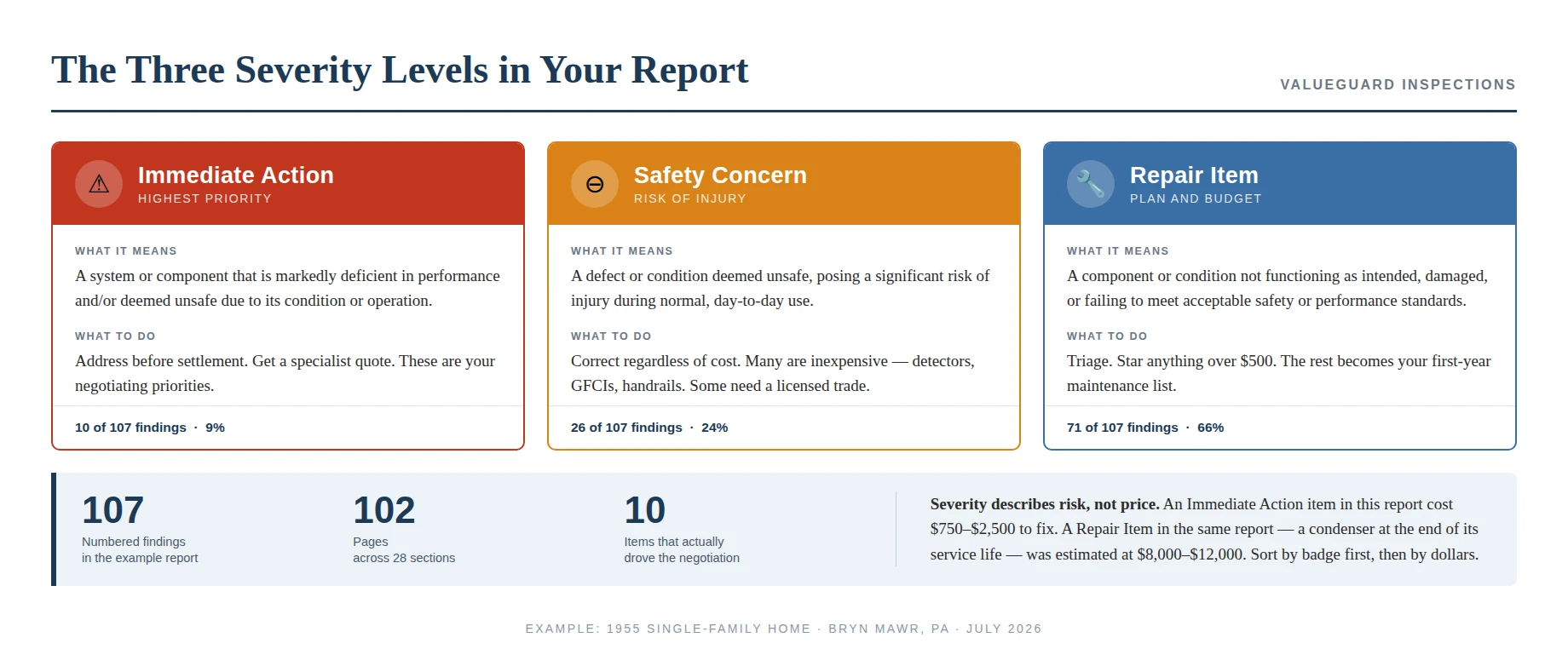
Sort the whole report by these badges before you read anything else. In the Bryn Mawr report, that sort produced 10 Immediate Action items, 26 Safety Concerns and 71 Repair Items.
Suddenly it is not 107 things. It is ten things to handle before settlement, twenty-six to schedule, and a list to budget against over the next few years.
One caution worth stating plainly. A Repair Item is not automatically cheap, and an Immediate Action item is not automatically expensive. The failed garage sill plate in that report was flagged at the top tier and estimated at $750 to $2,500. The air conditioning condenser, at 18 years old against a 12-to-15-year service life, was only a Repair Item — and carried an estimate of $8,000 to $12,000. Severity describes risk, not price.
3Decode a Single Finding
Every finding is built the same way. Once you can read one, you can read all of them quickly.
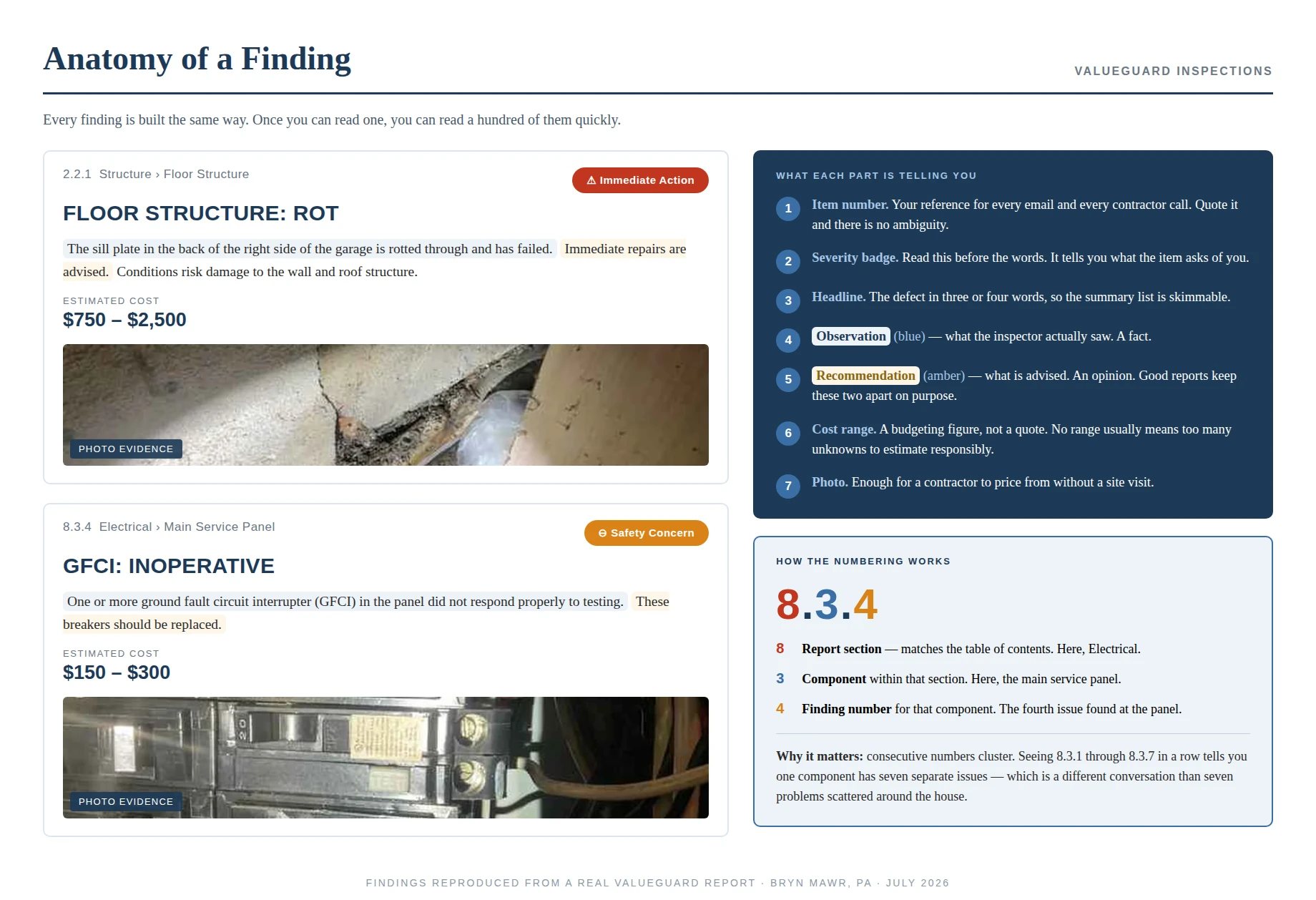
The numbering matters more than it looks. The first digit is the report section, matching the table of contents. The second is the component within that section. The third is the finding number for that component.
So 8.3.4 reads as Electrical, main service panel, fourth finding. When you email your agent or a contractor, quote the number. It removes all ambiguity about which item you mean.
Notice also how the narrative is built. The first sentence is what the inspector observed. The last sentence is what is advised. Those are two different claims, and good reports keep them apart on purpose.
One more thing the numbering gives you free: consecutive findings cluster. Seeing 8.3.1 through 8.3.7 in an unbroken run tells you a single component has seven separate issues. That is a very different conversation from seven problems scattered around the house.
4Read the Limitations. Everyone Skips Them.
Most sections of a report have three parts: Information, Limitations, and Deficiencies. Buyers read the Deficiencies. Almost nobody reads the Limitations.
That is backwards. Deficiencies tell you what the inspector found. Limitations tell you what the inspector could not see. Those unknowns are where future surprises live.
Limitations fall into a few recognizable types.
Access limitations. An unfloored attic. A crawlspace with height restrictions. A chimney that cannot be reached. In the Bryn Mawr report: “Partially finished or recently finished attics restrict inspector access and visibility.” The area was inspected as far as it could be, and no further.
Occupancy limitations. Furniture over receptacles. Boxes against a foundation wall. A finished basement hiding the masonry behind it. Our example home was occupied and furnished, which is exactly why its Structure section carried “Finished walls limited inspection of the wall structure.”
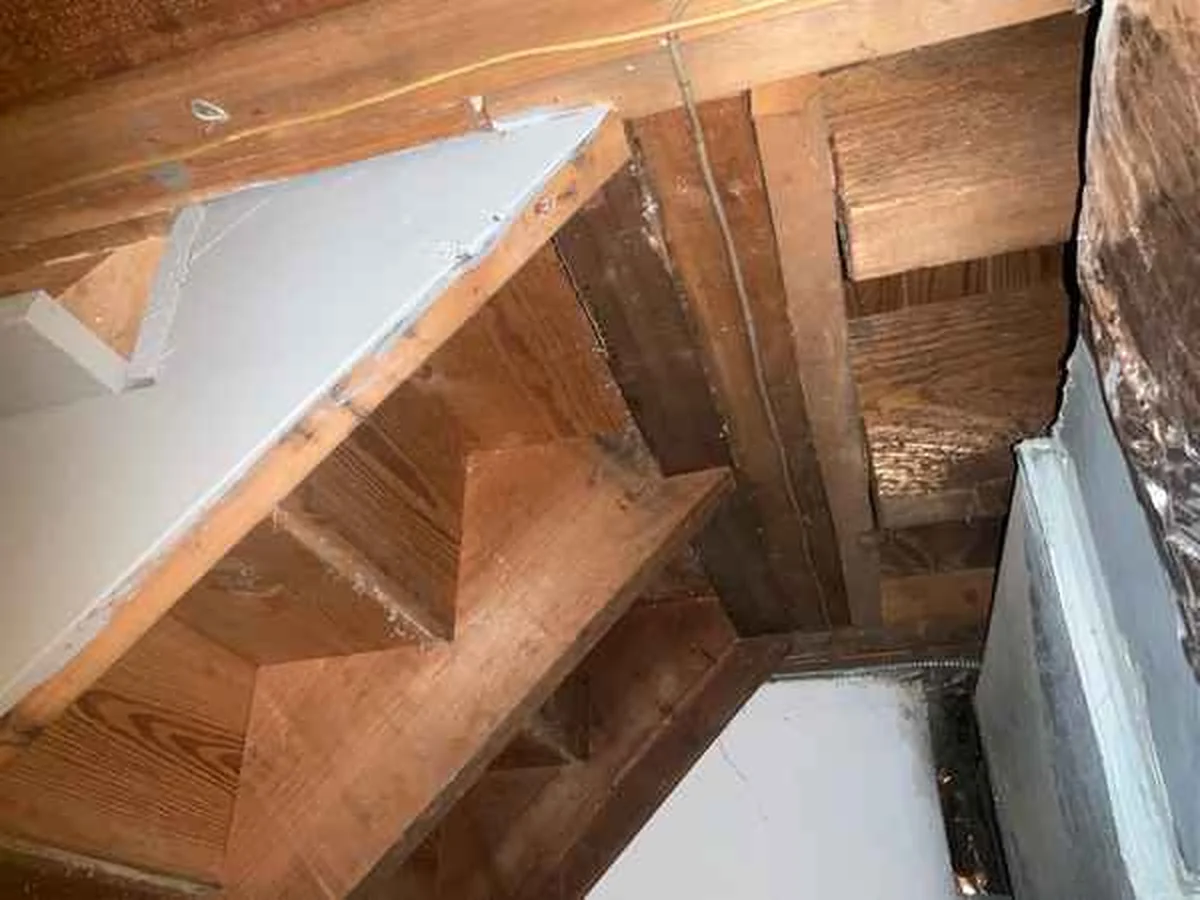
Condition limitations. A dry sump pit. Water shut off to a fixture. A boarded-up basement window, as in our example: “Operation and physical condition of restricted windows is unknown.” The component exists, but it could not be operated or evaluated.
Scope limitations. Radon, mold, asbestos, lead paint, wood-destroying insects, sewer laterals, septic systems, underground tanks and swimming pools all sit outside a general home inspection. If you want those answered, they have to be ordered separately.
Read your Limitations as a to-do list of open questions. Some can be closed cheaply. If storage blocked electrical testing in a bedroom, ask your inspector about a brief return visit once the house is empty.
Worth Knowing
A limitation is not an inspector cutting corners. It is the report being honest about the boundary of what a visual, non-invasive inspection can establish. A report with no limitations at all would be the one worth questioning.
5Understand What Cost Estimates Are For
Cost ranges cause more misunderstanding than any other part of a report. They exist to help you plan, not to price a job.
Our figures come from the National Renovation and Insurance Repair Estimator combined with the inspector’s field experience. They are deliberately presented as ranges, because the same headline can describe very different jobs.
Three rules for using them well.
Never negotiate off the range alone. Get real quotes. Contractors price the same defect very differently, and the report photos give them enough to start. A seller’s agent will discount an inspector’s estimate. They will not discount a licensed electrician’s written quote.
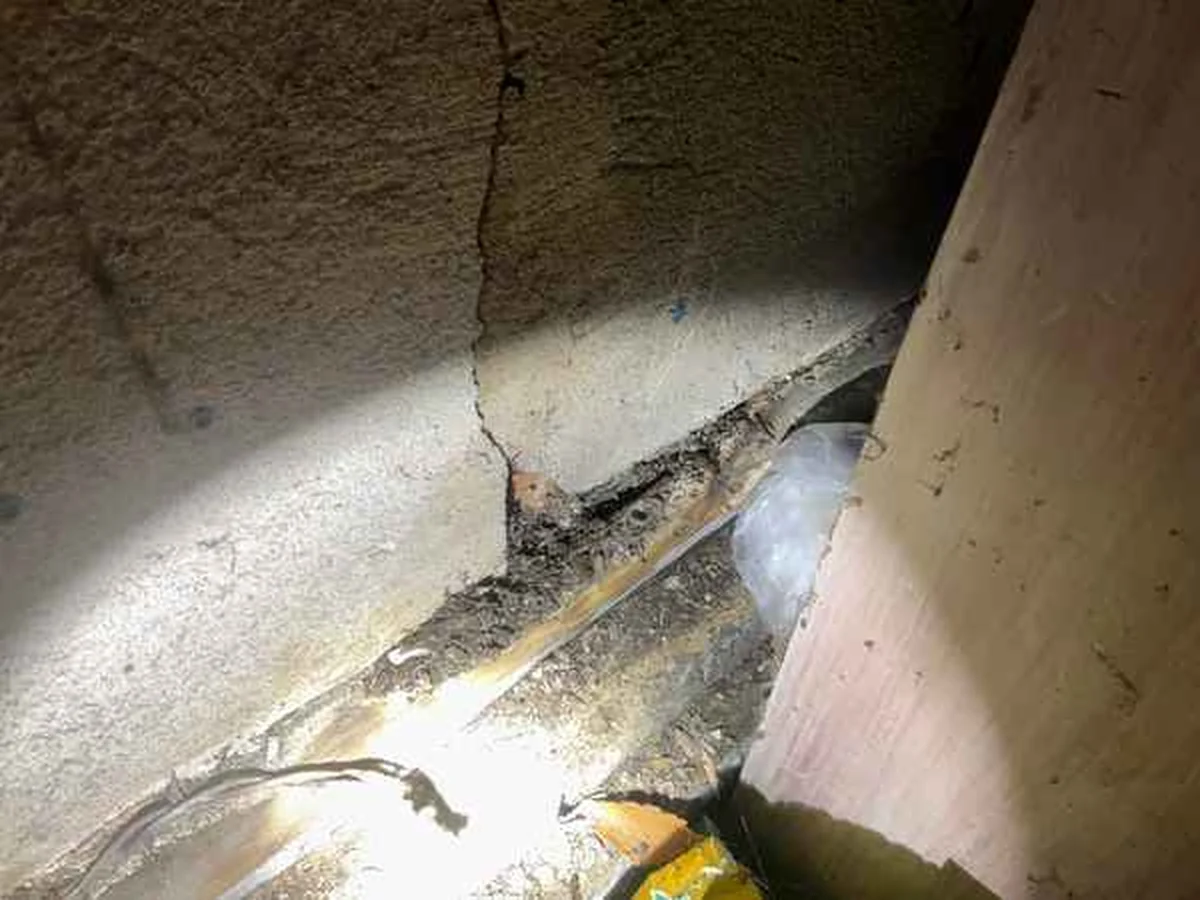
Expect the range to move once someone opens things up. The garage sill plate in our example was estimated at $750 to $2,500, and the finding itself warned that conditions “risk damage to the wall and roof structure.” That caveat is doing real work.
Notice which items have no range at all. That usually means too many unknowns to estimate responsibly. It is a signal to get a specialist in, not a signal that the item is minor. Every one of the ten Immediate Action items in our example lacking a range — the basement water, the cracked waste line, the failed cooling — needed a trade to diagnose before anyone could price it.
Cosmetic items do not carry estimates. Neither does routine annual maintenance. The report’s own guidance is to budget roughly one percent of the home’s value each year. On a $1.2 million Villanova or Radnor property, that is $12,000 annually — the number nobody tells first-time Main Line buyers.
6Group the Findings. Don’t Count Them.
Reports are organized by location, because that is how an inspector walks a house. Problems are not organized that way at all.
Look at five findings from five different sections of the Bryn Mawr report. A damaged gutter section, in Roof. Overhanging tree branches, in Landscaping. A bulkhead door with damaged masonry and failed flashing, in Exterior. Staining and efflorescence on the basement walls, in Basement. And standing water on the basement floor, also in Basement but eleven findings later.
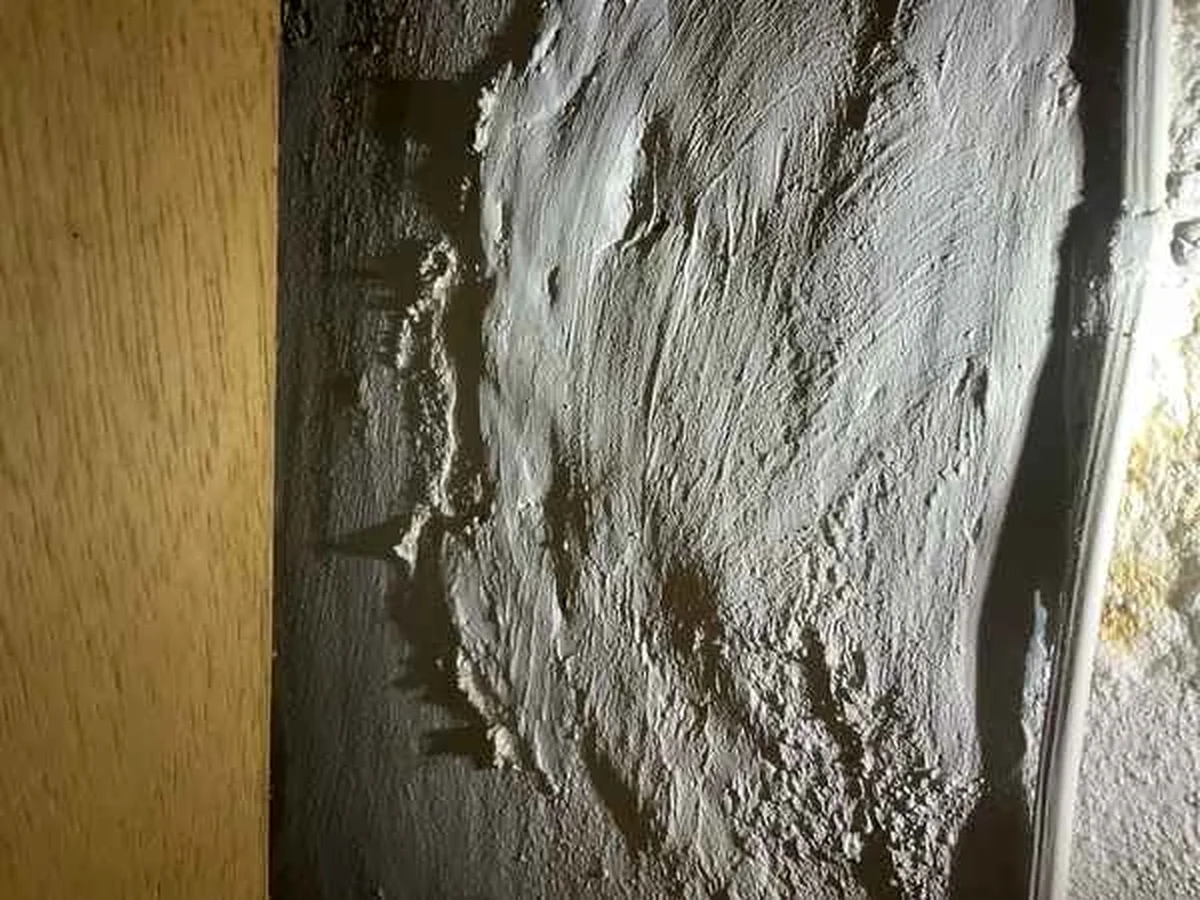
Read separately, those are five annoyances spread across a long document. Read together, they are one moisture story with a likely sequence: water is not being directed away from the foundation, so it enters at the weakest points, so it shows up on the walls and then on the floor.
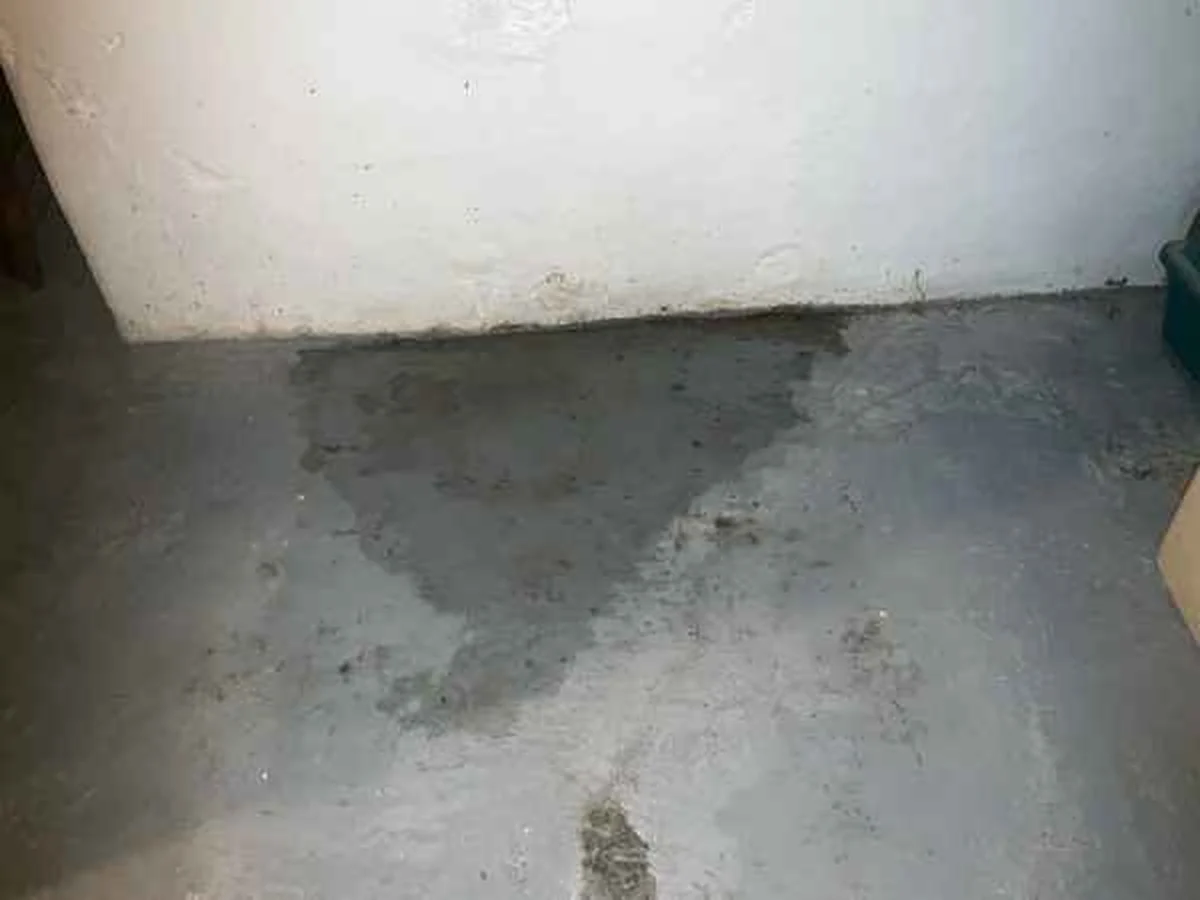
That reading changes what you do. You address gutters, downspouts and grading first, because a dehumidifier is treating a symptom. Most Main Line basement water traces to surface drainage long before it traces to the foundation. Heavy clay soil and mature tree canopy do the rest.
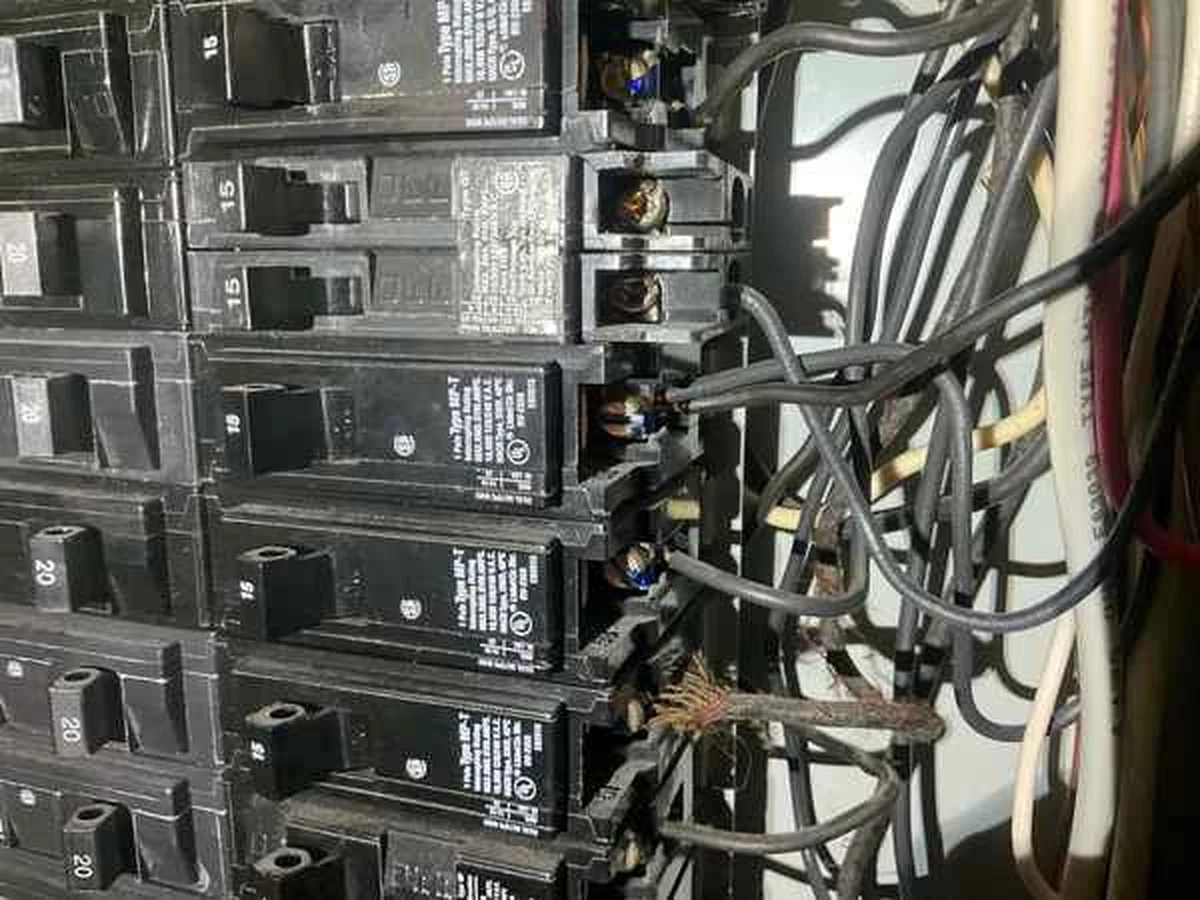
The same logic applies to the electrical section. Taken one at a time, a double-tapped breaker and an unlabeled panel are small. Taken together with an overloaded panel, an inoperative GFCI, doubled neutrals, non-permitted tandem breakers and active knob and tube wiring, they are one sentence: an electrician needs to price this panel before you close.
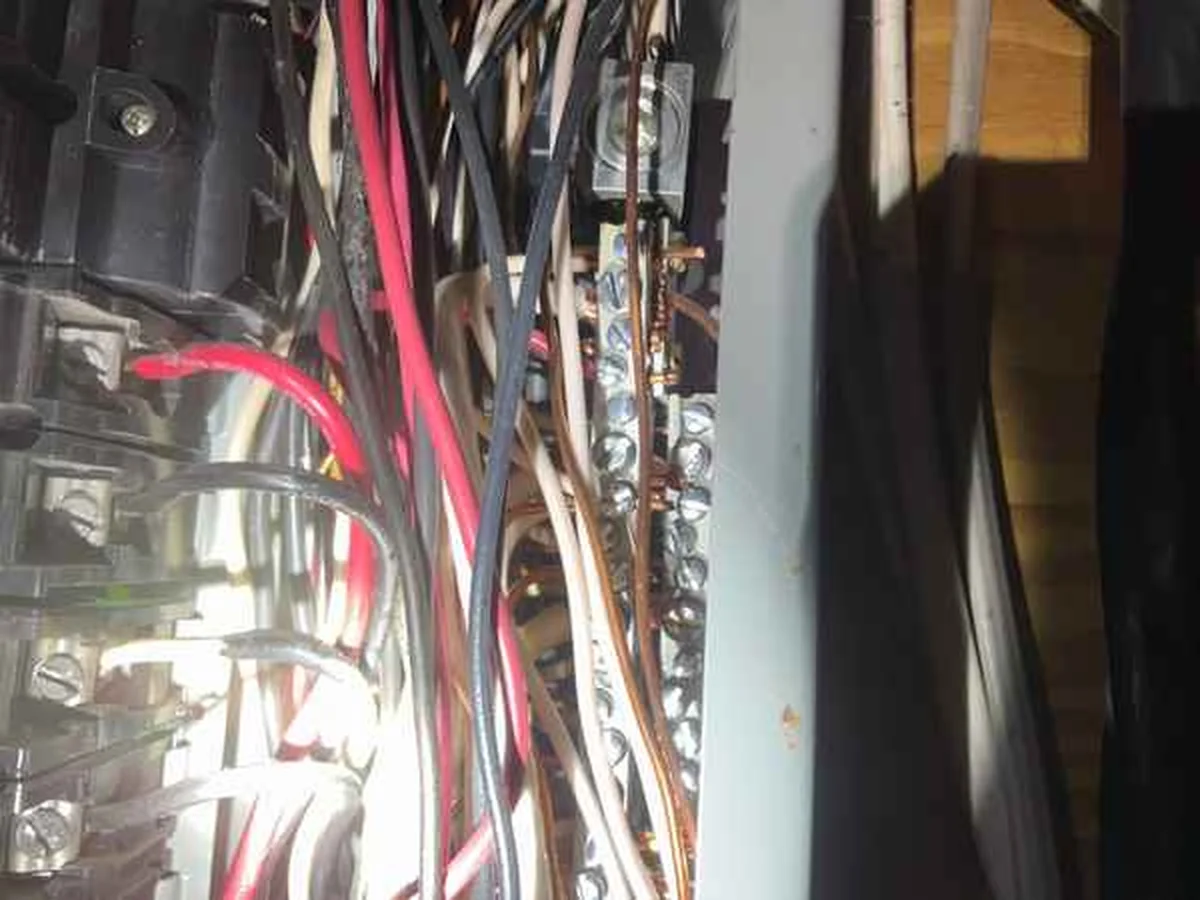
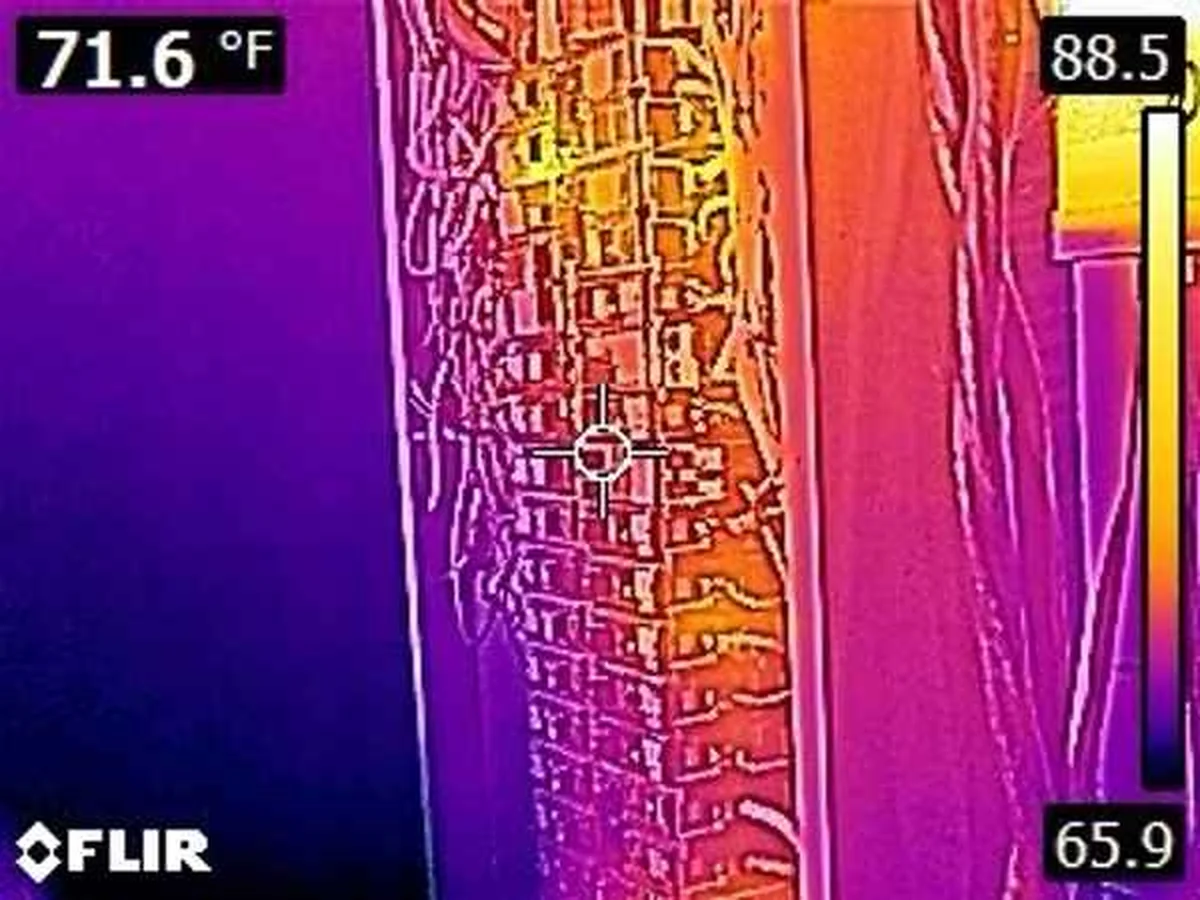
Try grouping your own report into four buckets: safety, water, systems nearing end of life, and cosmetic. Most reports collapse into three or four real conversations.
7Why Main Line Reports Run Long
If you are comparing your Bryn Mawr report to a friend’s report on a 2015 build in King of Prussia and wondering why yours is three times longer, this is why.
Age. Our example was built in 1955. Much of Bryn Mawr, Haverford and Villanova is older still. Every additional decade adds systems that someone has repaired, replaced or bypassed.
Layered systems. The branch wiring in that one panel was listed as “Romex, BX, Cloth Covered, Knob & Tube (Active).” Four methods in one box is seventy years of electricians stacked on top of each other. Active knob and tube is not shocking in pre-1960 Main Line housing stock, but it affects insurability and complicates any future renovation, so it is always worth pricing before closing.
Mixed cladding. The same house carried stone masonry, wood siding, vinyl siding and asbestos siding. Each has its own failure mode. Asbestos siding, common from the 1920s through the 1960s, is encapsulated in cement and poses little to no health risk while intact — but damaged sections require specialized handling, and removal can incur significant costs.
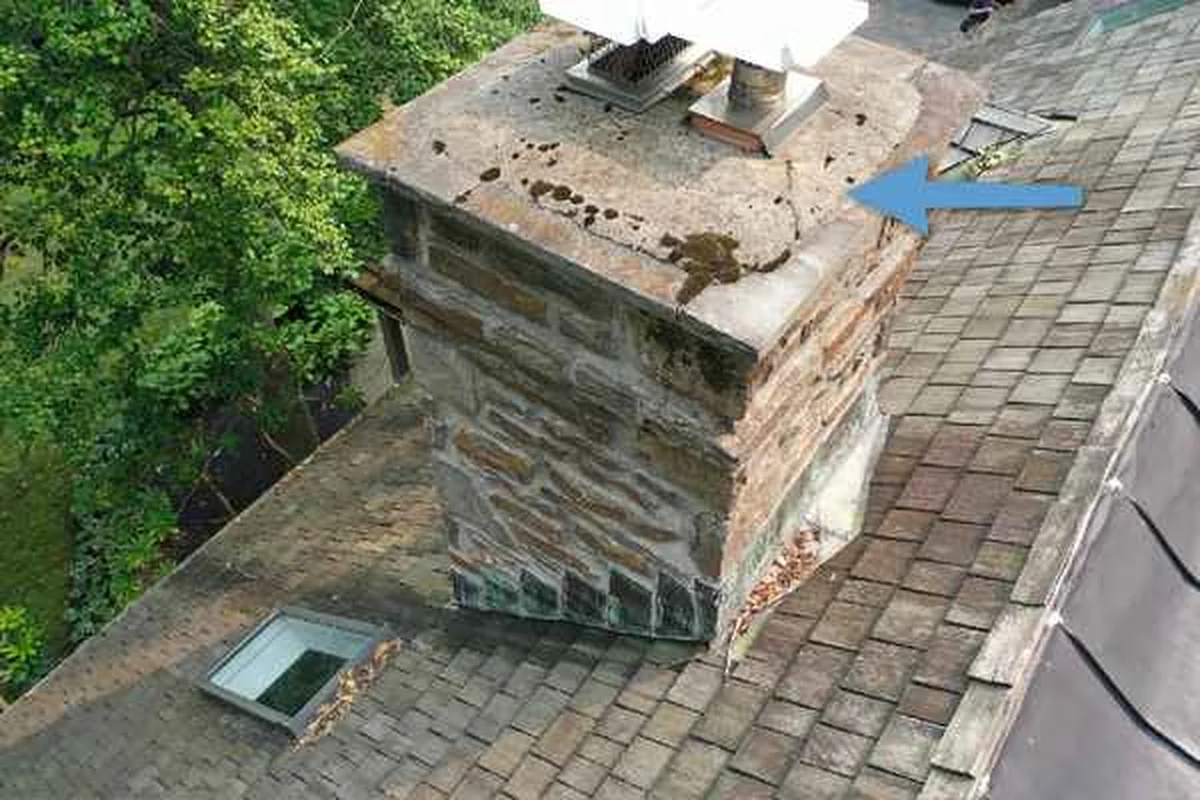
Basements and canopy. Stone and poured foundations in a region of heavy clay soil and mature trees. Beautiful streets, and also the reason for overhanging branches, settled walkways and mortar deterioration in retaining walls.
None of this makes these homes bad buys. Main Line homes hold value precisely because of that character. It only means you should expect a long report and read it as a maintenance roadmap rather than a verdict. Buying in Bryn Mawr, Radnor, Wayne, Haverford or Villanova means buying into older housing stock, and the report length follows from that, not from the quality of the house.
8Then Call Your Inspector
A report is a document. Your inspector is a person who spent three or four hours inside the house. Those are not the same resource, and the second one is included.
Call after you have done your own pass, with specific item numbers ready. Good questions sound like these.
Which two or three items would you fix first in my position? Is this finding typical for a house of this age, or does it stand out? How confident are you about what is behind this? What trade should I call, and what should I ask them to look at?
That last one saves real money. Our Bryn Mawr report named five different specialists across its findings — an electrician, a basement waterproofing contractor, an HVAC contractor, a plumber with a sewer camera, and an NCSG chimney professional for the Level 2 inspection. Sending the right trade to the right finding avoids paying for a diagnostic visit that ends in a referral.
And if you never received a report because you waived the inspection to win the house, that is a fixable situation. A post-settlement inspection produces the same document after closing.
The Twenty-Minute First Read
Minutes 1–3 — Read the summary list at the front. Note every Immediate Action and Safety Concern item number. Ignore everything else.
Minutes 4–8 — Read those flagged items in full, including their photos and cost ranges.
Minutes 9–13 — Skim every Limitations block. Write down what could not be seen or operated.
Minutes 14–17 — Scan the Information sections for equipment ages and service lives. This is your replacement calendar.
Minutes 18–20 — Group everything into safety, water, aging systems and cosmetic. Write your three questions.
Then — Call your inspector. Read the full document later, once the fear is out of the way.
One last thing, and we mean it. A long report is a favor. The alternative was never fewer problems. The alternative was the same house with nobody writing any of it down.
Frequently Asked Questions
How many findings is too many in a home inspection report?
There is no such number. Length reflects the age, size and complexity of the home plus the thoroughness of the inspector. A recent ValueGuard report on a 1955 Bryn Mawr home ran 102 pages with 107 findings, of which only 10 were Immediate Action. A fifteen-year-old King of Prussia townhouse might produce 40 pages. Judge a report by severity, never by length.
What is the difference between a Safety Concern and an Immediate Action item?
An Immediate Action item is markedly deficient in performance or unsafe due to its condition or operation. It sits at the top of the list. A Safety Concern is a condition the inspector judges unsafe, posing a significant risk of injury during normal daily use. Both deserve prompt attention, and Immediate Action items come first.
What do numbers like 8.3.4 mean in an inspection report?
They are a location system. The first number is the report section from the table of contents. The second is the component within it. The third is the finding number for that component. So 8.3.4 means Electrical, main service panel, fourth finding. Quote these numbers when you email your agent or a contractor.
Are the cost estimates in a home inspection report accurate?
They are budgeting ranges rather than quotes. ValueGuard derives them from the National Renovation and Insurance Repair Estimator and the inspector’s experience. Use them to understand scale — a $150 GFCI breaker versus an $8,000 to $12,000 condenser replacement — then get written quotes from qualified contractors before negotiating or committing.
Why does my report say the attic or basement was only partly inspected?
That is a limitation, and it is disclosed on purpose. Common causes include an attic without flooring, a finished basement concealing the masonry, or stored belongings blocking access. The inspector reports how far the inspection reached and makes no representation about what was not visible. Treat each limitation as an open question worth closing.
What is not covered by a general home inspection?
Radon, mold, asbestos, lead paint, wood-destroying insects, sewer laterals, septic systems, underground tanks and wells, swimming pools and spas, alarm systems, and air and water quality all fall outside the standard scope. Several can be ordered as separate services. Radon testing is the one we recommend most often, since southeastern Pennsylvania sits on the Reading Prong and the EPA advises taking action at 4.0 pCi/L or higher.
Should I get a sewer scope in Bryn Mawr or on the Main Line?
If your report recommends one, yes. Our Bryn Mawr example flagged cracked waste piping and active leakage, and separately advised a sewer scope by name. Original clay and cast-iron laterals are common in pre-1960 Bryn Mawr, Haverford, Wayne and Villanova homes, and a failed lateral is one of the few five-figure surprises a general inspection cannot rule out.
What does active knob and tube wiring mean for my Main Line home?
Knob and tube is an outdated wiring system common in homes built before the 1950s. Active knob and tube, as found in our 1955 Bryn Mawr example, can affect homeowners insurance eligibility and premiums and complicates future renovation. It is not automatically an emergency, but a licensed electrician should evaluate it, and it is always worth pricing before closing.
My basement had standing water. Is the foundation failing?
Not necessarily, and a home inspection cannot identify the source from one visit. Most Main Line basement water traces to gutters, downspouts, grading and surface drainage before it traces to the foundation. In our example, the standing water sat alongside a damaged gutter section, a bulkhead door with failed flashing, and overhanging vegetation. A basement waterproofing contractor should identify the actual source before anyone prices a solution.
Are home inspectors licensed in Pennsylvania?
Pennsylvania does not license inspectors individually. Under Act 114 of 2000, anyone inspecting for compensation must hold full membership in a qualifying national association — one requiring an accredited exam, more than 100 completed inspections, a code of ethics and continuing education — and must inspect in accordance with that association’s Standards of Practice. Ask your inspector for their ASHI or NAHI membership number.
Can I call my inspector after I get the report?
Yes, and you should. Call once you have made your own pass, with specific item numbers in hand. Ask which items to prioritize, whether a finding is typical for the home’s age, and which trade to call for each one. That last question routinely saves a wasted service visit.
Which areas does ValueGuard Inspections serve?
We inspect throughout Greater Philadelphia, including Bryn Mawr, Radnor, Wayne, Haverford, Villanova and King of Prussia, across Montgomery County, Delaware County, Chester County and Bucks County, with particular depth on the older homes of the Main Line.

About ValueGuard Inspections
ValueGuard Inspections has served Greater Philadelphia for more than two decades, inspecting homes throughout Philadelphia, Montgomery, Bucks, Chester and Delaware counties. Our ASHI-certified inspectors specialize in the region’s older housing stock, and every inspection produces a photo-rich, plain-English report you can act on.
Call (215) 860-3150, email Team@valueguardinspections.com, schedule an inspection, or find us on Google.
The report referenced throughout this article was performed by a ValueGuard inspector in Bryn Mawr, Pennsylvania in July 2026 and is reproduced with the property address and client names removed. All findings, quotations and cost ranges are taken from the original document. Cost estimates are ranges for triage purposes only and do not constitute a quote. This article is general education and is not a substitute for a home inspection of your specific property.
Enjoying our home inspection guides? Get ValueGuard articles in your Google results: