Chestnut Hill sits at Philadelphia’s northwest corner, defined by Germantown Avenue’s Belgian-block main street, the Wissahickon Valley to the west, and the Montgomery County line. Originally a country retreat for wealthy Philadelphians, the neighborhood was transformed in the 1850s when the Chestnut Hill Railroad (now SEPTA’s Chestnut Hill East line) made it America’s first railroad commuter suburb. Henry Howard Houston and later George Woodward developed much of the area’s signature Wissahickon-schist stone housing between 1880 and 1930 — manors, twins, and singles deliberately designed to look ancient even when new. Most of the neighborhood is within the Chestnut Hill National Register Historic District. ValueGuard’s ASHI-certified home inspectors in Chestnut Hill have been inspecting this neighborhood since 1997, and we’ve built our home inspections in Chestnut Hill around exactly these stone-and-slate differences.
Inspections from $429 — condos and lofts from $329. Save with a package:
| Value Package · $829 · save $149 | Value + Sewer Scope · $1,108 · save $199 | Full Protection · $1,457 · save $249 |
See full pricing and packages →
i. Why this neighborhood is different
Wissahickon stone, slate, and timber.
Chestnut Hill housing is unlike anywhere else in Philadelphia — built largely between 1880 and 1930 from native Wissahickon schist, with slate roofs, large lots, and a heavy historic-district overlay. A thorough home inspection in Chestnut Hill means knowing which era you’re standing in. Here’s what we focus on:
Wissahickon-Schist Stone Manors
Large 1880s-to-1920s stone houses built from native Wissahickon schist quarried locally — load-bearing stone walls, slate or terra-cotta roofs, massive stone chimneys, leaded-glass windows, and copper flashing. We evaluate stone-wall and mortar condition, slate roof systems, chimney integrity, and how the home’s original framing has aged inside the stone shell.
Houston-Woodward Stone Twins
Henry Howard Houston and his son-in-law George Woodward built dozens of stone twins around St. Martins and Pelham, intended as workforce housing for the neighborhood’s craftsmen. These twins share many of the same details as the manors at smaller scale — slate roofs, schist walls, and the same long mechanical-systems history.
Slate Roofs & Original Chimneys
Most Chestnut Hill homes still wear their original or first-generation replacement slate roofs — beautiful, but with finite life expectancy and expensive to replace properly. Stone chimneys, copper flashing, and complex roof geometries with multiple dormers all need close attention. We document slate condition, flashing integrity, and any failed repairs.
Historic District & Renovation Constraints
Most of Chestnut Hill sits within the Chestnut Hill National Register Historic District, and many properties also fall under the Wissahickon zoning overlay. We help buyers understand how those constraints affect renovation plans, materials choices for repairs, and what’s likely to require Historical Commission review — especially important on the very houses with the most deferred maintenance.
Aging Heating & Plumbing Systems
Stone manors often retain large original boilers, cast-iron radiators, galvanized supply, lead service lines, and knob-and-tube wiring in walls that are difficult to access through schist construction. We document what’s been replaced and what’s still original, especially in the basements and attics where the systems live.
Drainage, Trees & Large Lots
Chestnut Hill’s hallmark large wooded lots bring drainage, grading, and tree-root issues that compact urban lots don’t. We evaluate site drainage, retaining-wall condition, foundation moisture, and the impact of mature trees on roofs, gutters, and sewer laterals. The trees are part of the appeal — they’re also part of the inspection.
← Swipe to see all six →
A note on Chestnut Hill slate roofs
The slate roof is one of Chestnut Hill’s signature features and one of its most expensive components to maintain. Original slate from the 1890s-1920s is approaching, at, or past its design lifespan on many homes, and replacement is a $60,000-to-$200,000+ project depending on the home’s size and roof complexity. Even when slate looks fine from the ground, individual slates fail, copper flashing corrodes, and patchwork repairs by non-specialist roofers can accelerate damage. We inspect from inside the attic for evidence of leaks, evaluate flashing detail at the dormers and chimneys, and document the slate’s overall remaining life as best we can determine. On a Chestnut Hill home, the roof is part of the deal — and worth understanding fully before closing.
From our recent caseload
Recently inspected in 19118.
Three homes from recent ValueGuard inspections in Chestnut Hill — one large Wissahickon-schist stone manor, one Houston-Woodward stone twin, and one Colonial Revival single on a wooded lot. Same neighborhood, same ZIP. Three entirely different inspections. Swipe or use the arrows to see all three.
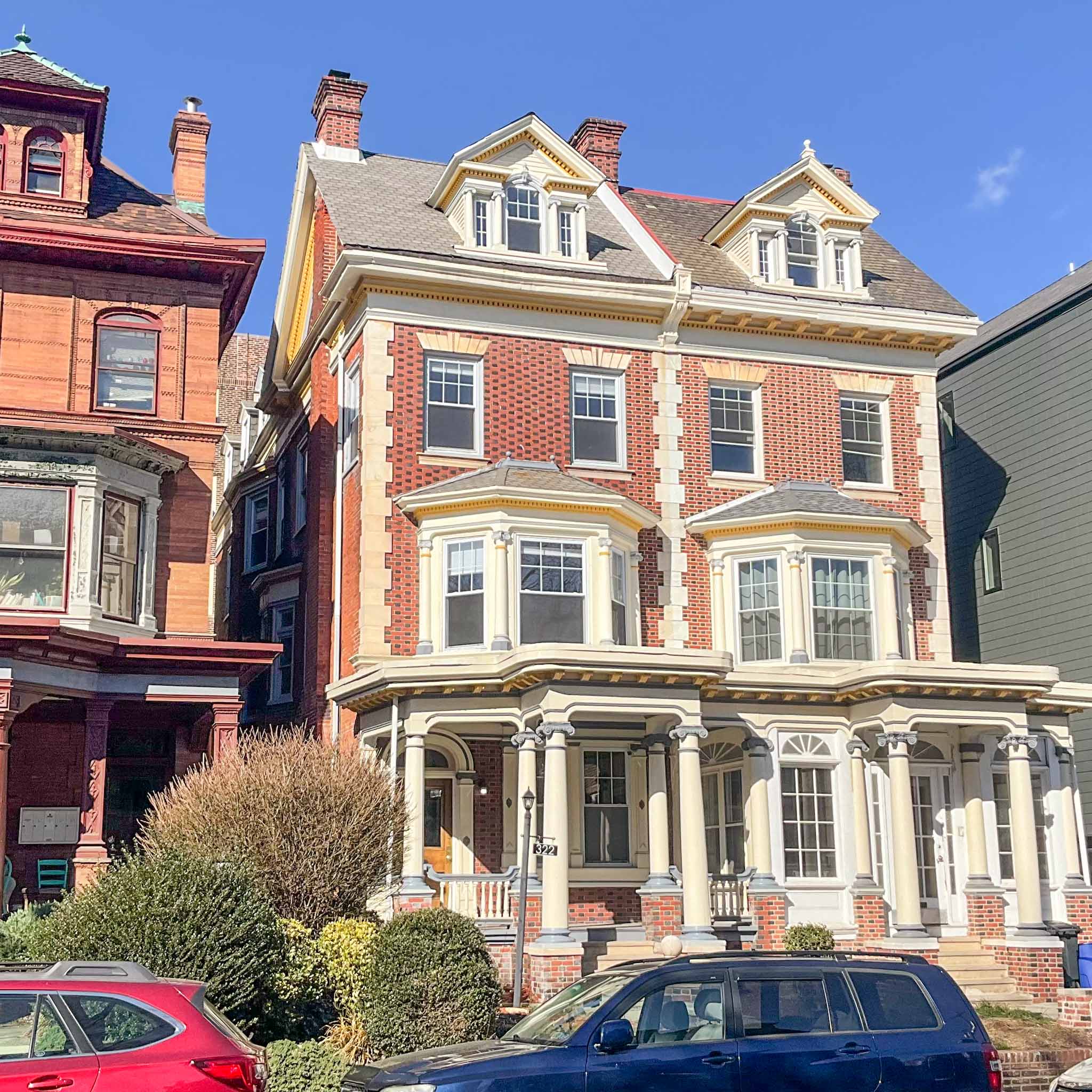
No. 01
Large Stone Manor with Slate Roof
A large 1890s-to-1920s Wissahickon-schist stone manor — load-bearing rough-cut stone walls, slate hipped roof with multiple dormers, massive stone chimney with copper flashing, louvered shutters, and a flagstone courtyard. Signature Chestnut Hill construction at full scale.
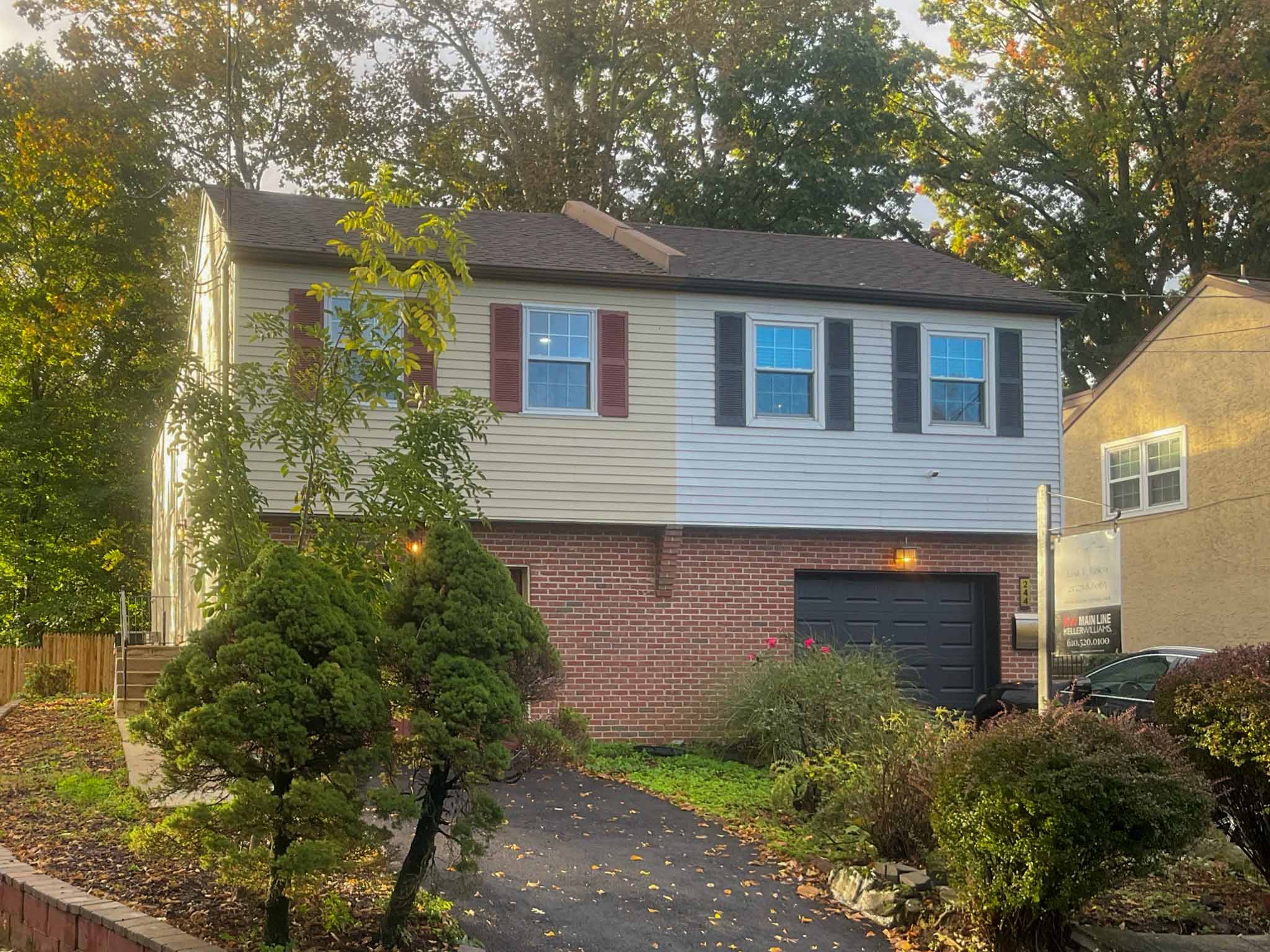
No. 02
Wissahickon-Schist Stone Twin
A Houston-Woodward stone twin built between 1900 and 1930 around the St. Martins or Pelham area — native schist walls, slate roof, gabled front, original casement or double-hung windows, and a shared party wall with the attached twin. The signature smaller-scale stone construction that fills much of Chestnut Hill.
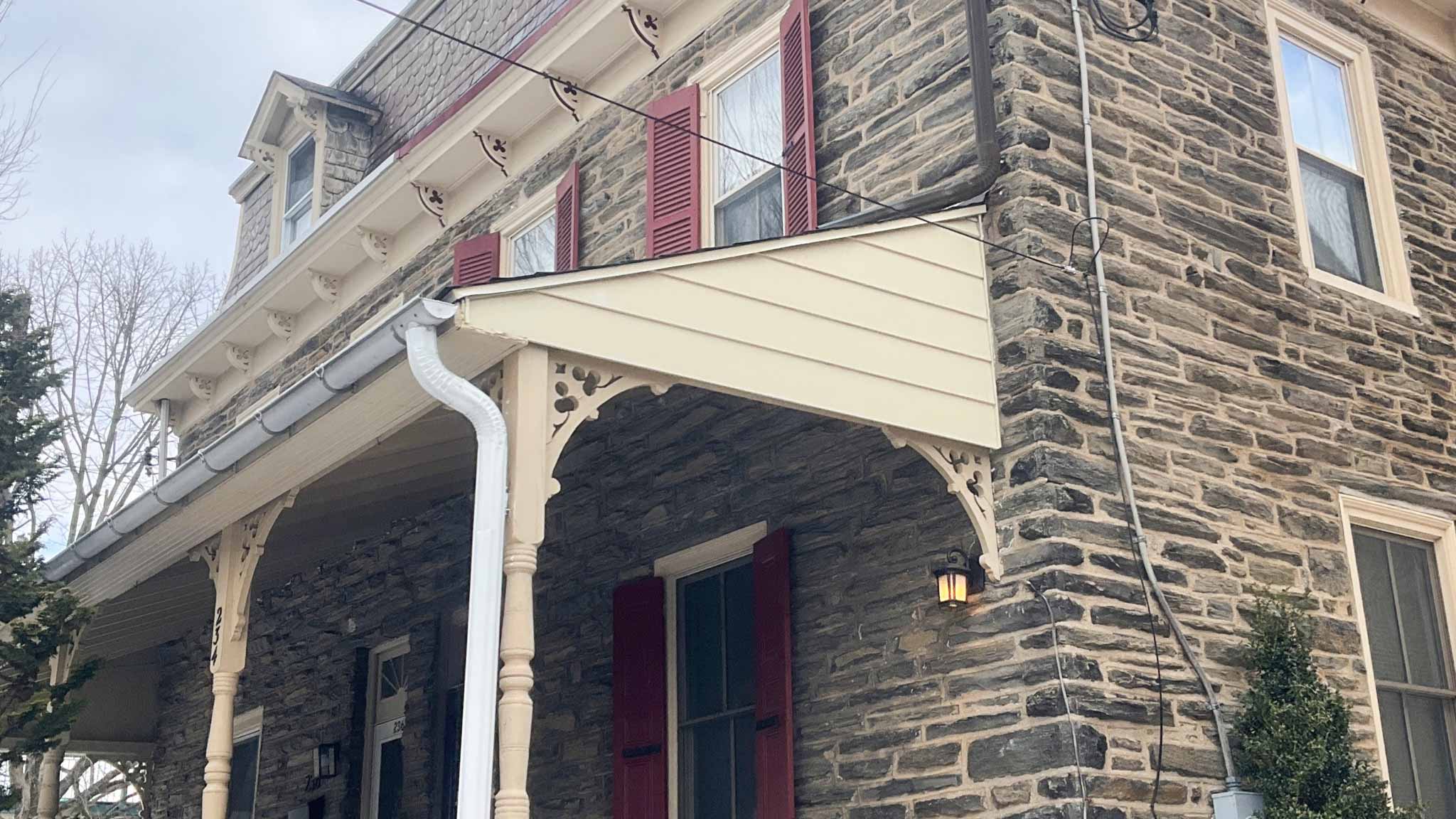
No. 03
Colonial Revival Single on Wooded Lot
A center-hall Colonial Revival single home from the 1900-to-1930 building boom — deep wooded lot, painted clapboard or stucco-over-frame walls, side-gabled slate or asphalt-replacement roof, multi-pane double-hung windows, and louvered shutters. Sitting deep among mature trees on a quiet Chestnut Hill side street.
Photos from recent ValueGuard inspections in Chestnut Hill.
ii. The four services that matter most
What to inspect in 19118.
Home Inspection
A complete evaluation of structure, roof, electrical, plumbing, HVAC, and major systems — delivered as a photo-rich report the next business day. Tuned to whichever Chestnut Hill housing type you’re buying: Wissahickon-schist stone manor, Houston-Woodward stone twin, Colonial Revival single, or other historic property.
Sewer Scope Inspection
Essential in Chestnut Hill, where sewer laterals often date to the 1880s-1920s development era and run beneath some of Philadelphia’s largest mature trees. Root intrusion, offsets, bellies, and partial collapses are common findings. Our camera travels the lateral from cleanout to main, documenting condition. A few hundred dollars now can save tens of thousands later.
Radon Testing
Radon is particularly common in Northwest Philadelphia’s stone-foundation homes with finished basements. Our PA DEP-certified technicians use tamper-resistant electronic monitors with 48-hour turnaround. Mitigation, if needed, typically runs $800 to $2,500. We strongly recommend testing on every Chestnut Hill purchase.
Slate Roof & Stone Masonry Review
Built for Chestnut Hill’s signature construction. Detailed evaluation of slate roof condition and remaining life, flashing and copper-detail integrity, stone wall and mortar joints, chimney condition, and the historic-district considerations that affect any repair or replacement. The two most expensive systems on a Chestnut Hill home, inspected with appropriate care.
← Swipe to see all four →
Ready to book your inspection?
iii. Your local inspection team
Meet your Chestnut Hill inspectors.
When you book ValueGuard in Chestnut Hill, you get inspectors who have walked thousands of Northwest Philadelphia Wissahickon-schist stone manors, Houston-Woodward stone twins, Colonial Revival singles, and historic carriage houses — and know exactly what to look for in each. Swipe or use the arrows to meet all 9 inspectors serving Philadelphia.
Schedule now
Meet our full team →
iv. Services & pricing
Chestnut Hill inspection pricing.
Starting prices shown. Final price confirmed at booking. See full pricing →
| Value Package · $829 · save $149 | Value + Sewer Scope · $1,108 · save $199 | Full Protection · $1,457 · save $249 |
See full pricing and packages →
v. What buyers say
From recent buyers.
★★★★★
James was incredibly knowledgeable and patient. He has a great attention to detail and excellent communication skills. Would highly recommend.
Lindsey Kuhl
Google · Inspector: James Royer
★★★★★
Buying our first home was a milestone for us, and having ValueGuard there made it that much easier. We’ll definitely recommend them.
Michael & Marissa R.
Google · Philadelphia, PA
★★★★★
Incredible experience working with Nick! He was so thorough and patient with all my questions. Would definitely recommend ValueGuard.
Anne Tran
Google · Inspector: Nick Ostrowski
← Swipe to see all three →
Read all 1,300+ Google reviews →·See our reviews page →
vi. Common questions
Frequently asked.
How much does a home inspection cost in Chestnut Hill?
+
Do I need a home inspector in Chestnut Hill who knows the neighborhood?
+
What’s different about inspecting a Chestnut Hill home?
+
Should I get a sewer scope on a Chestnut Hill home?
+
What should I know about a Chestnut Hill slate roof?
+
What are the biggest issues in Chestnut Hill homes?
+
Can I be present during the inspection?
+
How quickly can I schedule in Chestnut Hill?
+
vii. Serving all of Philadelphia
Also inspecting nearby neighborhoods.
Wherever you’re buying in Philadelphia, ValueGuard is your local inspector.
Ready when you are
Let’s take a closer look at your Chestnut Hill home.
Book online in under 3 minutes — or call (215) 860-3150. Seven days a week. Report in your inbox tomorrow. 100% Satisfaction Guarantee.
Schedule my inspection
Get instant quote
Meet our full team →
100 E Penn Square, Suite 400, Philadelphia, PA 19107 · (215) 860-3150
Inspections 7 days a week · Office hours Mon–Fri 8:30am–5pm, Sat 9am–4pm · ASHI-certified home inspectors in Chestnut Hill · Serving Chestnut Hill (19118) and every Philadelphia neighborhood