University City sits across the Schuylkill from Center City, roughly bounded by the river to the east, Market Street to the north, 52nd Street to the west, and Woodland Avenue to the south. The neighborhood took shape in the 1870s and 1880s, when the University of Pennsylvania moved its campus from 9th Street to West Philadelphia in 1872 and Drexel Institute followed in 1891. Wealthy professors, doctors, and merchants built freestanding Victorian twins and detached houses on tree-lined blocks — Spruce Hill, Cedar Park, Walnut Hill, Garden Court, and Powelton Village — each with their own historic district status today. South of Market and along Baltimore Avenue, denser 1900s-1920s rowhome construction filled in around the original Victorian fabric. Recent decades have added modern high-rise condo and apartment construction along the eastern edge near Penn and Drexel. ValueGuard’s ASHI-certified home inspectors in University City have been reading this neighborhood since 1997, and we’ve built our home inspections in University City around exactly these differences.
Inspections from $429 — condos and lofts from $329. Save with a package:
| Value Package · $829 · save $149 | Value + Sewer Scope · $1,108 · save $199 | Full Protection · $1,457 · save $249 |
See full pricing and packages →
i. Why this neighborhood is different
Victorian stone, bracketed cornices.
University City housing falls into distinct eras — 1880s-1900s Victorian twins and detached houses in the historic-district blocks, 1900s-1920s rowhomes south of Market and along Baltimore Avenue, and modern high-rise condo construction near Penn and Drexel. Each has its own inspection profile. A thorough home inspection in University City means knowing which kind of property you’re standing in. Here’s what we focus on:
1880s Victorian Twins & Detached Houses
The defining University City housing type — freestanding twins and detached Victorian houses from the 1870s-1900s in Spruce Hill, Cedar Park, Garden Court, Walnut Hill, and Powelton Village. Wissahickon schist or brick facades, contrasting brownstone voussoirs and lintels, ornate carved wood brackets at the cornice, mansard or gable roofs, deep front porches, and 140+ years of layered systems inside. We pay close attention to stone and brick mortar, brownstone weathering, cornice and bracket condition, porch framing, and how decades of mechanical retrofits interact with the original structure.
Projecting Wooden Bay Windows
The signature University City architectural feature — three-sided projecting wooden bays with bracketed cornices, decorative skirts, and original tall windows, found on twins and rowhomes throughout Spruce Hill, Cedar Park, and along the Baltimore Avenue and Spruce/Pine corridors. These structures take constant exposure on all three sides and require careful evaluation: structural attachment to the main wall, cornice and bracket rot, paint and flashing condition, sill drainage, and the framing carrying the projection.
Ornate Porches & Enclosed Sunrooms
University City Victorian housing was built around the front porch — deep, often two-story, with turned columns, decorative spindles, scalloped trim, and dental molding. Many have been enclosed as sunrooms over the decades, typically 1940s-1960s additions over the original open-porch structure. We evaluate porch framing, column condition, enclosure quality, window installation in former porch openings, roof condition, and how the original framing is performing under added weight.
Multi-Unit Conversions
Many University City Victorians — especially the larger twins and detached houses — have been converted to duplexes, triplexes, or student-rental multi-units over the decades. We evaluate the legality and quality of those conversions, check for proper egress and fire separation between units, verify electrical service capacity for multiple meters, inspect kitchen and bath additions, and review whether the work was permitted through PHL L&I.
Aging Systems in 140-Year-Old Houses
University City Victorians are typically 120-150 years old with original mechanical systems aging together — boilers and radiators, galvanized supply pipes, lead service lines, original electrical service panels, and partial or whole-house knob-and-tube wiring still hiding behind walls in many homes. We examine each system in detail and document what is original, what has been replaced, and what’s reaching end of service life.
Modern High-Rise Condos near Penn & Drexel
University City has seen major modern high-rise condo and apartment development along its eastern edge, especially near Penn and Drexel. For these, we focus on in-unit mechanical systems, finish workmanship, the developer warranty, building envelope and balcony details, and the condo association’s reserve study and special-assessment exposure.
← Swipe to see all six →
A note on University City Victorians
The 1880s Victorian twins and detached houses that define Spruce Hill, Cedar Park, Garden Court, Walnut Hill, and Powelton Village are some of the most architecturally rich houses in Philadelphia — and they inspect very differently from a Center City rowhome. The carved wood brackets, projecting wooden bay windows, scalloped porch trim, and brownstone-and-stone facades are beautiful but require careful evaluation: a century-plus of weather exposure, layered painting, and incremental repairs has left every house with its own story. Multi-unit conversions, original porch enclosures, and 140-year-old mechanical systems add complexity. We take the time these houses deserve and document every finding in detail.
From our recent caseload
Recently inspected in University City.
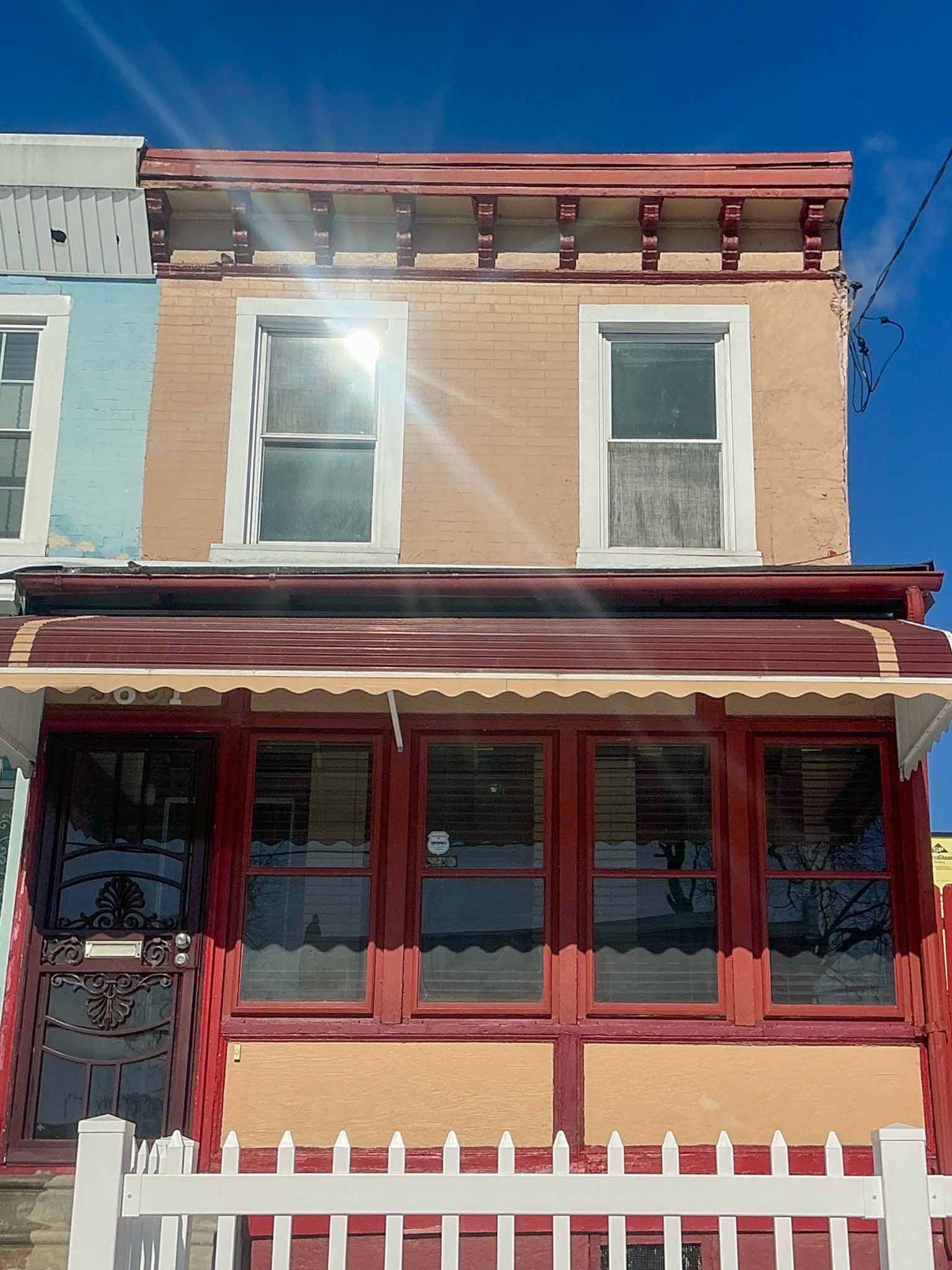
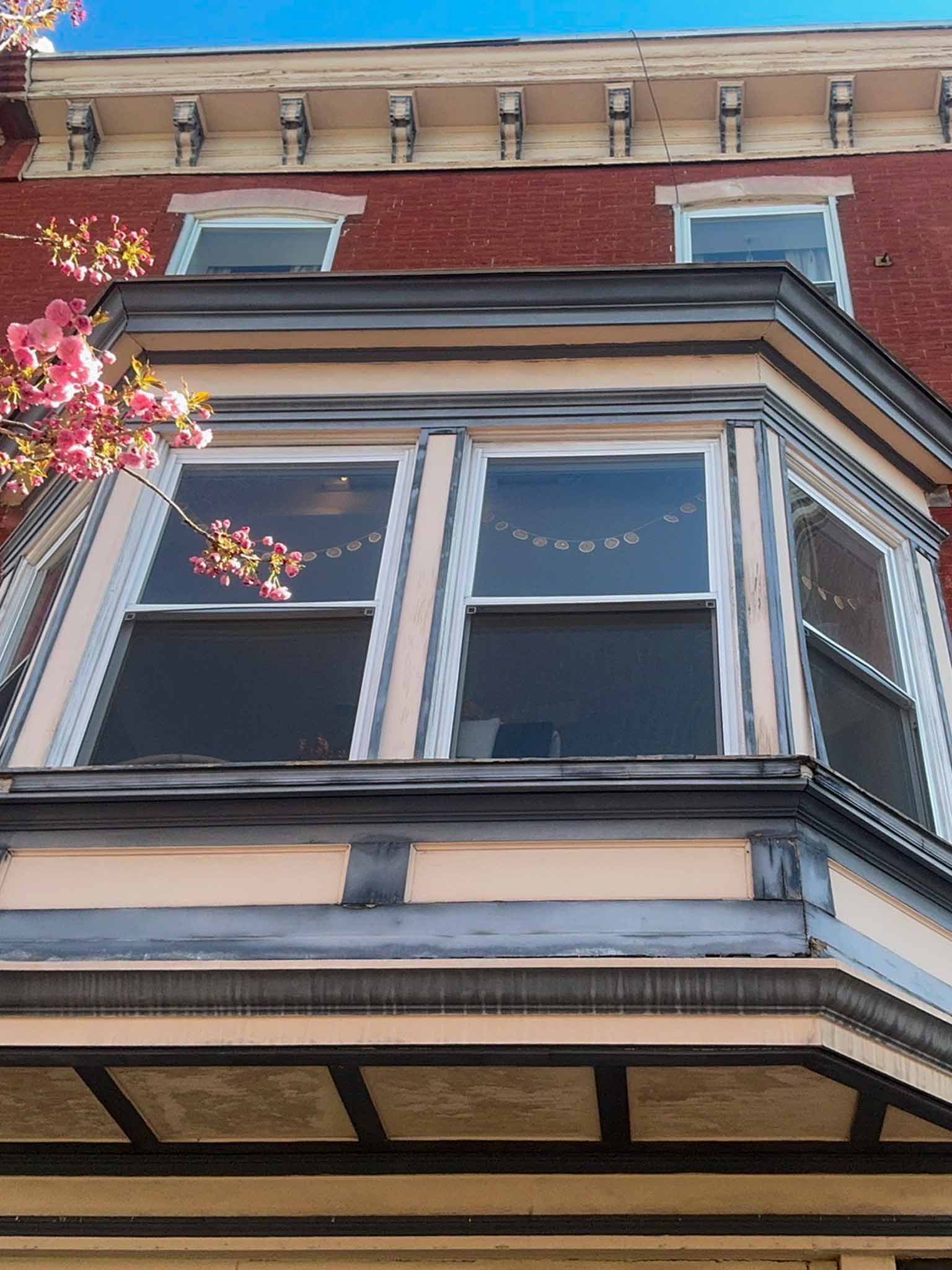
Three homes from recent ValueGuard inspections in University City — a signature projecting wooden bay window with bracketed cornice on a Spruce Hill twin, a brick Victorian twin with original enclosed wraparound porch, and an 1880s stone-and-brownstone twin with ornate carved wood brackets. Same neighborhood, three entirely different inspections. Swipe or use the arrows to see all three.
No. 01
Wooden Bay with Bracketed Cornice
The signature University City architectural detail — a three-sided projecting wooden bay window with original tall windows, decorative bracketed cornice, painted wood skirt, and the kind of carefully layered Victorian millwork that defines Spruce Hill and Cedar Park. Beautiful, distinctive, and exposed to weather on all three sides — with very specific inspection considerations.
No. 02
Brick Twin with Enclosed Porch
A classic University City porch-front Victorian — peach-painted brick second story with bracketed cornice and dental detail, original enclosed wraparound front porch with scalloped trim and dark-red beveled wood front door with ornate iron lacework, white picket fence at the property line. The kind of porch-front twin found throughout Cedar Park, Walnut Hill, and Garden Court — with porch enclosures typically added in the mid-1900s over original open porches.
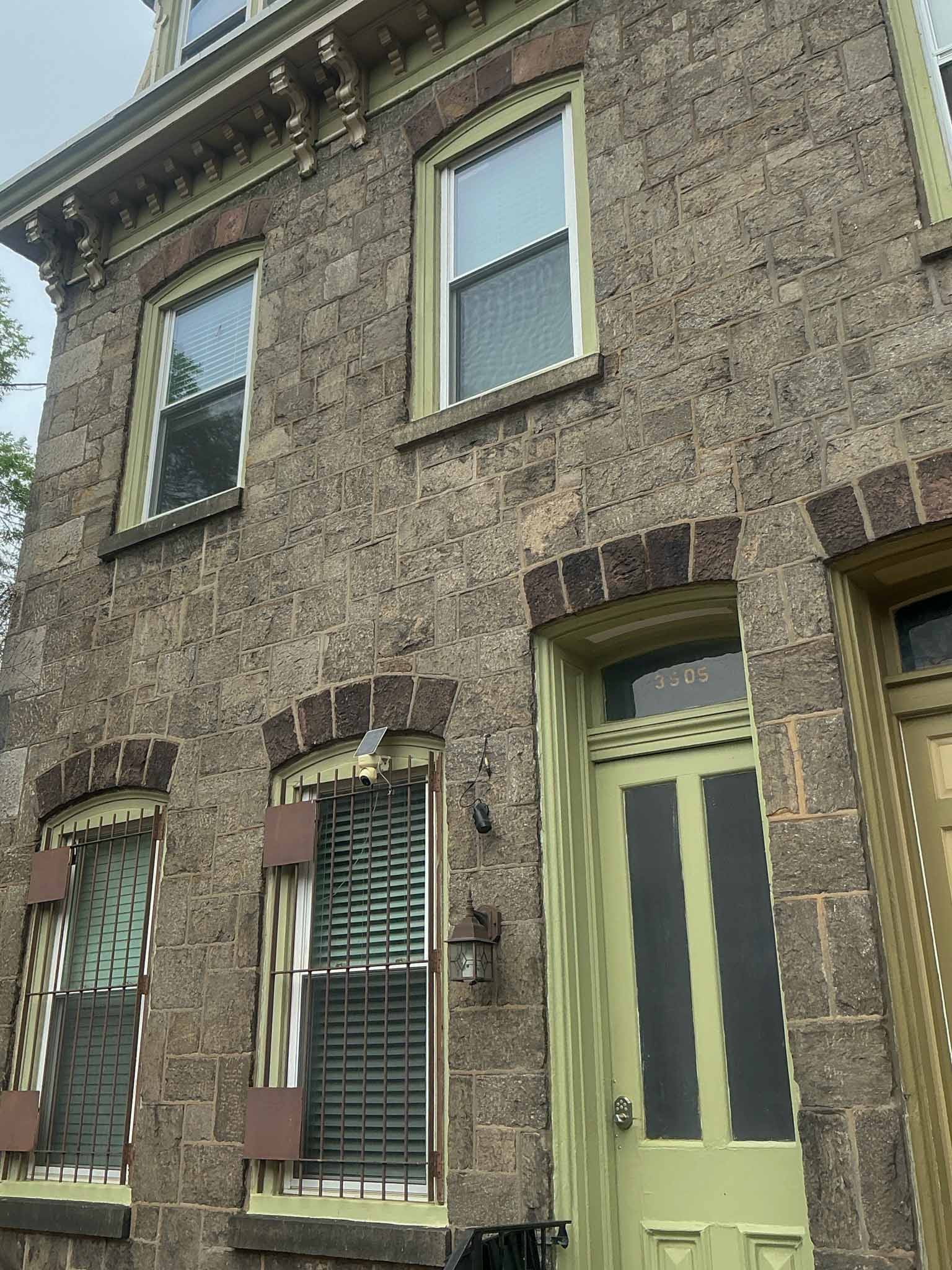
No. 03
Stone & Brownstone Victorian Twin
A signature University City Victorian property at #3505 — rusticated Wissahickon schist facade with contrasting brownstone voussoirs and lintels above doors and windows, ornate carved wood brackets at the cornice, green-painted trim, and a four-panel door with arched transom. The layered Victorian detailing that distinguishes Spruce Hill, Cedar Park, and Garden Court — with very specific inspection considerations.
Photos from recent ValueGuard inspections in University City.
ii. The four services that matter most
What to inspect in University City.
Home Inspection
A complete evaluation of structure, roof, electrical, plumbing, HVAC, and major systems — delivered as a photo-rich report the next business day. Tuned to whichever University City property type you’re buying: 1880s Victorian twin, porch-front rowhome, multi-unit conversion, or modern high-rise condo.
Sewer Scope Inspection
Strongly recommended on University City Victorians — sewer laterals here largely date to the original 1880s construction and run beneath the mature street trees that define Spruce Hill, Cedar Park, and Garden Court. Our camera travels the lateral from cleanout to main, documenting root intrusion, offsets, bellies, and collapse. A few hundred dollars now can save tens of thousands later.
Radon Testing
Radon appears throughout West Philadelphia — including in University City Victorians with original or finished basements. Our PA DEP-certified technicians use tamper-resistant electronic monitors with 48-hour turnaround. Mitigation, if needed, typically runs $800 to $2,500.
Multi-Family Inspections
Built for University City’s many multi-unit converted Victorians. We inspect each unit and the building as a whole, evaluate egress and fire separation, check electrical service capacity for multiple meters, review whether the conversion was permitted through PHL L&I, and document the condition of shared systems — roof, foundation, mechanical, and exterior envelope.
← Swipe to see all four →
Ready to book your inspection?
iii. Your local inspection team
Meet your University City inspectors.
When you book ValueGuard in University City, you get inspectors who have walked thousands of 1880s Victorian twins and detached houses, multi-unit conversions, porch-front rowhomes, and modern high-rise condos — and know exactly what to look for in each. Swipe or use the arrows to meet all 9 inspectors serving Philadelphia.
Schedule now
Meet our full team →
iv. Services & pricing
University City inspection pricing.
Starting prices shown. Final price confirmed at booking. See full pricing →
| Value Package · $829 · save $149 | Value + Sewer Scope · $1,108 · save $199 | Full Protection · $1,457 · save $249 |
See full pricing and packages →
v. What buyers say
From recent buyers.
★★★★★
James was incredibly knowledgeable and patient. He has a great attention to detail and excellent communication skills. Would highly recommend.
Lindsey Kuhl
Google · Inspector: James Royer
★★★★★
Buying our first home was a milestone for us, and having ValueGuard there made it that much easier. We’ll definitely recommend them.
Michael & Marissa R.
Google · Philadelphia, PA
★★★★★
Incredible experience working with Nick! He was so thorough and patient with all my questions. Would definitely recommend ValueGuard.
Anne Tran
Google · Inspector: Nick Ostrowski
← Swipe to see all three →
Read all 1,300+ Google reviews → · See our reviews page →
vi. Common questions
Frequently asked.
How much does a home inspection cost in University City?
+
Do I need a home inspector in University City who knows the neighborhood?
+
What’s different about inspecting a University City home?
+
Should I get a sewer scope on a University City home?
+
What should I know about buying a multi-unit Victorian in University City?
+
What are the biggest issues in University City homes?
+
Can I be present during the inspection?
+
How quickly can I schedule in University City?
+
vii. Serving all of Philadelphia
Also inspecting nearby neighborhoods.
Wherever you’re buying in Philadelphia, ValueGuard is your local inspector.
Ready when you are
Let’s take a closer look at your University City home.
Book online in under 3 minutes — or call (215) 860-3150. Seven days a week. Report in your inbox tomorrow. 100% Satisfaction Guarantee.
Schedule my inspection
Get instant quote
Meet our full team →
100 E Penn Square, Suite 400, Philadelphia, PA 19107
(215) 860-3150
Inspections 7 days a week · Office hours Mon–Fri 8:30am–5pm, Sat 9am–4pm · ASHI-certified home inspectors in University City · Serving University City (19104, 19139, 19143) and every Philadelphia neighborhood