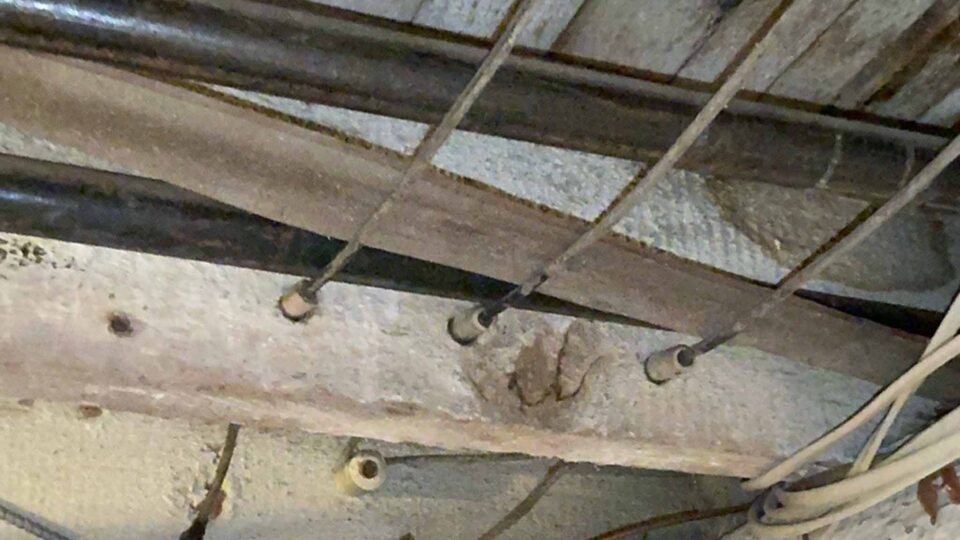
The first time you hear the words “knob and tube,” it’ll probably be from a home inspector standing in an attic in Mt. Airy, a basement in Manayunk, or a crawl space under a stone colonial in Bryn Mawr. The tone will be careful — not alarmed, exactly, but deliberate. And then your stomach will drop slightly, because the next question is always the same: How much is this going to cost me?
Here’s the thing nobody tells you when you start house-hunting in Greater Philadelphia: knob-and-tube wiring isn’t some rare antique curiosity. The Philadelphia–Camden–Wilmington metropolitan area has some of the oldest housing stock in the country, ranked 17th nationally with 31.57 percent of homes built before 1950. Inside the city limits, 41.7% of housing units were built before 1940. If you’re shopping in our region — Philadelphia or any of the surrounding counties — you are statistically very likely to encounter knob-and-tube at some point. The question isn’t whether you’ll see it. The question is what to do when you do.
The Philly reality check: Roughly 4 out of every 10 homes inside the city — and nearly 1 in 3 across the metro — predate modern electrical standards. Knob-and-tube isn’t a defect. It’s a feature of the neighborhood you love.
What Knob-and-Tube Actually Is (In Plain English)
Knob-and-tube (K&T) was the dominant residential wiring system in North America from roughly the 1880s through the late 1940s. The name is literal: porcelain knobs hold the wires in place along joists and studs, and porcelain tubes protect them where they pass through wooden framing. The hot and neutral conductors run as two separate single wires — not bundled together the way modern Romex cable bundles them — and they’re spaced a few inches apart so heat can radiate into open air.
There is no third wire. There is no ground.
Porcelain knob
Porcelain tube
Hot wire
Neutral wire
Anatomy of a K&T wiring run
In its day, this was a perfectly engineered system for a house that ran a few light bulbs, a radio, and maybe an icebox. The problem isn’t that K&T was bad design. The problem is that we now plug 47 things into one Manayunk row home that was built for three.
Three Scenarios Greater Philly Inspectors See Constantly
In over two decades inspecting homes from Doylestown down to West Chester, we’ve found that K&T rarely shows up the way buyers expect. It’s almost never a simple “the whole house is original.” Instead, it tends to fall into one of three patterns — and recognizing which one you’re dealing with is the difference between a fair negotiation and a panicked one.
The “partial rewire” — most common in Philly row homes and twins
A previous owner — or a flipper — replaced the wiring on the first two floors, dropped a shiny new 200-amp panel in the basement, and called it a day. The third floor and attic are still on the original K&T, fed through a fuse-style sub-circuit or a single tapped junction in the ceiling. From the curb, the house looks “renovated.” From the attic, it tells a different story. This is the scenario where buyers get the most caught off-guard, because the listing photos show recessed lighting and quartz countertops, not the porcelain knobs three feet above the bedroom ceiling.
K&T buried in blown-in insulation — the silent fire hazard
Somewhere in the 1990s or 2000s, an energy-efficiency contractor blew cellulose or fiberglass into the attic of a stone colonial in Haverford or a Cape in Abington. They didn’t check what was underneath. K&T was specifically designed to dissipate heat into open air — burying it under insulation traps that heat. This is the number one reason insurance carriers in Pennsylvania flag K&T as an elevated risk. If your inspector finds insulation covering active K&T runs, that’s not a “monitor it” finding. That’s an “address before closing” finding.
“Spider-webbing” — the DIY legacy of 75 years of homeowners
Every time a homeowner over the past 75 years added a ceiling fan, an outlet, or that gigantic 1970s window AC unit, they may have spliced into the existing K&T. Often these splices are wrapped in cloth tape, hidden behind plaster, and entirely undocumented. We’ve pulled junction boxes in homes from Germantown to West Chester and found Romex from 1985 spliced onto K&T from 1925 with electrical tape from 2003. That’s not just a code violation — it’s a fire that hasn’t started yet.
The Insurance Conversation You Need to Have Before You Submit an Offer
This is where K&T turns from “interesting old-house quirk” into “this could blow up my deal.” Most buyers don’t call their insurance agent until after their offer is accepted. With K&T, that’s backwards.
Pennsylvania homeowners’ insurance carriers treat K&T very differently from one another. In our experience inspecting homes across Bucks, Chester, Delaware, Montgomery, and Philadelphia counties, here’s what we typically see:
|
Carrier Type A
Outright refusal
Will not write a new policy at any price if active K&T is present. Common with national carriers. |
Carrier Type B
Conditional approval
Will write the policy only if a licensed electrician certifies the K&T is intact, not covered by insulation, and not over-fused. Often requires removal within 30–90 days. |
Carrier Type C
Higher premium, full coverage
Specialty or regional carrier accepts the risk for an elevated premium. Usually 15–40% more annually than a standard policy. |
The practical takeaway: if you’re shopping in a neighborhood with significant pre-1950 housing stock — Chestnut Hill, Narberth, Jenkintown, Doylestown, West Chester, or anywhere in the city — call your insurance agent before you submit an offer. Ask them point-blank: “What is your carrier’s position on knob-and-tube wiring?” That five-minute phone call has saved more deals than any other piece of advice in this article.
What It Actually Costs to Rewire a Greater Philly Home
National articles love to throw out a range of $12,000 to $36,000 for K&T replacement. That’s accurate — for the national average. For Greater Philadelphia specifically, the picture is tighter and a little more forgiving.
Most Pennsylvania homeowners spend between $5,000 and $10,000 for whole-house rewiring, though the work could cost as little as $1,500 to $2,000 or well over $20,000 depending on size and complexity. Here’s how we see those numbers break down on actual jobs in our service area:
Costs above reflect typical 2026 estimates for Greater Philadelphia. City of Philadelphia jobs run slightly higher due to permitting requirements and union labor rates; rural Bucks and Chester County jobs may run lower. Always get three written estimates from licensed Pennsylvania electricians.
One thing the line items don’t capture: plaster. Homes in Philadelphia, the older Main Line towns, and historic boroughs in Bucks and Chester counties typically have lath-and-plaster walls, not drywall. Every wire pull means a hole, every hole means patching, and patching plaster is twice the price of patching drywall. If your contractor’s estimate doesn’t break out the wall repair as a separate line item, ask why.
How to Negotiate When K&T Shows Up on Your Inspection
Here’s where many buyers leave money on the table. K&T is one of the most negotiable findings in any inspection report — but only if you handle it the right way. A few rules of thumb from someone who has seen hundreds of these negotiations play out:
| Don’t lead with the asking price reduction. Ask for a credit at closing instead. Sellers feel less defensive about a credit (it’s “the closing costs”) than a price drop, and you keep your loan-to-value ratio cleaner. | |
| Get the licensed electrician’s quote before you negotiate — not after. A written estimate from a Pennsylvania-licensed electrician carries 10x the weight of “my inspector said this might cost around $X.” | |
| Tie your ask to the insurance reality. “My carrier won’t write the policy without remediation” is a much harder claim for a seller to dismiss than “I’d prefer it be rewired.” | |
| Prefer a credit over a seller-completed repair. If the seller arranges the rewire to save the deal, they’ll hire the cheapest electrician they can find. You’ll inherit whatever shortcuts that involves. Take the credit, hire your own contractor. | |
| Don’t expect 100%. Sellers in our market often split K&T costs 50/50 with the buyer, particularly when the listing already disclosed “as-is” or “original electrical.” Going in expecting full remediation usually kills the deal. |
When K&T Is Probably Fine — and When It Isn’t
Knob-and-tube is not automatically dangerous. The copper conductors themselves were high-quality, the porcelain doesn’t degrade, and many systems have been running quietly for a century with no incidents. Whether yours is a problem comes down to four diagnostic questions — and these are exactly what a good Delco, Montco, Chesco, or Bucks County inspector should be answering for you in plain language:
|
Probably fine
K&T is limited to a small number of low-draw lighting circuits, the insulation on the conductors is intact and supple, there are no homeowner splices, nothing is buried in insulation, and the panel is appropriately fused. |
|
Worth a closer look
K&T serves outlets and bedrooms, the insulation looks brittle but intact, there’s some evidence of past splicing into modern cable. Recommend a follow-up evaluation by a licensed electrician before deciding. |
|
Address before closing
K&T is buried in blown-in insulation, runs to high-draw circuits (kitchen, bathroom, window AC), shows charring or melted insulation, or has been spliced by a non-professional. This is your negotiation moment. |
Why You Want a Local Inspector for This
A home inspector who works mostly in Cherry Hill or Wilmington can absolutely identify K&T. But the nuances — the specific patterns we described above, the way Philly row homes were rewired in waves through the 70s and 80s, the difference between a 1920s Wissahickon schist house in Mt. Airy and a 1940s brick rancher in Havertown — come from inspecting thousands of homes in this specific market.
At ValueGuard, we’ve spent over 25 years inspecting homes across Philadelphia and the four surrounding counties — Bucks, Chester, Delaware, and Montgomery. Our team of 11 certified inspectors is available 7 days a week. We don’t just flag K&T on a report and move on — we photograph every run we can access, document the specific scenario (partial, buried, spider-webbed), and walk you through what it means for your specific deal.
Trusted across five counties
Over 25 years of 5-star service across Philadelphia, Bucks, Chester, Delaware, and Montgomery counties. Read our Google reviews →
Explore our full range of services and coverage areas:
Pre-Purchase Inspection
Radon Testing
Mold Evaluation
Termite Inspection
Philadelphia
Bucks County
Chester County
Delaware County
Montgomery County
Under contract on an older Philly home?
Don’t wait until closing week to find out you have knob-and-tube. A thorough pre-purchase inspection gives you the time, the leverage, and the information to make the right call — before it’s an emergency.