Montgomery County, PA · Mold air testing
Mold Testing in Montgomery County
From Main Line stone colonials in Bryn Mawr and Narberth to split-levels in Horsham and Lansdale, Montgomery County basements are where we find mold most often. A ValueGuard mold test samples the air in those rooms and compares it with the air outside, so you know what you’re buying.
Every number on this page comes from 27 ValueGuard mold air tests in Montgomery County, read straight off the lab reports.
Montgomery County mold testing at a glance
✓From $399Two indoor rooms plus an outdoor control sample. Extra rooms $100 each.
✓Accredited independent labAir samples analyzed by EMSL Analytical (AIHA-LAP EMLAP accredited).
✓27 Montco homes testedLab results from 16 towns, Lower Merion to Harleysville
✓Testing onlyWe don’t sell mold remediation, so we have no reason to find a problem.
✓Since 199794,000+ inspections · 4.9★ on Google
The short answer
| Cost | $399 for two indoor air samples plus an outdoor control; $100 per additional room. Included in our Full Protection package. |
| What you get | A lab report with spore counts per cubic meter for every room tested, compared with the outdoor sample, plus a plain-language summary from ValueGuard. |
| What we find most in Montgomery County | Basements far above the outdoor air for Aspergillus/Penicillium (17 of 21 homes read highest in the basement), and water-damage molds in 12 of 27 homes |
| Turnaround | Lab results are usually back 1–3 business days after sampling. |
| Service area | All of Montgomery County: Lower Merion and the Main Line, Cheltenham, Abington, Horsham, Lansdale, Blue Bell, Collegeville and Pottstown |
✦✦✦
Montgomery County has some of the oldest suburban housing in the region, and a lot of it sits on fieldstone or block foundations under mature trees. Those basements stay damp, and many have been finished since. Of all the counties we test in, Montgomery has had the highest share of homes with signs of mold growing indoors.
✦✦✦
i. Montgomery County by the numbers
27 Montco homes, and the basement usually wins.
In more than half of the Montgomery County homes we tested, at least one room had Aspergillus/Penicillium at least twice the outdoor air. Where we sampled both, the basement was the higher reading in 17 of 21 homes.
27Montgomery County homes air-testedLab reports since 2025
59%showed indoor mold growth16 of 27 homes had Aspergillus/Penicillium at least 2× the outdoor sample (and 500+ spores/m³) in at least one room
17 of 21basements read highestHomes where we sampled both a basement and a living area
44%had water-damage molds12 of 27 homes had Stachybotrys or Chaetomium in an indoor sample
Montgomery County figures use every ValueGuard mold air test we matched to a Montco address since 2025 (27 homes, 16 towns). How we counted.
✦✦✦
ii. Real results from recent reports
What the lab actually found.
Four recent Montgomery County tests. The pattern repeats: the basement is high, and the question is whether it has spread upstairs.
 Elevated
Bryn Mawr · Jul 2026
Standing water, a damaged bulkhead and a sump pump going the wrong wayAspergillus/Penicillium, spores/m³
Basement35,100
2nd-floor bedroom0
Outdoor air80
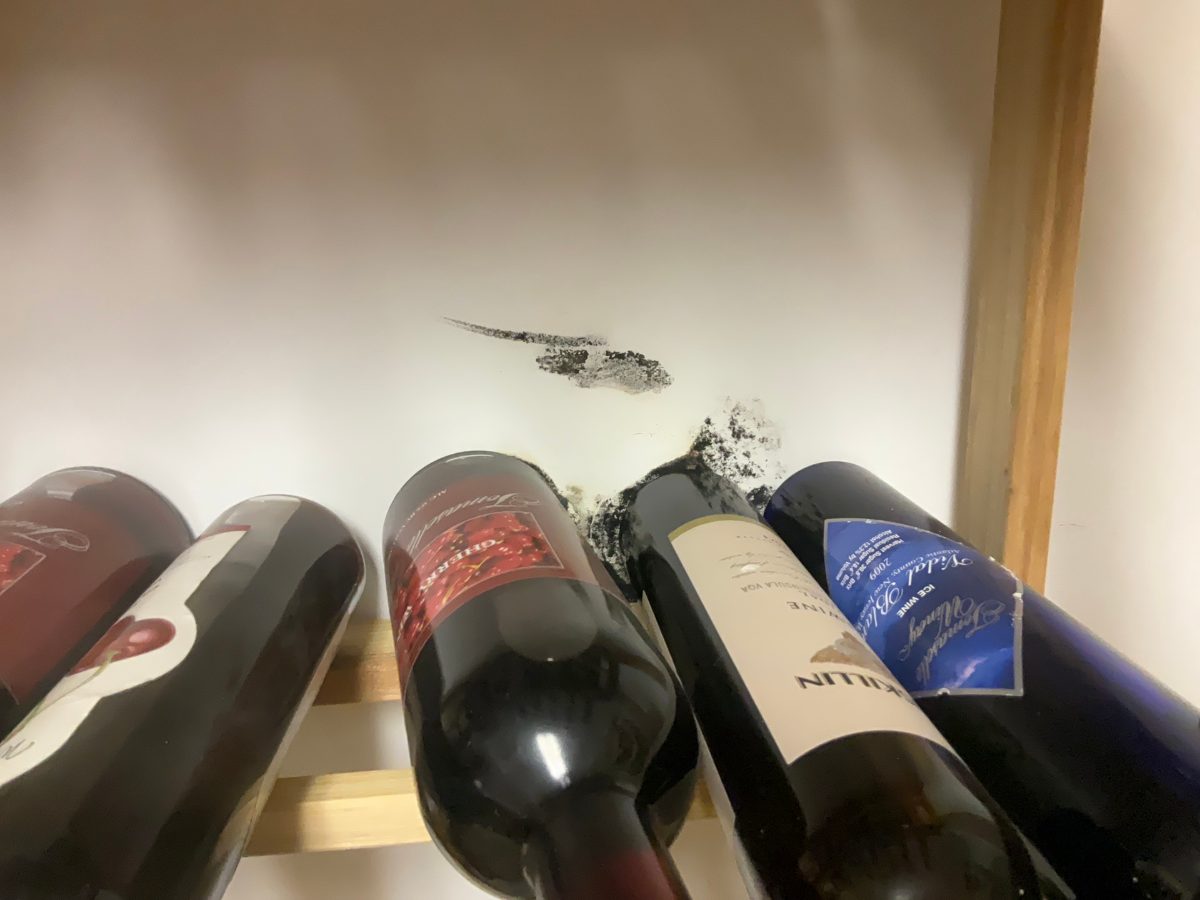
The inspection found masonry damage at the bulkhead door letting water in, standing water, a sump pump discharging into the house’s waste piping and suspected mold growth. The basement read 35,100 Aspergillus/Penicillium spores/m³; the upstairs bedroom had no Aspergillus/Penicillium detected, so the problem was still mostly contained to the basement.
ElevatedHighest indoor reading197,000Aspergillus/Penicillium in the basement
North Wales · Sep 2026
Highest Montco reading in our dataAspergillus/Penicillium, spores/m³
Basement197,000
Owner bedroom/bath2,100
Outdoor air400
The basement was nearly 500 times the outdoor sample, and the owner’s suite was more than five times outdoors. That is a remediation-scale result, and it gave the buyer specific numbers to negotiate with.
ElevatedHighest indoor reading67,200Aspergillus/Penicillium in the basement
Wyncote · Aug 2025
Clean outside air, very different insideAspergillus/Penicillium, spores/m³
Basement67,200
Top floor2,100
Outdoor air0
No Aspergillus/Penicillium was detected in the outdoor sample, so what was in the basement was coming from the house, not from outside. The top floor was elevated as well, a sign the basement air was reaching living space.
Water-damage moldsHighest indoor reading16,000Aspergillus/Penicillium + Chaetomium in the basement
Narberth · Aug 2026
A water-damage indicator in a Main Line twinAspergillus/Penicillium, spores/m³
Basement16,000
Bedroom300
Outdoor air100
Besides high Aspergillus/Penicillium, the basement had 700 Chaetomium spores/m³, a mold the lab lists as a water-damage indicator. It grows on materials that have been wet for a while, such as drywall paper or wood.
Readings are spores per cubic meter of air (spores/m³) from the EMSL lab reports. Addresses are withheld. See a full sample report.
✦✦✦
iii. Why Montgomery County homes are different
Fieldstone, shade and finished basements.
These are the conditions behind most of the high Montgomery County results we see.
Stone and block foundationsLower Merion, Narberth, Wynnewood and Cheltenham have many early-1900s homes on fieldstone. Those walls pass ground moisture straight into the basement.
Finished basements over old wallsPaneling, carpet and drywall added to an old basement give mold something to eat. Several of our highest Montco readings were in finished or partly finished basements.
Mature trees and shadeHeavily wooded lots keep roofs, gutters and soil damp, and clogged gutters dump water at the foundation.
Sump pumps and bulkheadsWe regularly find sump pumps discharging into the sewer line or next to the house, and bulkhead doors that let water in. Each one feeds a damp basement.
✦✦✦
iv. How to read a mold report
The outdoor sample is the yardstick.
There are no EPA or other federal limits for mold spores in indoor air, so a number on its own means little. What matters is how each room compares with the air outside on the same day, and which molds are in it.
| What the lab shows | What it usually means |
|---|
| Indoor counts at or below outdoor, similar mix of molds | Normal. Spores are coming in from outside, which every house has. |
| Aspergillus/Penicillium well above the outdoor sample | The most common sign of mold growing inside, usually tied to a damp basement, a leak or high humidity. |
| Stachybotrys or Chaetomium found indoors | The lab flags these as water-damage indicators. Even low counts point to wet building materials somewhere. |
| One room high, others normal | Usually a local moisture source. That room is where to look first. |
| Every indoor room high | Often an HVAC or whole-house humidity problem rather than one leak. |
The EPA recommends keeping indoor humidity below 60% and ideally between 30 and 50%. Fixing the moisture is what fixes the mold.
✦✦✦
v. How it works
Three steps, one visit.
1Book with your inspectionAdd mold air sampling when you schedule. We sample during the same visit, so it doesn’t add a trip.
2We pick the roomsIn most Montco homes we sample the basement and the main living floor or the owner’s bedroom, plus the outdoor control. Finished and unfinished basement areas can be sampled separately.
3Lab results, explainedEMSL analyzes the spore traps and we send the full lab report with a short summary of what it means for this house.
✦✦✦
vi. Who should test
An independent test, not a sales pitch.
Many “free mold inspections” come from companies that are paid to remove mold. ValueGuard only tests, so the result is the result.
| ValueGuard | Remediation company |
|---|
| Sells remediation | No | Yes |
| Outdoor control sample | Always | Varies |
| Accredited lab report you keep | Yes, EMSL | Varies |
| Ties results to the home inspection | Yes, same visit and same team | No |
| Cost | From $399 | Free, then a remediation quote |
✦✦✦
vii. Across Montgomery County
From the Main Line to Pottstown.
Our Montgomery County results include Ambler, Bala Cynwyd, Blue Bell, Bryn Mawr, Conshohocken, Elkins Park, Glenside, Harleysville, Horsham, Huntingdon Valley, Lansdale, Narberth, North Wales, Oreland, Wyncote, and Wynnewood. We test anywhere in the county, usually during the same visit as the home inspection.
Mold testing in other counties: Philadelphia · Delaware County · Chester County · Bucks County
✦✦✦
viii. Questions we get
Mold testing in Montgomery County, answered.
Should I get mold testing when buying a house in Montgomery County?+
For most older Montco homes, yes, especially homes with finished basements, past water, a sump pump, a musty smell or stone foundations. 59% of the Montgomery County homes we air-tested had Aspergillus/Penicillium at least twice the outdoor air in at least one room.
How much does mold testing cost?+
Mold air sampling is $399, which covers two indoor rooms and the outdoor control sample. Each additional indoor room is $100. Mold testing is also included in our Full Protection package with the home inspection, radon, termite and sewer scope. Get exact pricing on our
instant quote page or call (215) 860-3150.
Where do you test in a Montgomery County home?+
Typically the basement and one main living area or the owner’s bedroom, plus an outdoor control. For homes with a finished and an unfinished basement area, sampling both can show where the source is.
Is there a safe level of mold?+
There are no EPA or other federal limits for mold spores in indoor air. That is why every ValueGuard mold test includes an outdoor control sample: we compare each room with the air outside on the same day, and we look at which molds are present, not just the total.
How long do mold results take?+
Sampling takes well under an hour during the inspection visit. The accredited lab usually returns results 1–3 business days later, and we send you the full lab report with a short summary.
Do you remove mold?+
No. ValueGuard tests and inspects only. We don’t sell remediation, so we have no stake in the result. If a test shows a problem, we can retest after the work is done to confirm the spore levels came down.
How we counted
Montgomery County figures come from the EMSL lab reports for every ValueGuard mold air test we could match to a Montgomery County address, from 2025 through November 2026 (27 homes). Each home is counted once. “Indoor mold growth” means at least one indoor sample had Aspergillus/Penicillium at least twice the outdoor sample and at least 500 spores/m³. “Water-damage molds” means the lab found any Stachybotrys/Memnoniella or Chaetomium indoors. These are ValueGuard’s own results, not a random survey of every home in the county; homes are often tested because a buyer or owner already had a concern.