Philadelphia · Mold air testing
Mold Testing in Philadelphia
Philadelphia rowhomes share walls, sit on old brick and stone foundations, and often hide water behind finished basements and drop ceilings. A ValueGuard mold test samples the air in the rooms that matter and compares them with the air outside, so you know whether there is mold growing in the house before you buy it.
Every number on this page comes from 29 ValueGuard mold air tests in Philadelphia, read straight off the lab reports.
Philadelphia mold testing at a glance
✓From $399Two indoor rooms plus an outdoor control sample. Extra rooms $100 each.
✓Accredited independent labAir samples analyzed by EMSL Analytical (AIHA-LAP EMLAP accredited).
✓29 recent Philly testsAug–Nov 2026 lab reports, rowhomes to condos
✓Testing onlyWe don’t sell mold remediation, so we have no reason to find a problem.
✓Since 199794,000+ inspections · 4.9★ on Google
The short answer
| Cost | $399 for two indoor air samples plus an outdoor control; $100 per additional room. Included in our Full Protection package. |
| What you get | A lab report with spore counts per cubic meter for every room tested, compared with the outdoor sample, plus a plain-language summary from ValueGuard. |
| What we find most in Philadelphia | Basements with active moisture and Aspergillus/Penicillium far above outdoor levels; in 8 of 29 homes the elevated reading reached a bedroom or living area too |
| Turnaround | Lab results are usually back 1–3 business days after sampling. |
| Service area | All Philadelphia neighborhoods, from Center City condos and South Philly rowhomes to Germantown, Oak Lane and the Northeast |
✦✦✦
Philadelphia’s housing is old and close together. Much of the city’s rowhome stock was built before World War II, with brick or stone basement walls that were never meant to be finished, rear areaways and bulkheads that collect water, and flat roofs that leak into top-floor ceilings. Moisture is the cause of indoor mold, and Philly houses have a lot of ways to let it in. A mold air test tells you whether that moisture has already turned into mold growth you would be breathing.
✦✦✦
i. Philadelphia by the numbers
29 Philadelphia homes, tested this fall.
These are our 29 most recent Philadelphia mold air tests. In almost half, at least one room had Aspergillus/Penicillium well above the outdoor air, the clearest lab sign of mold growing inside.
29Philadelphia homes air-testedAug – Nov 2026
45%showed indoor mold growth13 of 29 homes had Aspergillus/Penicillium at least 2× the outdoor sample (and 500+ spores/m³) in at least one room
10 of 18basements read highestHomes where we sampled both a basement and a living area
17%had water-damage molds5 of 29 homes had Stachybotrys or Chaetomium in an indoor sample
Philadelphia figures use our 29 most recent city tests (Aug–Nov 2026). How we counted.
✦✦✦
ii. Real results from recent reports
What the lab actually found.
Four recent Philadelphia tests, with the same readings the buyer received. Two had obvious water problems in the home inspection; for the other two, the lab numbers tell the story.
 Elevated
Queen Village · Oct 2026
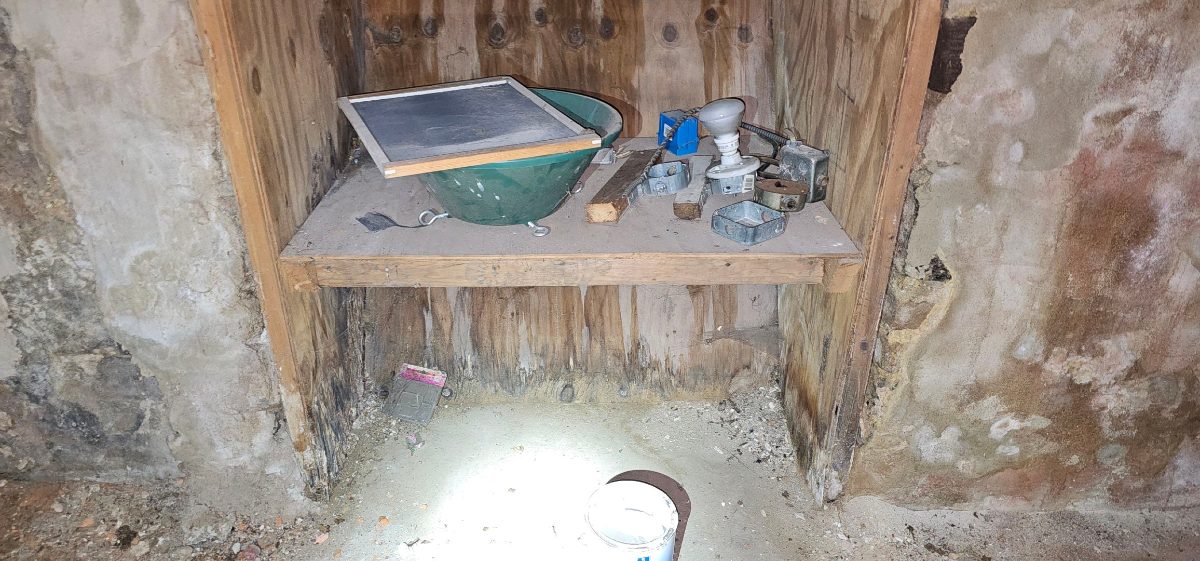
A sealed-up basement exit and the highest reading of the seasonAspergillus/Penicillium, spores/m³
Basement882,000
Outdoor air0
The rear basement exit had been covered with plywood under a deck. The inspector found moisture, suspected mold and rot behind it, and above-average, ongoing moisture in the basement. The lab confirmed it: 882,000 Aspergillus/Penicillium spores per cubic meter in the basement, against none detected outdoors, plus Chaetomium.
 Water-damage molds
Oak Lane · Nov 2026
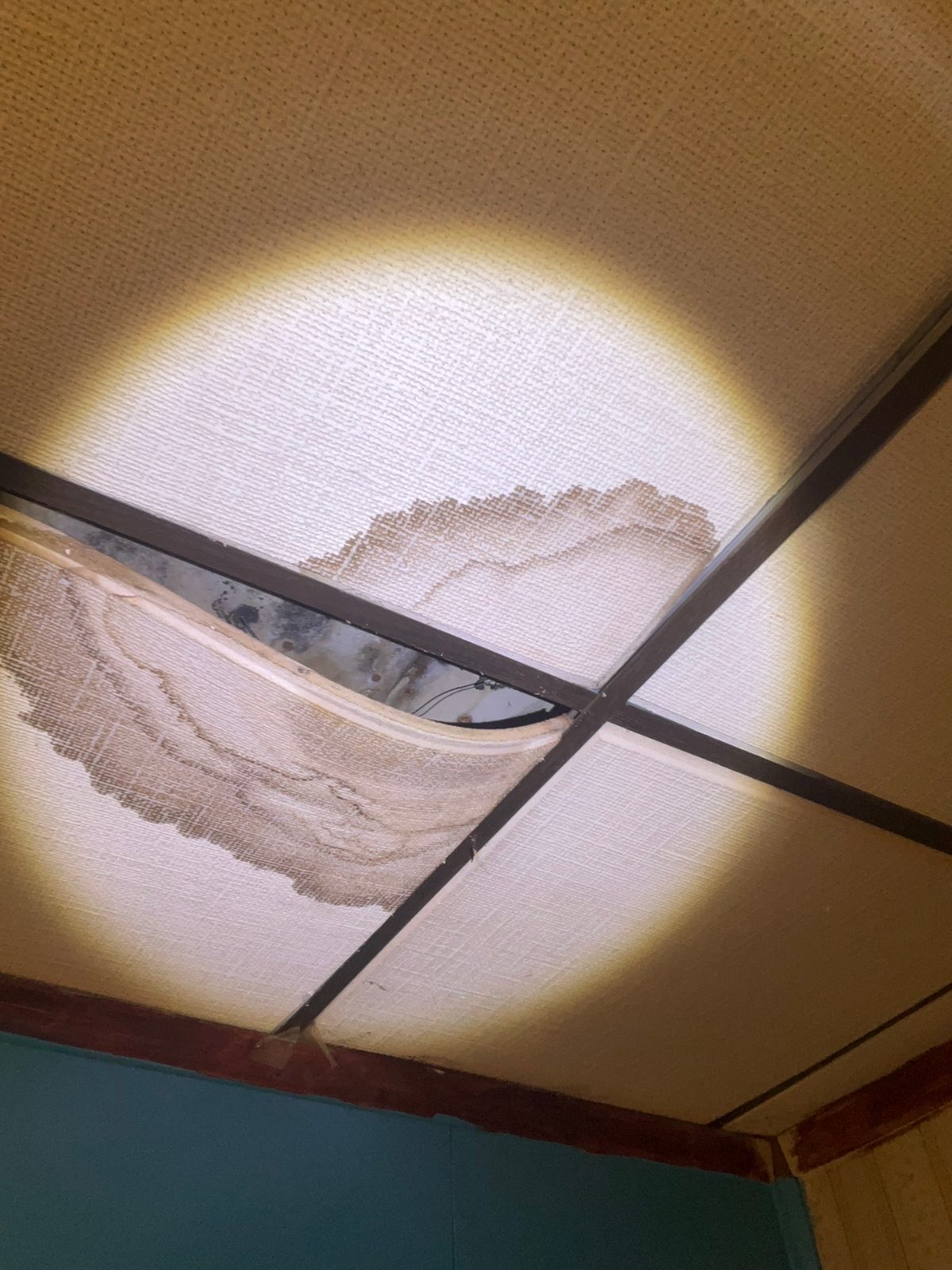
Stained ceilings upstairs, Stachybotrys in the basementAspergillus/Penicillium, spores/m³
Basement29,400
Bedroom7,350
Outdoor air820
The home inspection noted wet moisture damage and suspected mold growth. The basement air had 29,400 Aspergillus/Penicillium spores/m³ and both water-damage indicators, Stachybotrys and Chaetomium. The bedroom was elevated too, which told the buyer the problem was not confined to the basement.
ElevatedHighest indoor reading175,000Aspergillus/Penicillium in the basement
Northwest Philadelphia · Sep 2026
A basement reading in the six figuresAspergillus/Penicillium, spores/m³
Basement175,000
Outdoor air400
Basement spore counts were more than 400 times the outdoor sample. In a basement, a number like this almost always means mold growing on organic material such as framing, stored boxes or drywall, and it is worth finding before closing.
ElevatedHighest indoor reading5,490Aspergillus/Penicillium in a rear bedroom
Roxborough area · Nov 2026
The basement reading followed the stairsAspergillus/Penicillium, spores/m³
Basement18,700
Rear bedroom5,490
Outdoor air200
The basement was high and a rear bedroom was more than 25 times the outdoor sample. Testing a living area as well as the basement is what showed the spores were moving through the house.
Readings are spores per cubic meter of air (spores/m³) from the EMSL lab reports. Addresses are withheld. See a full sample report.
✦✦✦
iii. Why Philadelphia homes are different
Old walls, shared walls, wet basements.
These are the conditions we see over and over in Philadelphia homes that test high.
Brick and stone foundationsPre-war basement walls wick ground moisture. Efflorescence and damp walls are common, and finishing them with drywall or paneling traps that moisture against organic material.
Areaways, bulkheads and rear exitsRear stairwells, abandoned basement exits and front areaways collect rain. Our worst result this season came from one that had been covered over instead of fixed.
Flat roofs and top-floor ceilingsRowhome roofs are low-slope membranes. Slow leaks show up as stained ceilings and drop-ceiling tiles on the top floor, sometimes years before anyone sees a drip.
Tight, shared buildingsParty walls, small windows and limited ventilation keep humid air inside. In 8 of our 29 recent Philly tests the elevated reading reached a bedroom or living room, not just the basement.
✦✦✦
iv. How to read a mold report
The outdoor sample is the yardstick.
There are no EPA or other federal limits for mold spores in indoor air, so a number on its own means little. What matters is how each room compares with the air outside on the same day, and which molds are in it.
| What the lab shows | What it usually means |
|---|
| Indoor counts at or below outdoor, similar mix of molds | Normal. Spores are coming in from outside, which every house has. |
| Aspergillus/Penicillium well above the outdoor sample | The most common sign of mold growing inside, usually tied to a damp basement, a leak or high humidity. |
| Stachybotrys or Chaetomium found indoors | The lab flags these as water-damage indicators. Even low counts point to wet building materials somewhere. |
| One room high, others normal | Usually a local moisture source. That room is where to look first. |
| Every indoor room high | Often an HVAC or whole-house humidity problem rather than one leak. |
The EPA recommends keeping indoor humidity below 60% and ideally between 30 and 50%. Fixing the moisture is what fixes the mold.
✦✦✦
v. How it works
Three steps, one visit.
1Book with your inspectionAdd mold air sampling when you schedule. We sample during the same visit, so it doesn’t add a trip.
2We pick the roomsUsually the basement plus the main living area or a top-floor bedroom, the two places Philadelphia rowhomes most often show trouble, along with the outdoor control.
3Lab results, explainedEMSL analyzes the spore traps and we send the full lab report with a short summary of what it means for this house.
✦✦✦
vi. Who should test
An independent test, not a sales pitch.
Many “free mold inspections” come from companies that are paid to remove mold. ValueGuard only tests, so the result is the result.
| ValueGuard | Remediation company |
|---|
| Sells remediation | No | Yes |
| Outdoor control sample | Always | Varies |
| Accredited lab report you keep | Yes, EMSL | Varies |
| Ties results to the home inspection | Yes, same visit and same team | No |
| Cost | From $399 | Free, then a remediation quote |
✦✦✦
vii. Across Philadelphia
Every neighborhood, one standard.
We test homes all over the city, from Center City high-rises and South Philadelphia rowhomes to Fishtown, Germantown, Oak Lane, Roxborough and the Northeast. Every test uses the same method and the same lab.
Mold testing in other counties: Montgomery County · Delaware County · Chester County · Bucks County
✦✦✦
viii. Questions we get
Mold testing in Philadelphia, answered.
Should I get mold testing when buying a house in Philadelphia?+
It is worth it for most Philadelphia purchases, especially rowhomes with finished basements, signs of past water, musty odors or stained ceilings. In our 29 most recent city tests, 45% of homes had at least one room with Aspergillus/Penicillium well above the outdoor air.
How much does mold testing cost?+
Mold air sampling is $399, which covers two indoor rooms and the outdoor control sample. Each additional indoor room is $100. Mold testing is also included in our Full Protection package with the home inspection, radon, termite and sewer scope. Get exact pricing on our
instant quote page or call (215) 860-3150.
Where do you test in a Philadelphia rowhome?+
Usually the basement and the main living area or a top-floor bedroom, plus an outdoor control sample. If there’s a specific concern, like a stained ceiling or a musty closet, we can sample that room as an additional location.
Is there a safe level of mold?+
There are no EPA or other federal limits for mold spores in indoor air. That is why every ValueGuard mold test includes an outdoor control sample: we compare each room with the air outside on the same day, and we look at which molds are present, not just the total.
How long do mold results take?+
Sampling takes well under an hour during the inspection visit. The accredited lab usually returns results 1–3 business days later, and we send you the full lab report with a short summary.
Do you remove mold?+
No. ValueGuard tests and inspects only. We don’t sell remediation, so we have no stake in the result. If a test shows a problem, we can retest after the work is done to confirm the spore levels came down.
How we counted
Philadelphia figures come from the EMSL lab reports for ValueGuard’s 29 most recent Philadelphia mold air tests (August–November 2026). Each home is counted once. “Indoor mold growth” means at least one indoor sample had Aspergillus/Penicillium at least twice the outdoor sample and at least 500 spores/m³. “Water-damage molds” means the lab found any Stachybotrys/Memnoniella or Chaetomium indoors. These are ValueGuard’s own results, not a random survey of every home in the county; homes are often tested because a buyer or owner already had a concern.