The short answer
A termite inspection in Bucks County, also called a WDI (wood destroying insect) inspection, is a visual inspection of a home’s accessible areas for termites, carpenter ants, carpenter bees and wood-boring beetles, reported on the NPMA-33 form lenders accept. In Bucks County, inspectors look at basement framing in mid-century Lower Bucks homes, slab edges and siding buried in mulch or soil.
| Cost | From $160 for a standalone termite (WDI) inspection; also available as a same-visit add-on to a ValueGuard home inspection |
|---|---|
| What you get | A signed NPMA-33 Wood Destroying Insect Inspection Report covering termites, carpenter ants, carpenter bees and wood-boring beetles — typically delivered the next day |
| Lender requirement | VA requires a WDI report for purchase loans in Bucks County; FHA and conventional lenders often ask for one too |
| What we find most in Bucks County | Mud tubes on basement joists in 1950s homes, siding and trim in contact with mulch or soil, carpenter bees in fences and trim |
| Service area | All of Bucks County — Lower Bucks, Newtown and Yardley, Central Bucks and Upper Bucks |
Fewer than 1 in 10 Bucks County homes was built before 1940, and more than 40% were built after 1980. But Lower Bucks has thousands of 1950s homes, and landscaping across the county often pushes mulch and soil right up against the siding. Both give termites an easy way in. Add a termite inspection to your home inspection or book it separately.
i. Why Bucks County is different
Postwar homes and deep mulch beds.
Eastern subterranean termites are found throughout Pennsylvania. In Bucks County, the risk comes down to how the house meets the ground.
ii. What we’re finding in Bucks County
Real findings from Bucks County homes.
Every photo below comes from a ValueGuard inspection report on a Bucks County home in 2026. Addresses are withheld; towns, home types and findings are as reported.
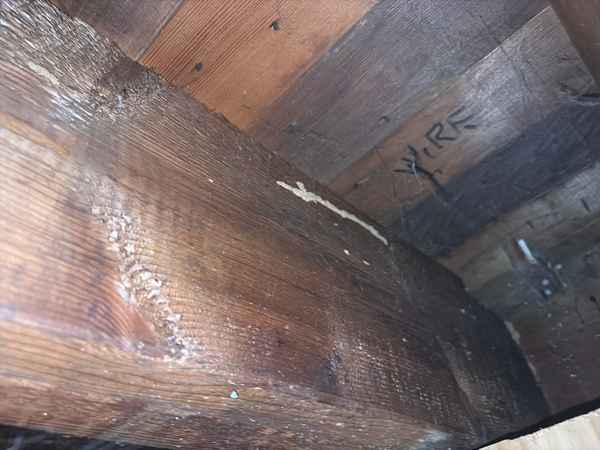
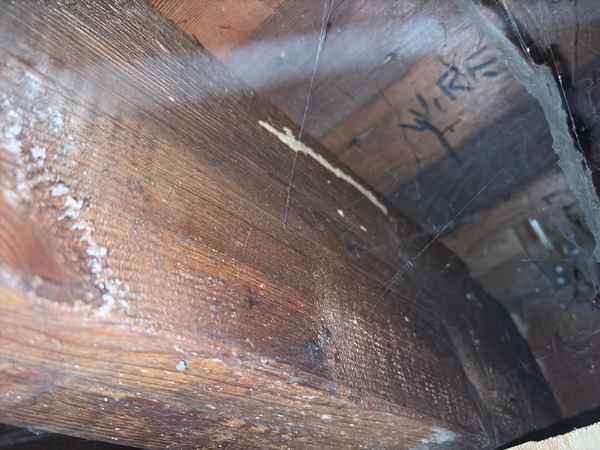
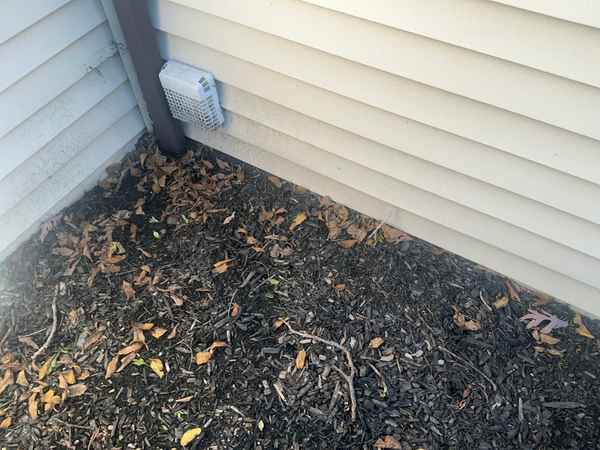
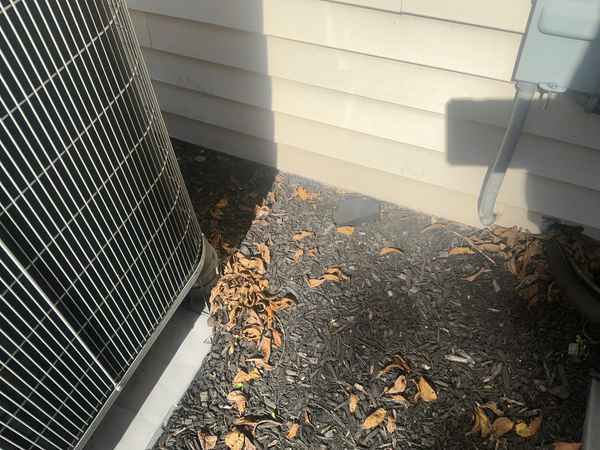
In a sample of four other recent Bucks County reports on homes built 1985–1989, none showed termite evidence, but one had soil against the siding and one had carpenter bees in a fence. Want to see a full report? Browse our sample inspection reports.
iii. What are the odds?
What are the odds this house has termites?
Buyers ask us this every week, so we pulled the answer from our own 2026 reports. Your odds depend mostly on when the house was built.
Termite evidence by year built
Termite evidence by home type
What skipping it can cost
What it means in Bucks County
Fewer than 1 in 10 Bucks County homes was built before 1940, but Lower Bucks’ postwar neighborhoods fall in the 1940–1979 group, where about 1 in 4 homes had termite evidence. Newer homes were rarely affected, but they’re where we most often flag mulch and soil against siding.
Based on a random sample of 219 ValueGuard termite (WDI) inspections from 2026 across Philadelphia, Montgomery, Delaware, Chester and Bucks Counties. “Termite evidence” means the inspector reported suspected termite activity or damage; “any sign” also includes carpenter bees, carpenter ants, beetles and past damage. Repair cost: Orkin. Insurance: National Pest Management Association.
iv. Where we look
Where termites get into Bucks County homes.
Most of what we find in Bucks County is within a foot or two of the ground.
| Where we look | Why it matters in Bucks County | What we’re looking for |
|---|---|---|
| Basement sills and joists | Mid-century homes have original framing | Mud tubes, soft or layered wood |
| Slab edges and door frames | Slab homes have no exposed framing to check | Tubes at the slab edge, damaged baseboards and door frames |
| Siding and trim at grade | Mulch and soil piled against the house | Soil contact, hidden tubes, damp wood |
| Decks, fences and steps | Wood touching or near soil | Damaged posts, carpenter bee holes |
| Garages | Framing sits close to the slab | Damaged bottom plates and trim |
v. Buying with a loan?
Who requires a WDI report in Bucks County?
Bucks County is on the VA’s list of Pennsylvania counties that require a wood destroying insect report. Many conventional buyers add one as well.
| Loan or situation | Is a WDI report needed? | Good to know |
|---|---|---|
| VA purchase or cash-out refinance | Yes — Bucks County is on VA’s list of Pennsylvania counties that require a WDI report | Must be on the NPMA-33 form; lenders generally treat it as valid for about 90 days |
| FHA | Often — when the lender, local custom or the appraiser calls for it | If the appraiser notes possible damage, expect the lender to require an inspection |
| Conventional | Up to the lender and your purchase agreement | Many Pennsylvania agreements give the buyer a WDI inspection contingency |
| Cash purchase | Not required | Still the cheapest way to avoid inheriting hidden damage — insurance usually won’t cover it |
Always confirm your lender’s exact condition early in the deal. County list: VA local requirements for Pennsylvania (64 of 67 counties are listed, including all five Greater Philadelphia counties).
vi. How it works
Three steps, one visit.
A termite inspection in Bucks County starts at $160. Most clients add it to their home inspection so it’s done in the same trip.
vii. Why not just the home inspection?
Home inspection vs. termite inspection.
Your home inspector will note obvious damage, but a general home inspection is not a wood-destroying insect inspection — and it does not produce the report your lender asks for.
| What matters | Home inspection only | ValueGuard termite (WDI) inspection |
|---|---|---|
| Purpose | Overall condition of the house | Focused search for termites, carpenter ants, carpenter bees and wood-boring beetles |
| Lender-ready NPMA-33 | No | Yes — signed and ready for your lender |
| Past treatment & damage noted | Only if obvious | Recorded on the report, including evidence of prior treatment |
| If termites are found | Referral to a pest company | Free, no-obligation treatment proposal from our own team |
| Scheduling | — | Same visit as your home inspection, or on its own |
viii. Across the county
Termite inspections in every Bucks County town.
From Bensalem to Quakertown, we inspect for termites throughout Bucks County. Explore our Bucks County home inspection pages:
More Bucks County services: sewer scope, radon testing, mold testing, chimney inspection. Also see our main termite inspection page and termite treatment.
ix. Common questions
Termite inspection in Bucks County, answered.
Do I need a termite inspection to buy a home in Bucks County, PA?+
Can termites get into a slab home in Levittown?+
Is mulch against the house really a termite risk?+
What does termite treatment cost in Bucks County?+
How much does a termite inspection cost in Bucks County?+
Does a VA loan require a termite inspection in Bucks County?+
What happens if the inspection finds termites?+
What does the NPMA-33 report include?+
Buying in Bucks County?
Clear the termite question before you close.
Schedule a Bucks County termite inspection online in under 3 minutes, or call (215) 860-3150.
Schedule a termite inspectionGet an instant quoteSources: ValueGuard Home Inspections inspection records (Spectora), 2026; Penn State Extension, Eastern Subterranean Termites; National Pest Management Association; VA local requirements for Pennsylvania; DVRPC Bucks County Housing Data Profile (U.S. Census ACS).
Related services