Montgomery County, PA · Termite & WDI Inspection

Termite Inspection in Montgomery County

Montgomery County runs from 1910s Main Line twins to 1960s ranches with crawlspaces and attached garages, and termites find their way into all of them. A ValueGuard termite (WDI) inspection checks the places each kind of house is vulnerable and gives you the NPMA-33 your lender needs.

In our 2026 suburban inspections, about 1 in 7 homes had termite evidence — and 1 in 3 of those built before 1940.

Montgomery County WDI inspection at a glance
✓From $160Standalone or added to your home inspection
✓NPMA-33 reportThe wood-destroying insect form VA, FHA and conventional lenders use
✓Crawlspaces & garagesWe get into crawlspaces and check garage framing at the slab
✓Free treatment proposalIf we find termites, you get a no-obligation plan on the spot
✓Since 199794,000+ inspections · 4.9★ on Google

The short answer

A termite inspection in Montgomery County, also called a WDI (wood destroying insect) inspection, is a visual inspection of a home’s accessible areas for termites, carpenter ants, carpenter bees and wood-boring beetles, reported on the NPMA-33 form. In Montgomery County the risk spots depend on the house: sill plates in older Main Line twins, framing above crawlspaces in mid-century homes, and garage framing at the slab.

CostFrom $160 for a standalone termite (WDI) inspection; also available as a same-visit add-on to a ValueGuard home inspection
What you getA signed NPMA-33 Wood Destroying Insect Inspection Report covering termites, carpenter ants, carpenter bees and wood-boring beetles — typically delivered the next day
Lender requirementVA requires a WDI report for purchase loans in Montgomery County; FHA and conventional lenders often ask for one too
What we find most in Montgomery CountyDamaged sill plates in older twins, mud tubes on framing above crawlspaces, damage in attached garage framing
Service areaAll of Montgomery County — the Main Line, Eastern Montco, the Route 309 and 422 corridors and Pottstown
✦ ✦ ✦

Montgomery County’s housing is a mix: about 1 in 6 homes was built before 1940, but the median house dates to around 1970. That variety changes where termites show up. Our inspectors know to get into the crawlspace of a Hatboro split-level and to check the sills of an Ardmore twin. Add a termite inspection to your home inspection or book it separately.

✦ ✦ ✦

i. Why Montgomery County is different

Three kinds of house, three kinds of risk.

Eastern subterranean termites are found throughout Pennsylvania. In Montgomery County, how they get in depends on when and how the house was built.

Main Line twins and stoneArdmore, Narberth and Bryn Mawr have plenty of early-1900s twins and stone homes with wood sills on rubble foundations. We often find termite galleries right where the sill meets the wall.
Mid-century crawlspacesMany 1950s and 1960s homes in Hatboro, Willow Grove and Lansdale have crawlspaces. They’re dark and often damp, and nobody goes in them — which is why mud tubes there can go unnoticed for years.
Mature trees and wooded lotsOld shade trees, stumps, ivy and wooded lots give termite colonies plenty of food near the house. Ivy growing into a garage wall is a direct path inside.
Garages and finished basementsAttached garages sit on slabs at grade, and finished basements hide the sill and rim joist. We check the garage framing at the slab and note anything we can’t see behind finishes.
✦ ✦ ✦

ii. What we’re finding in Montgomery County

Real findings from Montgomery County homes.

Every photo below comes from a ValueGuard inspection report on a Montgomery County home in 2026. Addresses are withheld; towns, home types and findings are as reported.
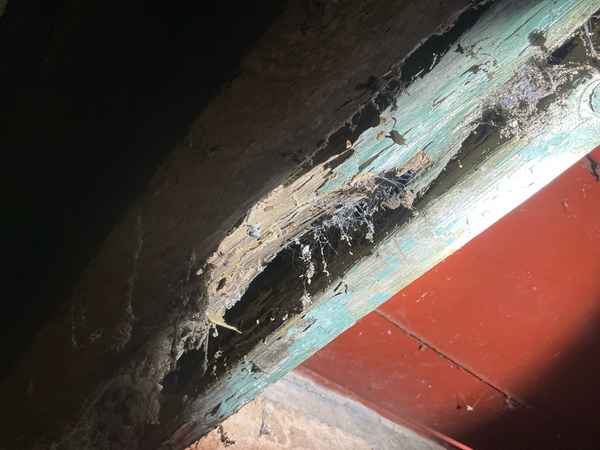
Termite galleries eaten into the sill plate at the exterior wall of an Ardmore twin in Montgomery CountyTermite evidence

Ardmore · twin

Galleries in the sill plate

Basement · sill at the exterior wall

The sill plate along the exterior wall had been eaten into layered galleries. On older twins the sill is often original, and it’s the first wood termites reach from the foundation.

Our recommendation: Treat the structure and have a contractor evaluate the sill before closing.

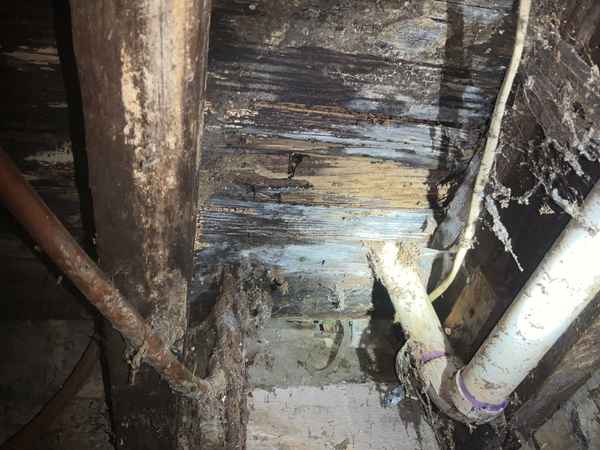
Wood-destroying insect damage on a basement post and subfloor near plumbing in an Ardmore twin in Montgomery CountyWDI damage

Ardmore · same twin

Damage at a post and subfloor

Basement · post and subfloor near plumbing

Damage continued at a basement post and the subfloor near the plumbing — a damp spot that termites favor.

Our recommendation: Treatment, plus repair of the plumbing moisture that attracted them.

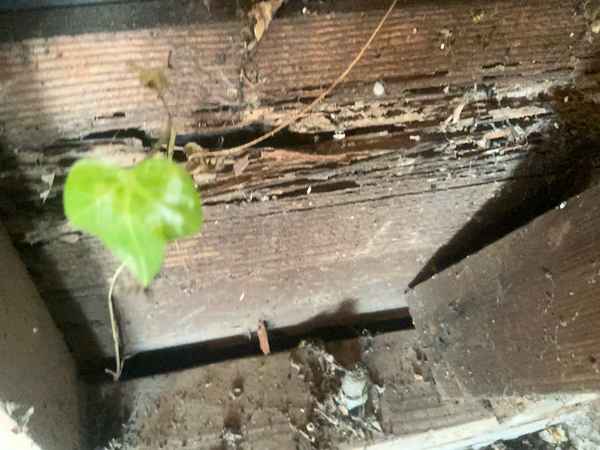
Ivy growing through damaged garage framing in a 1950 Wynnewood home in Montgomery CountyTermite evidence

Wynnewood · 1950 home

Ivy growing into the garage

Garage · framing at the slab

Ivy was growing through the damaged garage framing. Vines hold moisture against the wood and give termites a hidden bridge from the soil.

Our recommendation: Treat, cut back the ivy and repair the damaged framing.

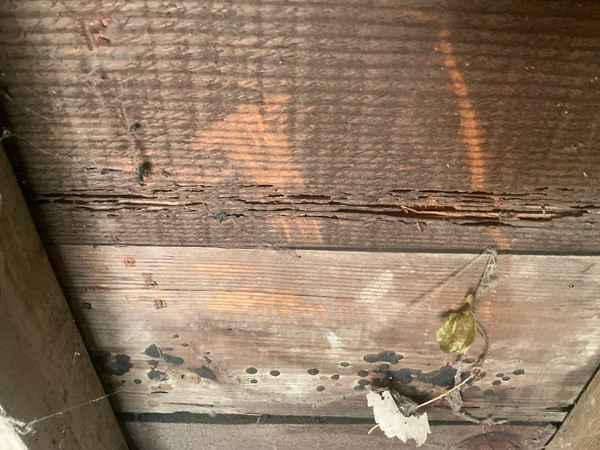
Wood-destroying insect damage in the garage framing of a 1950 Wynnewood home in Montgomery CountyWDI damage

Wynnewood · same home

Holes in the garage framing

Garage · framing

The same garage wall showed damaged, pitted framing where the wood meets the slab. Garages are easy to overlook because buyers focus on the living space.

Our recommendation: Treatment and framing repair; ask the seller about past treatment.

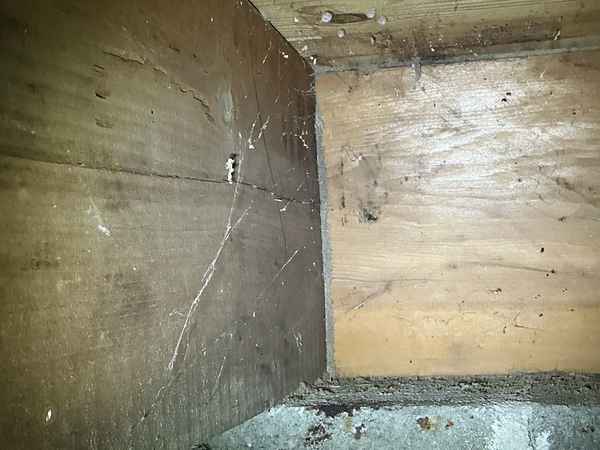
Termite mud tubes on the floor framing above a crawlspace in a 1963 Hatboro home in Montgomery CountyTermite evidence

Hatboro · 1963 home

Mud tubes over the crawlspace

Crawlspace · floor framing

Mud tubes ran across the floor framing above the crawlspace. This home’s basic home inspection didn’t include a WDI inspection, but the inspector still flagged it.

Our recommendation: Have a WDI inspection and treatment; check the framing for hidden damage.

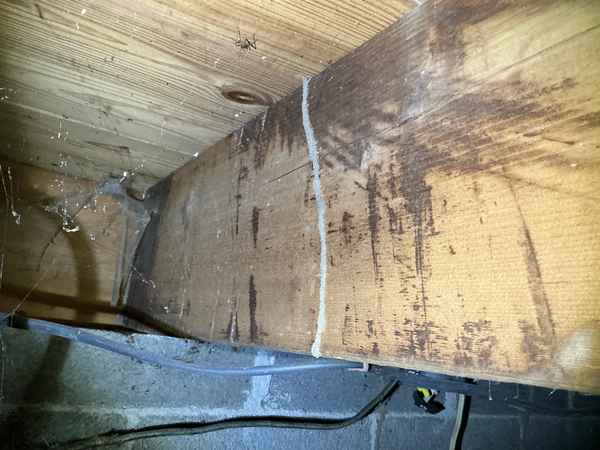
Termite mud tubes on the rim joist in the crawlspace of a 1963 Hatboro home in Montgomery CountyTermite evidence

Hatboro · same home

Tubes on the rim joist

Crawlspace · rim joist

More tubes on the rim joist showed termites traveling up from the foundation into the house in more than one place.

Our recommendation: Treat the perimeter and recheck in a year.

Two of the three homes were built before 1965. Want to see a full report? Browse our sample inspection reports.

✦ ✦ ✦

iii. What are the odds?

What are the odds this house has termites?

Buyers ask us this every week, so we pulled the answer from our own 2026 reports. Your odds depend mostly on when the house was built.

About 1 in 7suburban homes we inspected for termites in 2026 had termite evidence
1 in 3showed some sign of wood-destroying insects, active or past, across our 2026 termite inspections — including carpenter bees, which turned up in 1 in 9 suburban homes.

Termite evidence by year built

Built before 19401 in 3
Built 1940–1979about 1 in 4
Built 1980 or laterrare
None of the 29 newer homes in our sample — but rare isn’t never

Termite evidence by home type

Twinsabout 1 in 4
Rowhomesabout 1 in 6
Single-family homesabout 1 in 7
Townhomes & condosrare
None of the 15 in our sample

What skipping it can cost

$160ValueGuard termite inspection
~$3,000average termite damage repair (Orkin)
$0what homeowners insurance usually pays toward it (NPMA)

What it means in Montgomery County

About 1 in 6 Montgomery County homes was built before 1940 — the group where we found termite evidence in 1 in 3 homes. The county’s many mid-century homes fall in the next group, at about 1 in 4.

Based on a random sample of 219 ValueGuard termite (WDI) inspections from 2026 across Philadelphia, Montgomery, Delaware, Chester and Bucks Counties. “Termite evidence” means the inspector reported suspected termite activity or damage; “any sign” also includes carpenter bees, carpenter ants, beetles and past damage. Repair cost: Orkin. Insurance: National Pest Management Association.

✦ ✦ ✦

iv. Where we look

Where termites get into Montgomery County homes.

We start where the wood meets the foundation and work out from there.

Where we lookWhy it matters in Montgomery CountyWhat we’re looking for
Sill plates and rim joistsOriginal sills on stone and block foundations in older homesGalleries, soft wood, mud along the top of the foundation
CrawlspacesCommon in 1950s–60s ranches and split-levelsTubes on piers, rim joists and floor framing; damp soil
Attached garagesFraming sits close to the slab at gradeDamaged bottom plates, tubes at the slab edge
Porches, decks and additionsWood steps and posts near soilWood-to-soil contact, damaged posts
Trim and eavesCarpenter bees favor unpainted or weathered woodRound holes, sawdust, staining below holes
✦ ✦ ✦

v. Buying with a loan?

Who requires a WDI report in Montgomery County?

Montgomery County is on the VA’s list of Pennsylvania counties that require a wood destroying insect report, and many conventional buyers order one too.

Loan or situationIs a WDI report needed?Good to know
VA purchase or cash-out refinanceYes — Montgomery County is on VA’s list of Pennsylvania counties that require a WDI reportMust be on the NPMA-33 form; lenders generally treat it as valid for about 90 days
FHAOften — when the lender, local custom or the appraiser calls for itIf the appraiser notes possible damage, expect the lender to require an inspection
ConventionalUp to the lender and your purchase agreementMany Pennsylvania agreements give the buyer a WDI inspection contingency
Cash purchaseNot requiredStill the cheapest way to avoid inheriting hidden damage — insurance usually won’t cover it

Always confirm your lender’s exact condition early in the deal. County list: VA local requirements for Pennsylvania (64 of 67 counties are listed, including all five Greater Philadelphia counties).

✦ ✦ ✦

vi. How it works

Three steps, one visit.

A termite inspection in Montgomery County starts at $160. Most clients add it to their home inspection so it’s done in the same trip.

1Book itSchedule online, get an instant quote, or call (215) 860-3150. Tell us if your lender needs the NPMA-33 by a certain date.
2We inspectYour inspector checks the basement or crawlspace, sill plates, rim joists, garage framing and accessible exterior for evidence of termites and other wood-destroying insects, and notes areas that were covered or blocked.
3NPMA-33 + next stepsYou get the signed NPMA-33, photos of anything we found, and — if termites are present — a free, no-obligation treatment proposal.
✦ ✦ ✦

vii. Why not just the home inspection?

Home inspection vs. termite inspection.

Your home inspector will note obvious damage, but a general home inspection is not a wood-destroying insect inspection — and it does not produce the report your lender asks for.

What mattersHome inspection onlyValueGuard termite (WDI) inspection
PurposeOverall condition of the houseFocused search for termites, carpenter ants, carpenter bees and wood-boring beetles
Lender-ready NPMA-33NoYes — signed and ready for your lender
Past treatment & damage notedOnly if obviousRecorded on the report, including evidence of prior treatment
If termites are foundReferral to a pest companyFree, no-obligation treatment proposal from our own team
Scheduling—Same visit as your home inspection, or on its own
✦ ✦ ✦

viii. Across the county

Termite inspections in every Montgomery County town.

From Lower Merion to the Perkiomen Valley, we inspect for termites throughout Montgomery County. Explore our Montgomery County home inspection pages:

More Montgomery County services: sewer scope, radon testing, mold testing, chimney inspection. Also see our main termite inspection page and termite treatment.

✦ ✦ ✦

ix. Common questions

Termite inspection in Montgomery County, answered.

Do I need a termite inspection in Montgomery County, PA?+
Usually, yes. Montgomery County is on the VA’s list of counties that require a wood destroying insect report, and most Pennsylvania purchase agreements let buyers order one. In our 2026 inspections, about 1 in 7 suburban homes had termite evidence.
Do newer Montgomery County homes get termites?+
Yes. Termite colonies don’t care how old the house is, only whether they can reach wood and moisture. Slab garages, crawlspaces, finished basements and wood touching soil all give them a way in. Older homes tend to show more damage because termites have had longer to work.
Should I check the crawlspace for termites?+
Yes, if there is one. Crawlspaces are one of the most common places we find mud tubes in mid-century Montgomery County homes, because they stay damp and nobody goes in. Our inspectors enter accessible crawlspaces and note any that can’t be entered safely.
Are carpenter bees a problem on Main Line homes?+
They’re common on wood trim, eaves, porches and decks. Carpenter bees drill round holes to nest rather than eating the wood, but repeated nesting weakens trim. Carpenter bees are reported on the NPMA-33 along with termites, carpenter ants and wood-boring beetles.
How much does a termite inspection cost in Montgomery County?+
A ValueGuard termite (WDI) inspection starts at $160. Final pricing depends on the size of the home, and it costs less in time and coordination when you add it to your home inspection because it’s done in the same visit. See inspection pricing or get an instant quote.
Does a VA loan require a termite inspection in Montgomery County?+
Yes. Montgomery County is on the VA’s list of Pennsylvania counties where a wood destroying insect report is required for purchase loans and cash-out refinances. The report must be on the NPMA-33 form, and lenders generally treat it as valid for about 90 days. FHA and conventional lenders may also ask for one, especially if the appraiser notes possible damage.
What happens if the inspection finds termites?+
Findings on the NPMA-33 aren’t an automatic deal-breaker. We record what we saw and where, and if termites are present you get a free, no-obligation treatment proposal right away from our own team, so you can negotiate a repair or credit with real numbers. Learn more about termite treatment.
How long is a termite report good for?+
There’s no state expiration, but lenders generally want the NPMA-33 to be recent — commonly within about 90 days of closing. If your closing slips, ask your lender whether you’ll need an update.

Buying in Montgomery County?

Know what’s in the walls before you sign.

Schedule a Montgomery County termite inspection online in under 3 minutes, or call (215) 860-3150.

Schedule a termite inspectionGet an instant quote
ValueGuard Home Inspections100 E Penn Square Ste 400, Office 407, Philadelphia, PA 19107  ·  (215) 860-3150Mon–Fri 8:30am–5:00pm  ·  Sat 9:00am–4:00pm  ·  Termite & WDI inspections throughout Montgomery County, PA

Sources: ValueGuard Home Inspections inspection records (Spectora), 2026; Penn State Extension, Eastern Subterranean Termites; National Pest Management Association; VA local requirements for Pennsylvania; U.S. Census ACS 5-year estimates (Stacker).